Arts Reviews

The good, bad and ugly in arts and exhbitions

Actors will be in trouble if the Bridge Theatre's latest experiment catches on

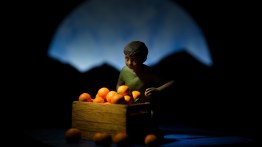
Flight has been hailed as a new form of dramatic presentation — prefab theatre. It’s great to look at. A set of model boxes containing stick figures and colourful landscapes slides past the seated viewer while a voiceover reads the narrative. No thesps are required, which may be a relief to producers and directors but the acting profession will be in trouble if this experiment catches on. The story, adapted from Hinterland by Caroline Brothers, follows two Afghan teenagers, Kabir and Aryan, who decide to walk to Europe in search of a better life. All they have is $2,000 in cash and a spare pair of trainers each. Along the

Most artistic careers end in failure. Why does no one talk about this?

It is a standard narrative in all showbiz reporting, and one that arts hacks seem to be duty-bound to abide by. It is the fairy tale of ‘Making It’; the story of a star whose career took time to get off the ground but, thanks to perseverance and self-belief, went stratospheric. It goes like this: ‘I was a nobody, and I was turned down from everything. And I nearly didn’t go to that final audition, but whaddya know? I turned up and… Shazam! Oscars raining down and a mini-series on Netflix.’ There is an encyclopaedia of stars who toughed it out before making it big. Type ‘stars who were failures’

The acting is very Scooby-Doo: Blithe Spirit reviewed

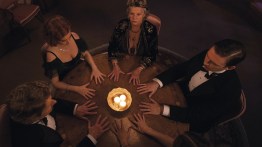
The comedy Blithe Spirit was written by Noël Coward in 1941. It is, essentially, about a séance going wrong and a deceased first wife coming back to haunt her husband and his second wife, causing mayhem. Better if she’d been left to rest in peace, and, after seeing this film adaption, you may well wish the play had been left to rest in peace too. Don’t dig it up! Leave well alone! I would even add that if Dame Judi Dench can’t save an adaptation — and I was previously of the mind that Judi Dench could save anything — then you know you are in real, real trouble. The

Englishness vs California dreaming: Meghan and Harry's Archewell Audio reviewed

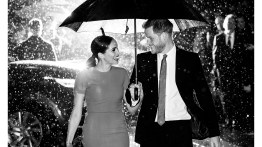
On Archewell Audio, Harry and Meghan’s new podcast, ‘love wins’, ‘change really is possible’, and ‘the courage and the creativity and the power and the possibility that’s been resting in our bones shakes loose and emerges as our new skin’. There’s no room for Christmas — the first episode dropped as a ‘Holiday Special’ — but there is for kindness, compassion and more than a few bromidic interjections of ‘So true!’ The podcast purports to ‘spotlight diverse perspectives and voices’ and ‘build community through shared experiences, powerful narratives, and universal values’. Turn down the volume and what you’ll actually hear is the most tremendous tussle between Englishness and California dreaming.

Watch Mark Kermode find 1950s political attitudes in 1950s films

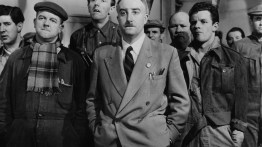
The new series of Mark Kermode’s Secrets of Cinema began with an episode on British comedy films. As ever, Kermode was terrific at demonstrating how persistent certain characters and ideas in his chosen genre have proved to be. He traced the theme of ‘the little man’ from George Formby and Norman Wisdom to Paddington Bear, paying due attention to its origins in Britain’s most successful early film export, Charlie Chaplin. Moving on to the subset of little men who think they’re bigger than they are, his judiciously chosen clips revealed how much Captain Mainwaring owes to Captain Waggett in 1949’s Whisky Galore! whom we even saw uttering the phrase ‘I

Riveting: Dear Comrades! reviewed

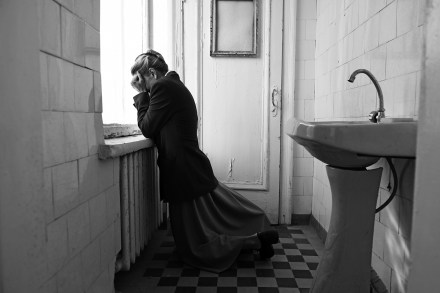
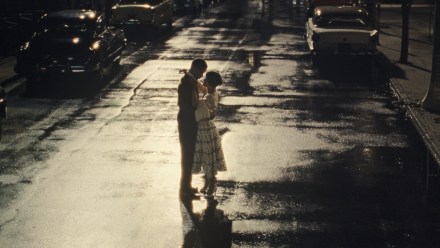
Andrei Konchalovsky’s Dear Comrades! is based on a true event and set in 1962 in the Russian city of Novocherkassk where the local factory, the Novocherkassk Electric Locomotive Plant, went on strike. This doesn’t sound especially sexy, I know, but it is superbly acted and so rivetingly told my concentration did not waver for an instant which, given how hard it has been to concentrate lately, is high recommendation indeed. (It wouldn’t be fair to list the films I couldn’t concentrate on, as the problem is likely mine, but… Mank!) Konchalovsky certainly has a wild CV. He has worked with Tarkovsky. He made the wonderfully hypnotic The Postman’s White Nights,

Ignore the activists – Humboldt’s Enlightenment project deserves celebrating

‘What a loss is the excellent Humboldt. You and Berlin will both miss him greatly,’ Prince Albert wrote to his much-beloved daughter Vicky, Crown Princess of Prussia, on news of the death of the author, explorer and celebrity Alexander von Humboldt in 1859. ‘People of this kind do not grow upon every bush [‘an den Blumen’] and they are the grace and glory of a country and a century.’ After some delays and bad luck, the grace and glory of the Humboldt name flourishes once again with the opening of the Humboldt Forum. Annoyingly digital to begin with, the launch last month of the Forum signalled the culmination of Berlin’s

The politics of handbags

‘Of course, I am obstinate in defending our liberties and our law — that is why I carry a big handbag,’ Margaret Thatcher once told an interviewer. That handbag was part of the Iron Lady’s suit of armour; a fashion accoutrement turned into a political prop. But an accessory that became instantly recognisable on the outside held secrets on the inside. Thatcher referred to it as the only ‘leak-proof’ place in Downing Street, and it was a bag of tricks from which she might conjure pertinent quotes from Abraham Lincoln or Friedrich Hayek, or a crumpled brief from a mysterious source. Norman Tebbit said the art of being a successful

Stick it on the BBC: Love Letters at Theatre Royal Haymarket reviewed

Love Letters by A.R. Gurney began life as an epistolary novella about two childhood friends, Andy and Melissa, whose on-off romance is traced through an exchange of letters lasting 50 years. In 1988, the script was turned down by the New Yorker magazine: ‘We don’t publish plays.’ Gurney hired an actress, Holland Taylor, and together they performed the script in a public library. From there it transferred to Broadway in 1989. It’s a minimalist’s dream. There are no costumes, and no set, and the actors can read the script without rehearsing or memorising their lines. This makes it a popular choice for galas and charity events. Elizabeth Taylor staged a

Superb but depraved: BBC1’s The Serpent reviewed

The Serpent is the best BBC drama series in ages — god knows how it slipped through the net — but I still think it most unlikely that I shall stick it through to the final episode. It’s not the style that’s wrong but the subject matter: do we really want to spend eight hours of life in the company of a smug, ruthless serial killer who murders at least 12 people — and more or less gets away with it? Up to a point The Serpent has addressed this problem by trying to make the central figure not the killer, Charles Sobhraj, but the persistent Dutch junior diplomat, Herman

On the trail of one of the first artists to paint ordinary things

There are many marvellous things to be seen in the Musée des Beaux-Arts at Dijon. But when I paid a visit a couple of years ago (in those days you could just step on a train and do such things), it was a little picture of the Nativity that particularly caught my eye. Its date, artist and original owner are all uncertain, but its beauty and originality were clear at a glance. Here, for almost the first time in European art, the appearance of ordinary things and people were the subject of close, rapt observation. Not of course that there was anything ordinary about the Nativity itself, which was a

A round-up of horror podcasts

Good evening! Come shivering on in through the garden side door, my friends, and distance yourselves in a semi-legal fashion around the flickering flames of my recently installed firepit while I guide you through the best horror listening for the depths of this December dark and drear. The Magnus Archives is an unslagoffably enthusiastic anthology series stuffed with monsters, ghouls and redundant adjectives. If you can get over the Alan Partridge touches (‘I didn’t move… I just stood there… sipping my tea… not even noticing it was still far too hot to drink comfortably’), this show features the scariest story I have heard this month, ‘Lost Johns’ Cave’. There is

Deserves to be a permanent winter fixture: Potted Panto at the Garrick reviewed

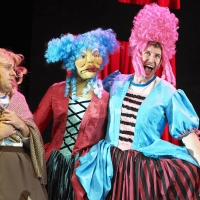
Potted Panto is a 70-minute parody presented by two burlesque comedians. Jeff is a tall, playful bungler and his colleague, Dan, is a squat, dour authoritarian who likes to see everything done efficiently. They leap on stage and declare their plan to present a compendium of the best-known Christmas shows. ‘All six of them,’ says Dan. ‘No, all twelve,’ contradicts Jeff, unfurling a list that includes classics from the TV schedules like A Christmas Carol and Das Boot. He insists that these non-pantos are included in their panto rundown. And so a war of opposites begins. Jeff is all appetite and instinct while Dan stands for reason and method. Or,

A romcom with very little com: BBC1’s Black Narcissus reviewed

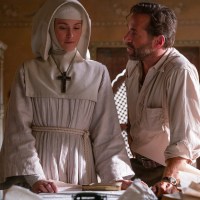
In Black Narcissus, based on the novel by Rumer Godden, five nuns set off for a remote Himalayan palace in 1934 to set up a convent school. The palace, donated by an Anglophile general, used to be a harem and was still adorned with erotic paintings. It was also where the general’s sister, Srimati, had committed suicide and where, just a few months previously, a male religious order had tried to establish a school too, before retiring defeated for mysteriously undisclosed reasons. The nuns’ main helper in practical matters, a British expat called Mr Dean (Alessandro Nivola), possessed an overwhelming maleness that expressed itself through such attributes as a chiselled

The grumpy genius of Raymond Briggs

Raymond Briggs has often spoken of his annoyance at being associated with Christmas. His Snowman may fly across our screens each Christmas day, but in the book there is no Father Christmas, no sleigh, and certainly no figgy pud. The North Pole scene featuring the jolly elf was written into the story for John Coates’s TV adaptation in 1982 and struck Briggs as rather mawkish at the time. As readers and viewers of Father Christmas know, Briggs’s Papa Noël is anyway rather a grouch at this time of year. As if the cold isn’t enough for him to contend with, there are the chimneys, the tasteless presents, and, oh yes,

Every page of this astonishingly beautiful ode to the citrus is a treat

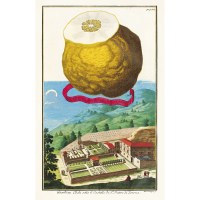
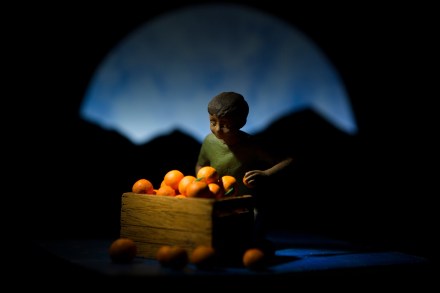
There’s an episode of Yes Minister called ‘Equal Opportunities’. Minister Jim Hacker is under pressure to recruit more women to the civil service. The hunt is on for female mandarins. ‘Ah,’ says principal private secretary Bernard. ‘Sort of… satsumas?’ At this time of year, I can’t help thinking of Bernard as I hover in the Co-op over nets of tangerines, mandarins, clementines, satsumas and ‘easy peelers’, whatever they are. ’Tis the season for citrus. For oranges at the bottom of stockings, for Buck’s Fizz on Christmas morning, for smoked salmon blinis with slices of lemon, for Milanese panettone with candied parings of peel, and for J.C. Volkamer’s The Book of

The legend of Marlene Dietrich

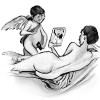
How to sum up the legend of Marlene Dietrich? She was an actor, a singer, a style icon, even a war hero. A retrospective is under way at the BFI, where more than a dozen of her films are being shown throughout this month. Many admirers saw only the shimmering legs and forgot the sharp intellect, the wartime gallantry. But it would be wrong to deny that body image was central to her success. It was with this in mind that the critic Robin Wood christened Dietrich ‘the Venus de Marlene’. Like the statue alluded to, Dietrich is a monument of Western culture, her image cast not in stone, but

What's an art form that feels unpopular and pointless, but isn't?

How did the universe begin? Did the great god Bumba vomit us up, as the Kuba believe? Or did we emerge, as the Navajo think, from a cloud of coloured mist? Or do we listen to the ancient Egyptians who thought the curtain opened on a giant cobra slithering across the oceans? Perhaps it starts with a computer screen: Milky Way wallpaper, a folder labelled ‘History_Of_Universe’ and a sharp intake of breath. That’s how one of the great video artworks of the 21st century begins anyway. This summer New York’s Museum of Modern Art uploaded Camille Henrot’s ‘Grosse Fatigue’ (2013) to its YouTube channel. It gives you the birth of

Buttercup the cow was so convincing I felt quite moved: Jack and the Beanstalk reviewed

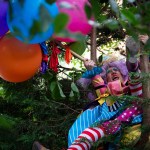
This pantomime was filmed by ‘legendary Blue Peter presenter’ Peter Duncan in his back garden over the summer. It was intended for online release only but it’s also gone into cinemas because this is the world we now live in. Oh no it isn’t. Oh yes it is. Oh no it isn’t. Seriously, it is. Why are you arguing like this? Stop it. As many theatres are still closed, and as most pantomimes have been cancelled, it makes sense to show it in cinemas and for cinemas to have something to show. During normal times the Christmas period is The Favourite and Portrait of a Lady and, while we’re at