Arts Reviews

The good, bad and ugly in arts and exhbitions

Looking back at Eyes Wide Shut, after Epstein

The constant parade of shocking and disturbing revelations from the Epstein files has been going on for a considerable time now. It shows no signs of coming to an end. Just when we all think that we’ve seen the worst of it, another 10,000 documents enter the public domain. Even though the stories have been widely disseminated, the details of the abuse of young women by the wealthy and powerful remain just as distressing – and scandalous – no matter how many times they are repeated. At some point in the future, Hollywood – or a streaming service, or AI, or however we get our entertainment by then – will

Harry Styles has a cute voice

Grade: B In which the foppish Davy Jones figure from the manufactured band One Direction (Zayn Malik being Peter Tork; One Direction didn’t have a Mike Nesmith) sheds the soft-rock pop-lite that has served him so well and goes with what he fondly believes is challengingly funky EDM, a genre which I do not believe plays to his strengths. So what you get is lyrics as fabulously inane as on “Watermelon Sugar” but very little of the pleasant tunes which accompanied that and his many other hits. There are some interesting rhythmic textures for sure, and a surfeit of old-skool playground synths. There is also a surfeit of repetition, a

harry styles

The Peaky Blinders film is surprisingly literate

Peaky Blinders: The Immortal Man is the film that fans of the television show have long been waiting for, so I must watch what I say. The story follows a group of exceptionally violent Birmingham gangsters operating between the wars and if you see it at the cinema you’ll hear a message before the opening credits. It’s Cillian Murphy imploring audiences not to give away any spoilers and ruin it for everyone else “by order of the Peaky Blinders!” There will be no spoilers here today. I have no wish to get my face slashed. Although I’ve dipped in and out of Peaky Blinders down the years, I’ve never stuck

peaky blinders

David Byrne has done it again

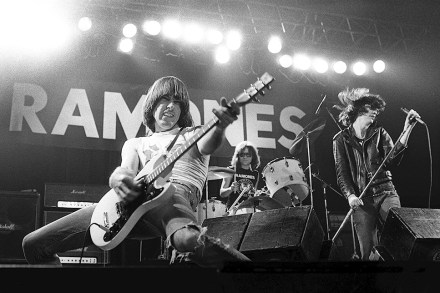
The title of David Byrne’s most recent album and current tour is Who Is The Sky? The phrase works two ways. Read literally, it has the playful 1960s feel of a Yoko Ono film or some absurdist Fluxus piece; firmly on brand, in other words, for someone as steeped as Byrne in New York’s downtown art lore. Read it aloud, however, and it becomes “Who Is This Guy?,” a more pointed title for an artist who has always seemed – to reference an old Talking Heads song – one of rock’s more slippery people. At the second of two recent Glasgow dates, both interpretations seem to fit. In Talking Heads,

The art of aging

More than 30 contemporary artists have contributed to the Wellcome Collection’s latest exhibition, which asks what it’s like to age at a time of unparalleled longevity. But as so often happens at the Wellcome’s exhibitions, it’s the ephemera that draw the eye first. “These 2 men are the same age,” says a leaflet advertising Kellogg’s All-Bran breakfast cereal. “One has driving power – energy – the will to succeed. The other is listless – tired all the time – it is an effort for him to plod through each day’s work.” The point being that aging is, to a not inconsiderable degree, something we do to ourselves, and something we

aging

Fans of George Eliot are in for a shock: Bird Grove at Hampstead Theater reviewed

Bird Grove by Alexi Kaye Campbell is a comedy of manners set in 1841. A portly suitor, Horace, arrives at a respectable house intending to propose to a rebellious and brilliant 22-year-old, Mary Ann. Horace’s father is dying and he must find a bride before nightfall or lose a substantial legacy. This ludicrous but very human situation starts the play. It’s instantly gripping. Mary Ann is in the drawing room being treated for headaches by a French mesmerist along with two wealthy radicals, Mr and Mrs Bray, who encourage her political activism. Her father, Robert, introduces his guests to each other and invites them to stay for tea. This fascinating

‘I didn’t expect to love Wagner’

By the end of Siegfried, the third opera in Wagner’s Der Ring des Nibelungen, the king of the gods is in freefall. In the first opera, Das Rheingold, Wotan is a confident protagonist; a world-builder. In Die Walküre, we’ve seen him discover the limits of power, and felt his heart break. Now, in Siegfried, he’s a haunted figure; the solitary Wanderer, searching the world for answers that his all-powerful wisdom can no longer supply. He confronts the young hero Siegfried, and his law-giving spear shatters on the sword of a reckless, clueless boy. “All he can say is, ‘Go, then. I can’t hold you any more,'” says Christopher Maltman, who

Marvelous but repetitious: Gwen John – Strange Beauties reviewed

A pilgrimage to Cardiff Central, sorry, Caerdydd Canolog (according to the signage in the station, which also had my return train’s destination ‘Lundain Padd’ton’) to see the new Gwen John show. She is being lauded as Wales’s greatest artist, but she left Tenby at 18 in 1895, and never went back. After studying at the Slade she moved to Paris, fell in love with Rodin, and adopted the Catholic faith. She ended her days in Meudon in 1939, leaving a cache of work that her nephew Edwin John thankfully rescued before the Nazi invasion, and that the National Museum of Wales (now National Museum Cardiff) had the foresight to acquire

elvis

Fascinating: EPiC – Elvis Presley in Concert reviewed

EPiC: Elvis Presley In Concert is a concert documentary that grew out of the 65 boxes of unseen Las Vegas performances discovered by Baz Luhrmann while researching his 2022 biopic Elvis. As I have little interest in “the King” I approached with a heavy heart. But now? I’m abundantly interested. In fact, I’ve shifted from indifference to thinking that if I could see one musical artist live at their peak it would have to be him. He’s that electrifying. A warning, however: it’s a 12A. “Elvis picks up a bra thrown on to the stage during a concert performance and puts it on his head,” notes the BBFC. I wish

Enjoyably old-fashioned: ITV’s The Lady reviewed

I lasted all of five minutes with Netflix’s tasting menu-length Being Gordon Ramsay. This surprised me, because I’ve long had a bit of a soft spot for the irascible, crevice-faced, sweary old ham. I know that all reality TV is fake but I’ve always quite enjoyed watching carrot-top pretending to lose his rag yet again in some rat-infested culinary cesspit before transforming it, in the space of a month, into a Michelin three-star. Ramsay no longer even pretends that his programs are anything more than extended plugs for his brand But the dishonesty and contrivance and brazen commercialism of this autohagiography are just too much to stomach. Supposedly, a small

Love Story’s counterfeit Kennedys

Last June, Jack Schlossberg, the Kennedy nepo baby currently running for the open seat in New York’s 12th Congressional District, called out the television mini-series, Love Story: John F. Kennedy Jr & Carolyn Bessette. Executive producer Ryan Murphy was, Schlossberg declared, exploiting this couple’s courtship, marriage and death, and “profiting off of it in a grotesque way.” On a key point, Jack can rest easy. Love Story, now airing on FX/Hulu, treats his uncle John F. Kennedy Jr. reverently. Elizabeth Beller, Bessette’s biographer, praises the show for “honoring the legacy of everyone involved.” If JFK Jr. had a single physical flaw – I am grasping at straws here – it was a head

The auteur Eugène Atget

Few connoisseurs of the image are unfamiliar with the great French photographer Eugène Atget (1857-1927). But his name is, unfortunately, unfamiliar to the lay person. This is a shame: his gloriously detailed, sharply focused black-and-white images of late 19th- and early 20th-century Paris evocatively conjure the shadows and lights of the boulevards, parks and alleyways of the Belle Époque. His astonishing close-ups of finely crafted architectural details are as striking as his sometimes surreal views of storefront windows and food-stall displays. Whether training his bulky large-format view camera on scenes interior or exterior, he reveals an aesthetic sensibility exquisitely sensitive to the world around him. His close-ups of architectural details

Marilyn Monroe, poetic muse

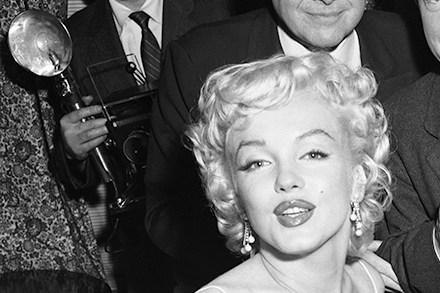
The year 1959 was a particularly productive but especially depressing year for Sylvia Plath. She toured the length of America, attended a series of stimulating literary seminars and wrote some of her most beloved verse. While outwardly active and energetic, her diary reveals she was struggling all the time to sustain her few fleeting fits of happiness. One entry in October describes a vivid dream she had, in which Marilyn Monroe appeared as a kind of fairy godmother. Monroe gave Plath a manicure and promised her a “new, flowering life,” before wishing her well and inviting the troubled poet over for Christmas. The image of Monroe clearly consoled her. Plath

Eye-catching but superficial: ‘Wuthering Heights’ reviewed

Emerald Fennell’s “Wuthering Heights” had purists losing their minds from the get-go. They lost their minds at the casting – Margot Robbie is too old for Cathy; Jacob Elordi is too white for Heathcliff – and then lost their minds at the trailer, which is all heaving bosoms and kinky vibes set to Charli xcx beats. But Fennell has made it clear that it is her vision of Emily Brontë’s novel, hence the quotation marks around the title, and that she wants it to feel as she felt when she first read the book at 14 years old. I was willing to cut her considerable slack but did her 14-year-old self,

ann lee shakers

Ann Lee deserves better than her biopic

Ann Lee was a sharp-tongued woman from the back streets of 18th-­century Manchester who joined a maverick Protestant sect that became known as the Shakers, or “Shaking Quakers.” In fact their shaking was the least of it: they howled, gurned and gibbered while flirting with the notion that God would return to Earth in the form of a woman. All sexual activity, even between man and wife, was forbidden. Ann then had a series of visions that, according to subsequent Shaker accounts, identified her as the “woman clothed with the sun” whose appearance in the Book of Revelation heralds the end of the world. In 1774, “Mother Ann” and a

Why does Taxi Driver still resonate?

Even if you haven’t seen the movie, you probably know the macabre legacy of Martin Scorsese’s early masterpiece Taxi Driver. Released 50 years ago this month, the tale of the eponymous cabbie Travis Bickle, played by Robert De Niro, still has something potent to say about what can happen when a brooding loner finds himself adrift amid the menace and jammed chaos of New York’s streets with a .44 Magnum for company. Perhaps one of the reasons Taxi Driver resonates with so many people is because of this human void that lies at its center. At one time or another, we’ve all felt as alone as Travis Bickle. Fortunately, most of us are

Taxi Driver
marty supreme

Marty Supreme mirrors Timothée Chalamet’s desire

Recently, Timothée Chalamet gave the world a refreshing show of ambition when, after winning a SAG award, he said that “the truth is I’m really in pursuit of greatness. I know people don’t usually talk like that, but I want to be one of the greats.” Ambition perhaps turned into arrogance when, during an interview for his new film, Marty Supreme, Chalamet noted that during the last few years, he’s been handing in “top-of-the-line performances… I don’t want people to take it for granted. This is really some top-level shit.” Marty and Chalamet both resemble one of the most hated and beloved 21st-century figures: Donald Trump The film (which has

The golden years of David Bowie

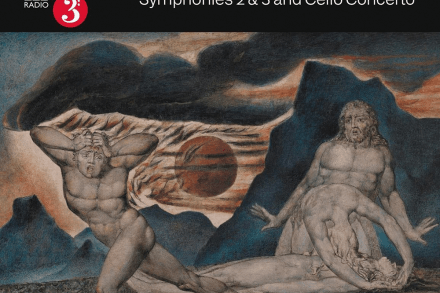
This year marks the anniversaries of two of David Bowie’s most compelling and powerful albums: 1976’s Station to Station and 2016’s Blackstar. Given that they are often – rightly – described as Bowie’s crowning artistic achievements, amid severe competition from his other releases, they also have the intriguing fillip that both were originally released in January: a fortunate time for the musician, who was born on January 8, 1947, even if it was also the month in which he finally departed this Earth. Yet the comparisons between Station to Station and Blackstar, which came out 40 years apart, are far more pervasive – and persuasive – than the serendipity of

david bowie

A vibrant, partial look at Gabriele Münter

Recognition can be late in coming for many artists, but perhaps especially so for women whose originality and talents too often become overshadowed by their more famous romantic partners. Museums are often eager to put on shows making this very argument as women artists are rediscovered. Sometimes the thesis succeeds; other times, it does not. The latest of these is the case of the German artist Gabriele Münter (1877-1962), whose reputation, until recent decades, rested less on her own body of work than on her long-time connection to her mentor and lover, the Russian expressionist Wassily Kandinsky (1866-1944). The Guggenheim Museum’s exhibition, Gabriele Münter: Contours of a World, attempts to

How mediocrity took over the Grammys

Is music getting worse? Rick Beato is a musician, producer and critic with more than five million YouTube subscribers. His answer would be: yes, pretty much. In a recent video, he compares the 2026 Grammy Song of the Year nominees to those of 1984. There are a few bright sparks among the slate of new songs, but Beato regards most of them as derivative, unoriginal and unlikely to be remembered past the end of the awards show. In contrast, 42 years on, all the 1984 nominees – Michael Jackson’s “Beat It,” The Police’s “Every Breath You Take” and Lionel Richie’s “All Night Long” among them – are firmly embedded in