
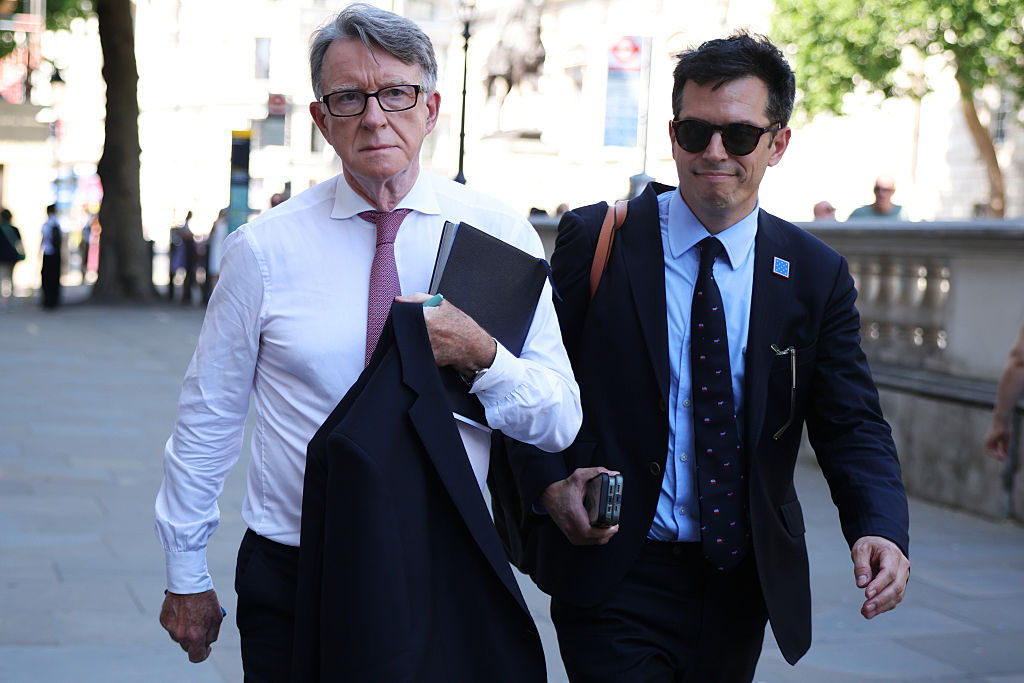
Nothing excuses the manner of Peter Mandelson’s communications with Jeffrey Epstein both before and after the latter’s conviction for sex offenses. Nor are the lies which Andrew Mountbatten-Windsor told about breaking off relations with Epstein defensible. Nevertheless, there is something disturbing about what looks like being the inevitable fallout of the Epstein scandal: that no one in public life will ever again risk remaining friends with anyone who has been jailed or disgraced in any other way. It may well extend to people outside public life, too. The principle seems to have been established: that if one of your friends commits a serious offense and you do not instantly cut off all relations with them, then you are guilty of moral turpitude yourself.
This does not seem to me to be humane, and nor will it exactly aid the rehabilitation of offenders. Surely, a good friendship should be allowed to outlast a criminal sanction; it is not necessary to condone what your friend has done in order to carry on seeing them. In Britain, Conservative figures did not feel the need to cut themselves adrift from Jonathan Aitken or Lord Archer when both were jailed; indeed, Archer got into trouble for attending a lunch party given by the former cabinet minister Gillian Shephard while on day leave from an open prison in Suffolk. He was sent back to a closed prison for breaking the rules on attending social gatherings during day release, but I do not recall any outrage directed at Shephard. Northern Ireland minister Michael Mates was forced to resign in 1993 after giving fraudster Asil Nadir a watch. But then Nadir was a fugitive from justice at the time, and Mates had inscribed the watch with the message “don’t let the buggers get you down.”
Maybe someone can enlighten me as to whether any Labour MPs kept in touch with John Stonehouse after he was jailed for fraud, but I am pretty sure that they would not have got into trouble for doing so. God knows what contemporary society would have thought of Lord Longford, a Labour minister who made a life’s work out of visiting the most heinous of offenders, including Myra Hindley. His campaign to have Hindley paroled certainly caused controversy, disgust even. Yet it did not stop the then Prime Minister Tony Blair calling him “a great man of passionate integrity and humanity” when he died aged 95 in 2001.
Of course, Mandelson’s and Mountbatten-Windsor’s friendships with Epstein were very different in nature from the relationships between prisoner and prison visitor. There is little in the communications that we have seen so far to suggest any contrition on the part of Epstein. Indeed, he suggested in an email to Mandelson that he would like to celebrate his release – or “liberation day,” as Mandelson called it – with a couple of strippers. Mountbatten-Windsor appears to have invited Epstein for a quiet lunch at Buckingham Palace after Epstein’s release. Surely the inappropriateness of that ought to have registered.
But I fear that the crassness of Mandelson’s and Mountbatten-Windsor’s relations with Epstein will erupt into a more general cancel culture against friends who have been convicted of serious offenses. I can sense a growing piousness which will lead public figures loudly to condemn their fallen friends and vow never to have any contact with them ever again. It will not make us a better society.



Comments