Jane austen

The mind-altering miracle of the novel in Britain, from A to Z

From our UK edition

The jacket design of this splendid book shows Lewis Carroll’s Alice pulling back a curtain to reveal the door into Wonderland. In the original story, it leads to ‘a small passage, not much larger than a rat-hole’, at the end of which Alice notices ‘the loveliest garden you ever saw’. She is too large to squeeze through this doorway, but questions whether she might be able to defy the laws of physics and get into the garden anyway; after all, she tells herself, so many curious things have happened to her already that it seems ‘very few things indeed were really impossible’. It’s hard to imagine a better metaphor for reading a work of fiction.

Charming: The Other Bennet Sister reviewed

From our UK edition

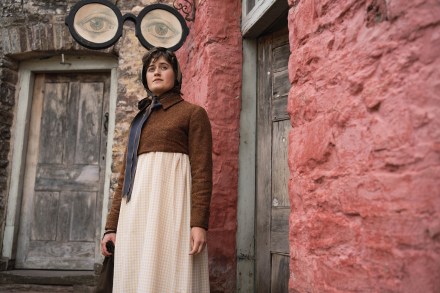
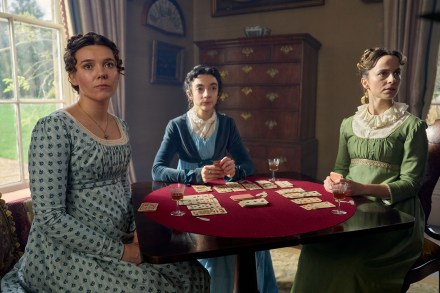
The Other Bennet Sister is to Pride and Prejudice what Tom Stoppard’s Rosencrantz and Guildenstern Are Dead is to Hamlet. The events of the original novel are all there, but the focus is on a character Jane Austen mostly neglected and occasionally scorned. One effect is that the other sisters, including the sainted Lizzy, come across as smug and snooty According to Mary Bennet’s opening voiceover: ‘It is a sad fact of life that if a young woman is unlucky enough to come into the world without expectations, she had better do all she can to ensure she is born beautiful. To be poor and handsome is misfortune enough; but to be penniless and plain is a hard fate indeed.

Jane Austen: Rise of a Genius is projecting

Which is your favorite Jane Austen novel? OK, maybe not a conversation prompt appropriate for every setting, but a reliable one, I find, to break the ice at DC dinner parties where I’m not well acquainted with my fellow guests but spy someone who seems likely to know her work. I also ask it of younger fiction writers who come looking for advice about plot construction. I once resorted to it with a stranger, a woman of a certain age, to distract me from my irritation, sitting on an Acela train inexplicably halted outside Wilmington, Delaware, for two hours. She chose Persuasion, Austen’s elegiac account of late-in-life love.

Bondi attack: understanding Islamism & the causes of anti-Semitism

From our UK edition

50 min listen

Michael Gove and Madeline Grant confront the horror of the Bondi Beach massacre and ask why anti-Semitic violence now provokes despair rather than shock. As Jewish communities are once again targeted on holy days, they examine the roots of Islamist ideology and the failure of political leaders to name it. Why has anti-Semitism metastasised across the radical left, the Islamist world, and the far right – and why does the West seem so reluctant to grapple with its causes? Then, on the 250th anniversary of Jane Austen’s birth, Michael and Maddie ask why Austen is endlessly repurposed, politicised and rewritten by modern adaptors? Was she an abolitionist, a moralist, or something far subtler – and why do her novels continue to resist ideological shoehorning two centuries on?

Do we really need a ‘new spin’ on Jane Austen?

From our UK edition

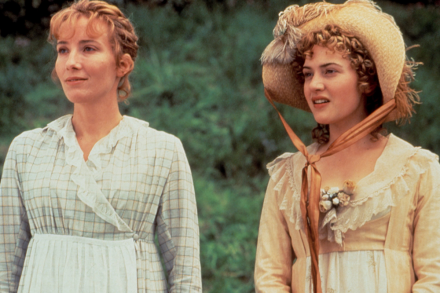
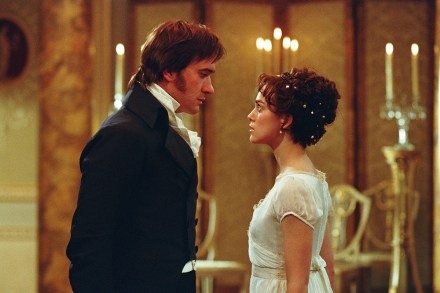
If you like your period dramas butchered, then you are in for a real treat. The 250th anniversary of Jane Austen’s birth falls on 16 December, and we are promised a slew of adaptations, documentaries and lectures to mark it. Inevitably, some of these will try to put a ‘new spin’ on Austen, to make out that she was somehow in line with a particular cause or interest of modernity; Mansfield Park is about saving the whales, Colonel Brandon is actually trans, that sort of thing. This year, Emma Thompson stars in a ‘racy’ new audio drama, Becoming Meg Dashwood, which will focus on the youngest Dashwood sister and her quest for ‘female friendship, sexuality, and liberation’. Oo-er.

Pride and Prejudice retold in a thousand different ways

From our UK edition

‘It is a truth universally acknowledged that any essay about Jane Austen... must be in want of a poorly rendered paraphrasing of her most famous opening lines,’ writes Ella Risbridger in this sharp, gleefully obsessive field guide to romantic fiction. For her, Austen is the genre’s ‘mother’, and she crisply notes that while George Eliot disparaged ‘silly novels by lady novelists’, ‘she does appear to have read a lot of them’. Risbridger is the author of two cook books, including the award-winning Midnight Chicken (and Other Recipes Worth Living For); a children’s novel, The Secret Detectives; and the editor of anthologies of poetry and food writing. She has read a lot of romance novels, too.

Marriage is the real rebellion

From our UK edition

Jonathan Swift had a suitably unromantic attitude to holy matrimony. Once, when sheltering under a tree during a storm near Lichfield, he was asked to marry a heavily pregnant bride to a rather guilty-looking groom. Asked to provide evidence that he had performed the shotgun wedding, Swift found a piece of paper and wrote: Under an oak, in stormy weather,I joined this rogue and whore together;And none but he who rules the thunderCan put this rogue and whore asunder. Despite his cynicism, even Dean Swift would lament the marginalisation of one of our foundational institutions. Marriage is undergoing a seemingly inexorable decline. In the 1970s, almost three quarters of the adult population were married.

Will the ‘bunny boiler’ tag continue to haunt single women?

From our UK edition

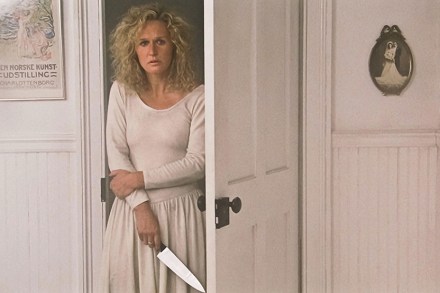
Even if you’ve never seen Adrian Lyne’s 1987 thriller Fatal Attraction, you’ll know what a ‘bunny boiler’ is. When Alex (Glenn Close) slaughters her lover Dan’s family pet and leaves it simmering on the stove, she invented a universal shorthand for the obsessive, unstable woman who can’t take romantic rejection. In the film, Alex is portrayed as the destroyer of domestic happiness: an embittered career woman on the wrong side of 35, who is made literally sick when she spies on the contentment shared by Dan (Michael Douglas), his wife and his daughter. Audiences loathed her. Susan Faludi, in her book Backlash, reported cries of ‘Kill the bitch!’ and ‘Punch the bitch’s face in!’ during the film’s violent climax.

Why Jane Austen is still the queen of romance

Jane Austen was born in Hampshire on December 16, 1775, the seventh child of a poor country rector. Despite being red-cheeked and a good dancer, she never married. And despite the handful of novels she wrote under the byline “A Lady,” she was always considered by her family less promising than her older sister. She died of a painful illness at 41. Her books found a readership that included the Prince Regent, but she had some prominent detractors. Charlotte Brontë scorned them: “I should hardly like to live with her ladies and gentlemen in their elegant but confined houses.” Where were the windswept moors, the big feelings? In the next century, D.H. Lawrence dismissed Austen as “mean” and “snobbish.

Austen

A summer romance: Six Weeks by the Sea, by Paula Byrne, reviewed

From our UK edition

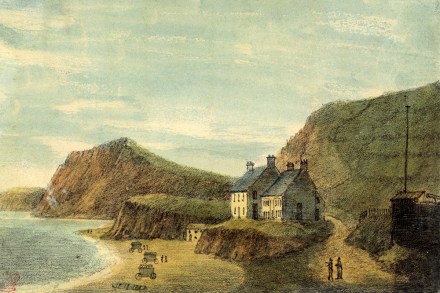
After Jane Austen’s death, her sister Cassandra destroyed the majority of her letters.  This act, often interpreted as an attempt to preserve Jane’s reputation, has had the opposite effect of fuelling fervent – at times prurient – speculation about what the letters contained. While Cassandra may simply have wished to shield her relatives from the lash of Jane’s sharp tongue, later writers, drawing on the author’s fiction and family lore, have surmised that the missing correspondence concealed evidence of a love affair. Such an affair formed the basis for Gill Hornby’s fine 2020 novel Miss Austen and now inspires Paula Byrne’s pleasant if unremarkable Six Weeks by the Sea.

Leave our period dramas alone!

From our UK edition

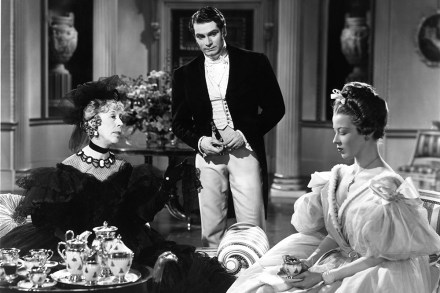
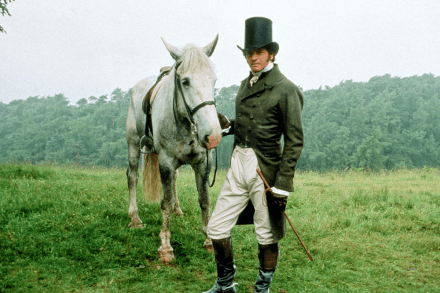
It is a truth universally acknowledged that any article about Jane Austen must begin with a mangled, platitudinous variation on her most famous line. Irritating though this is, it’s rather a good metaphor for the state of the wider treatment of Austen – and her near contemporaries – by popular culture. When it comes to adaptations of novels from the Georgian, Regency and Victorian periods, and even longer ago, we find ourselves in a deep trough. If you want mangled, platitudinous variations, you now need look no further than today’s costume dramas. And this year being the 250th anniversary of Austen’s birth, we should brace ourselves for a barrage of them. Many of those behind the upcoming slough of modern takes on Austen et al hardly inspire confidence.

Why is the BBC making stuff up about Jane Austen?

From our UK edition

Jane Austen: Rise of a Genius began by saying that ‘getting into her mind isn’t easy’ – something you’d never have guessed from the rest of the episode, where both the narrator and the talking heads were able to tell us exactly what Austen was thinking and feeling at any given time. Like many Austen biographies, this one laments her sister Cassandra’s decision to burn most of her letters, but then takes full advantage of how little we consequently know about her to portray (or possibly make up) a woman whose attitudes are spookily close to its own. In a previous era, this might have meant presenting Austen as a gentle and contentedly domestic aunt. Now of course it means that ‘at a time when women were supposed to know their place, Austen ripped up the rulebook’.

The odd couple: Austen and Turner at 250

From our UK edition

History is full of odd couples: famous but unrelated people who happen to have been born in the same year. 1809: Charles Darwin and Abraham Lincoln. 1926: Queen Elizabeth II and Marilyn Monroe. Yet few historical pairings are as unlikely as the novelist Jane Austen and the painter J.M.W. Turner, born within a few months of each other in 1775. Usually the only time these two cultural icons encounter one another is in our purses or wallets: Turner depicted as a dashing young Romantic on the £20 note, Austen looking demure and doe-eyed (a heavily airbrushed version of the portrait originally sketched by her sister Cassandra) on the £10 note. Otherwise they might appear to have little in common.

Stately, sly and well-mannered: BBC1’s Miss Austen reviewed

From our UK edition

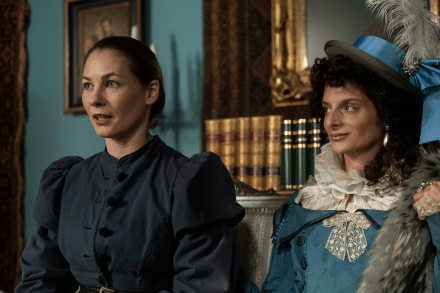
It is a truth universally acknowledged that lazy journalists begin every piece about Jane Austen with the words ‘It is a truth universally acknowledged’, so I’ll fight the temptation. In any case, the Miss Austen at the centre of BBC1’s new Sunday-night drama isn’t Jane, but her beloved sister Cassandra, best known for destroying most of Jane’s letters. Given that this has rendered our knowledge of the woman’s biography tantalisingly sketchy, Cassandra has attracted her fair share of resentment from Janeites. But rather cunningly, Miss Austen both exonerates her and takes full advantage of the sketchiness: high-mindedly questioning our entitlement to snoop into Jane’s private life, while feeling free to speculate on what that private life might have been.

What Spectator writers read in 2024

From our UK edition

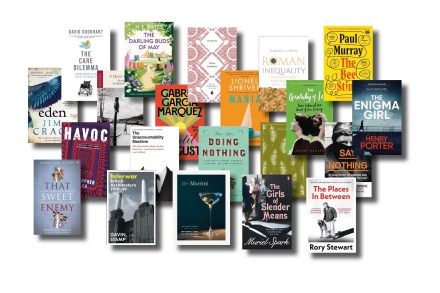
Rod Liddle The angels in Jim Crace's Eden are tetchy and petty authoritarians, apart from one who can't fly properly. This dissertation on freedom and mortality is rather wonderful – published two years ago but I caught up with it only this year. The best non-fiction book of the year is David Goodhart's The Care Dilemma: Caring Enough in the Age of Sex Equality, which has the temerity to suggest that divorce rates and broken families might just have something to do with our epidemic of mental illness. How dare he? Lionel Shriver I’d recommend the novel Havoc by Christopher Bollen, set in an Egyptian hotel to which westerners have fled to avoid the tyrannies of Covid regulations.

For sale: Jane Austen’s birthplace

From our UK edition

‘There is nothing like staying at home for real comfort,’ wrote the eminently quotable Jane Austen in Emma, in 1815. ‘Nobody can be more devoted to home than I am.’   If the incomparable Regency writer and social critic could see Steventon House, on the site of her birthplace and childhood home in Hampshire, she would doubtless approve. Although it’s not quite on the scale of the manicured estates that feature so largely in her property-obsessed novels, the Grade II listed 1820s home is all Georgian elegance, with 7,000 sq ft of living space, beautifully proportioned high-ceilinged receptions and fine period features including decorative fireplaces, cornicing, and working shutters.

Most-read 2022: Everyone involved should be in prison: Netflix’s Persuasion reviewed

From our UK edition

We’re finishing the year by republishing our ten most popular articles from 2022. Here’s number nine: Deborah Ross’s piece from July on the pitfalls of adapting Austen. You may already have read early reviews of Netflix’s adaptation of Jane Austen’s Persuasion saying it’s ‘the worst adaptation ever’ as well as ‘mortifying’ and ‘a travesty’, but I know you won’t believe it unless you hear it from me, so here you are: it is truly horrible. I would also add that everyone involved should probably be sent to prison. Not for life, but until we could be confident they’d learned the error of their ways and there was minimal risk of reoffending. A probation officer would possibly be required to keep a close eye, just to make sure. Better safe than sorry.

Reworking Dickens: Demon Copperhead, by Barbara Kingsolver, reviewed

From our UK edition

Putting new wine into old wineskins is an increasingly popular fictional mode. Retellings of 19th-century novels abound. Jane Austen inevitably leads the way, with Val McDermid’s Northanger Abbey, Alexander McCall Smith’s Emma, Joanna Trollope’s Sense and Sensibility, and no fewer than four recent adaptations of Pride and Prejudice. Dickens, too, has been updated, with Michael Rosen’s Bah Humbug and Lorie Langdon’s Olivia Twist. Now Barbara Kingsolver pitches in with a contemporary version of David Copperfield. Her Demon Copperhead is a russet-haired, mixed-race boy from the backwoods of South Virginia.

When did cheerfulness get so miserable?

From our UK edition

We’ve all met the sort of facetious oaf who orders any non-giggling woman to ‘Cheer up, love, it might never happen’. As Timothy Hampton grasps, enforced cheeriness feels about as much fun as compulsory games. His invigorating book about the quest for true cheerfulness in literature and philosophy dismantles the various ‘prosthetic or counterfeit’ versions of the real thing that bullies, bosses, self-help gurus and household tyrants inflict on their victims. Jane Austen’s heroines, as he shows, chafe against the elevation of cheerfulness into a ‘social norm’. It suffocates them like stays: ‘Thou shalt be cheerful, at least if thou art woman.’ For sound reasons, the prospect of cheerfulness fails to gladden many modern hearts.

The latest Jane Austen adaptation is dreadful

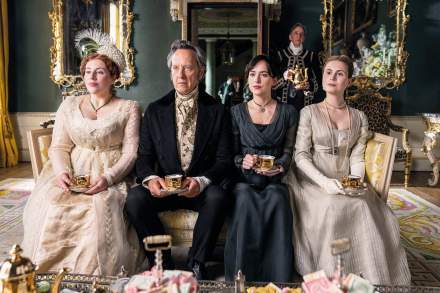
Full marks to whoever tweeted, after watching the trailer for the dire new version of Jane Austen’s Persuasion, that, "I’m sorry but Dakota Johnson has the face of someone who knows what an iPhone is." In that pithy phrase, the failings of Carrie Cracknell’s film are laid bare immediately. Johnson, despite the utter dreadfulness of the Fifty Shades films that launched her to fame, is a talented and likable actress, but she is also contemporary in a way that many of her peers are. You can dress her in all the crinolines and bonnets and Regency finery in the world, but she still looks like a California resident from 2022 cosplaying, rather than an inhabitant of early nineteenth-century Britain. But Johnson is not the only problem with Persuasion.