In the early hours of February 28, 2026, Operation Epic Fury commenced with large-scale American and Israeli air strikes against Iranian military, command, missile and infrastructure targets.
Since then, the United States and Israel have conducted extensive operations against Iran, while Iran has retaliated with missile strikes against US bases, Israel and its regional neighbors. This is an initial assessment of the missile war, which has defined the early stages of this conflict.
Over the past two nights, Iranian ballistic missile usage appears to have decreased sharply
The central military dynamic between Israel and the United States on the one hand, and Iran on the other, can be understood as a race to the bottom. Iran is seeking to deplete its neighbors’ missile defense arsenals while inflicting damage. In contrast, the United States and Israel are attempting to locate and destroy Iranian transporter-erector launchers (TELs) – mobile missile launchers – before they can fire, while also degrading Iran’s command and control and its missile production capacity.
“TEL hunting,” as this mission is commonly described, has historically proven extremely difficult. Efforts during Operation Desert Storm and Operation Iraqi Freedom produced limited results. Israel’s air campaign against Iran last year arguably marked the first instance of an air campaign successfully targeting enemy TELs at scale.
That success now appears to be repeating itself, with dozens of videos published by US and Israeli official channels showing the destruction of Iranian mobile launchers. The Israeli Air Force has stated that it alone has destroyed over 300 missile launchers since the beginning of the war. Successful counter-TEL operations are likely enabled, to a large degree, by pre-war intelligence on TEL storage bases and routes, and by the presumed large number of US and Israeli medium- and high-altitude drones operating above Iran with near impunity, providing continuous surveillance.
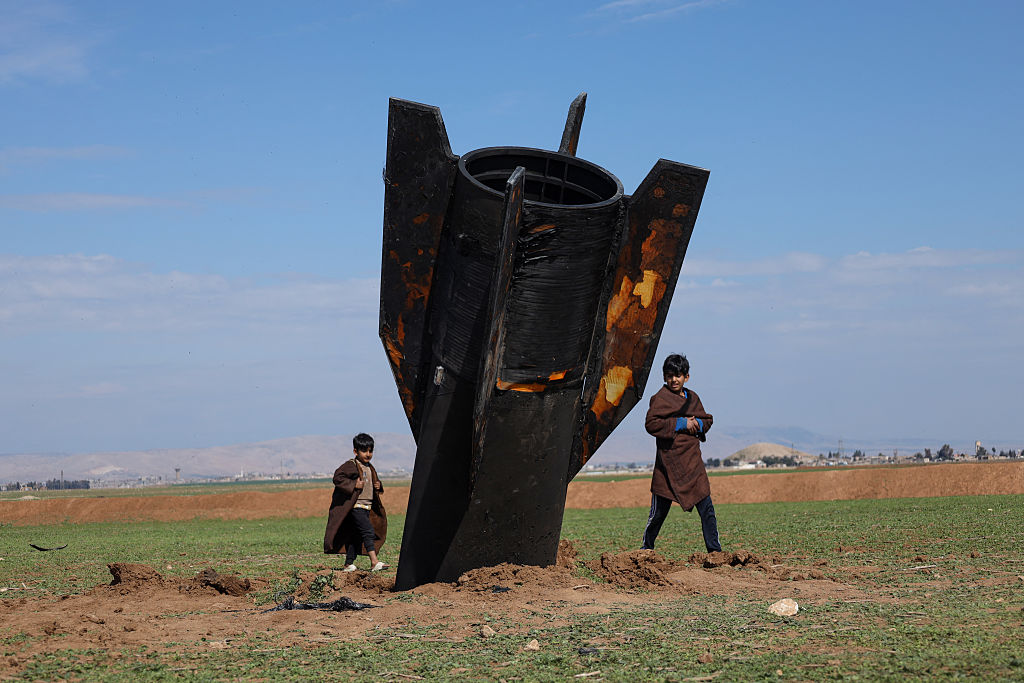
As expected, Iran has responded with missile and long-range drone attacks against US bases in the region, Israel, and its regional neighbors, particularly Bahrain, Kuwait, Qatar, Saudi Arabia and the UAE. Targets have included military and civilian infrastructure, as well as population centers.
Although much remains obscured by the fog of war, compared to the 12-Day War between Iran and Israel in 2025, and earlier missile exchanges between the two countries, Iran’s ballistic missile launches appear to have been more unevenly spaced out, significantly smaller in scale and less coordinated. This likely reflects the effects of the ongoing US and Israeli strike campaign, which has degraded not only Iran’s TEL availability but also its command and control operations, complicating the coordination of missile operations.
As a result, Iran has presumably had to rely more heavily on increasingly small units operating under pre-delegated authority and executing pre-authorized strike plans, while at times acting on their own initiative.
In total, Iran is estimated to have launched some 700 to 800 ballistic missiles in this war so far, which is comparatively limited. During the 12-Day War, Iran appears to have expended roughly 500 to 600 ballistic missiles. However, in that conflict, Iran relied entirely on medium-range ballistic missiles needed to strike Israel and did not employ short-range ballistic missiles. Given that, in the present conflict, short-range ballistic missiles are a viable means of striking America’s regional allies, and that the confrontation is arguably more existential from a regime-survival perspective, one would, in principle, expect short-range missiles to be used more.
During the 12-Day War, Iran regularly managed to launch salvos of 40 to 50 ballistic missiles at a time, including several days into the war. Current video footage of interceptor launches – for example, during a strike on Doha late in the evening of February 28 – suggests that double-digit ballistic missile salvos have still occurred, though likely not at the previously observed scale, and they remain the exception.
Indeed, over the past two nights, Iranian ballistic missile usage appears to have decreased sharply. The UAE, which has received the brunt of Iranian ballistic missile attacks and has been relatively transparent about the number of missiles launched at its territory, reported 165 ballistic missiles during the first two days. In the subsequent two days, the UAE reported only nine and 12 ballistic missile launches at its territory, respectively.
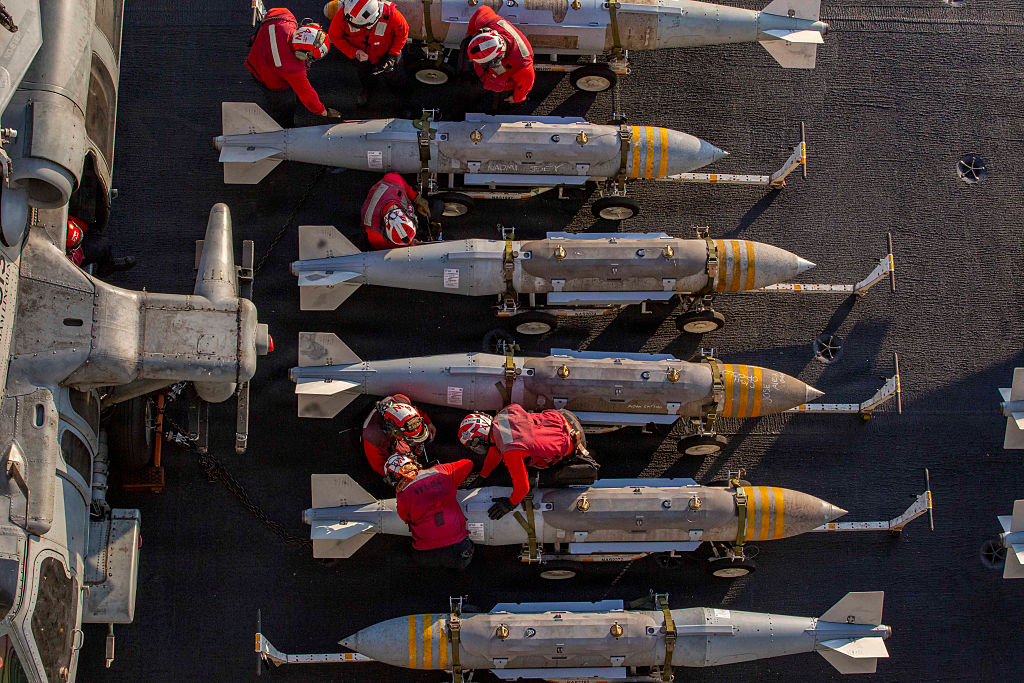
Whether the United States and regional allies can outlast Iran until its ballistic missile capabilities are sufficiently degraded depends to a large extent on their interceptor depth.
How many interceptors the Gulf states deployed at the beginning of the conflict, and how many interceptors the United States brought to the region, remains classified. However, reasonable estimates can be made based on how many interceptors the Gulf states were authorized to purchase in the years prior to that.
The table above provides an estimate of ballistic missile interceptor stocks that the Gulf states were authorized to purchase prior to the beginning of the war. Note that this estimate represents a theoretical maximum. There is no guarantee that states will purchase the maximum authorized quantities from the United States. Indeed, often it is less, possibly around 50 to 80 percent.
That said, given that the Gulf states have considered the Iranian ballistic missile threat one of the primary, if not the primary, threats, it is easy to imagine they may have invested accordingly and procured large amounts of ballistic missile defense equipment.
As noted above, according to official UAE information, the country detected 165 Iranian ballistic missiles during the first two days of the war. Assuming that each detected ballistic missile was engaged, and an average of 2.5 interceptors were allocated per projectile, this implies an interceptor use of roughly 410. The UAE likely did not bear the full burden of these engagements, however, as the United States also deploys Patriot fire units on its bases. If the UAE accounted for roughly half of the allocated interceptors, depletion over the first two days would amount to around 200 interceptors. Depending on whether the UAE purchased 50 to 100 percent of the interceptors it was authorized to acquire, this would correspond to roughly 20 to 40 percent of its interceptor stockpile.
This example illustrates the importance of ballistic missile defense interceptors. Had the intensity of Iranian ballistic missile attacks observed during the first two days continued at the same pace, Emirati interceptor inventories would likely have been severely depleted within a few days to a week. The same logic applies to the other Gulf states.
However, given that the intensity of Iranian ballistic missile attacks appears to have declined sharply, very likely due to TEL attrition, the situation now appears far less alarming. While it may still be premature to dismiss Iran’s ballistic missile capabilities entirely, the Gulf states – with the possible exception of Bahrain, given its comparatively small arsenal – have reason to expect that they can endure the conflict without exhausting their missile interceptors. Even Bahrain will likely remain in a manageable position, assuming continued US support and missile defense deployments on its territory.
Indeed, rather than ballistic missiles, long-range drones have exposed more gaps in the defenses of the Gulf states. Neither the Gulf states nor the United States deploy optimized drone interceptor systems in sufficient numbers, relying instead on manned aircraft to intercept incoming Shahed-type drones. Nevertheless, individual drones have repeatedly penetrated their defenses and struck military and symbolic targets, including the US embassy in Riyadh. Overall, this does not reflect well on US and allied militaries.
Reporting suggests that the Gulf states had already begun trying to address the drone defense issue in the years before the war, drawing lessons from Ukraine’s experience against Russia and from Iran’s long-range drone arsenal. Yet procurement cycles proved too slow to close the capability gap in time.
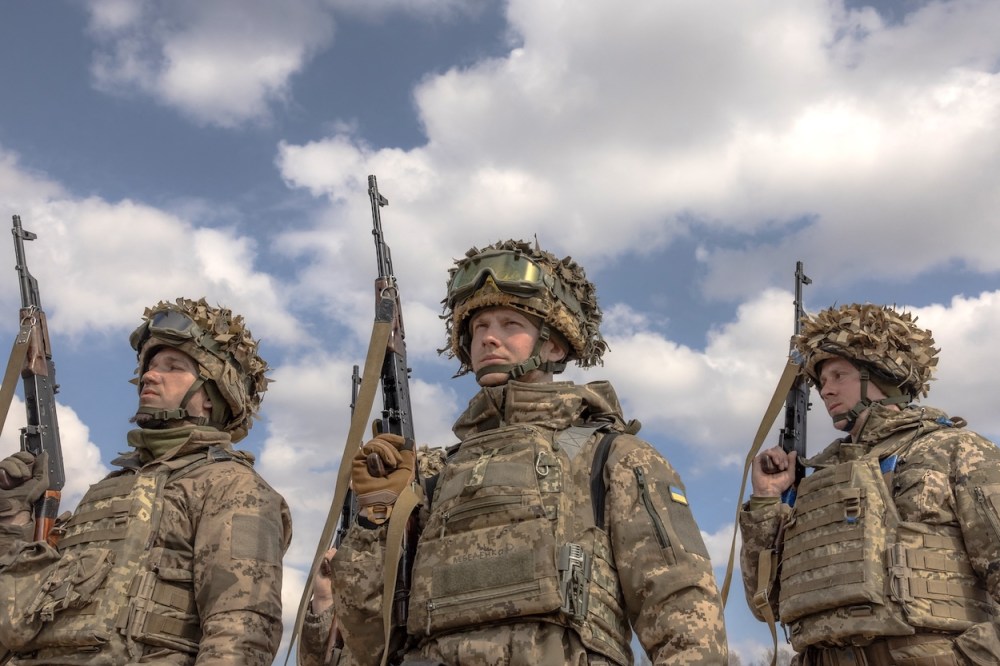
After the war, Gulf states will likely move quickly to close this gap. Ukrainian companies may be well-positioned to offer battle-tested counter-drone technologies to Gulf customers. At the same time, they will likely face intense competition from European missile defense startups, as well as from established European and American companies seeking to offer their own systems to Middle Eastern buyers.
Overall though, the US and its allies can be satisfied that while they may have struggled to handle Iran’s drones, they have blunted the worst of its missile attacks.
This article first appeared in Fabian Hoffmann’s Missile Matters Substack.






Comments