
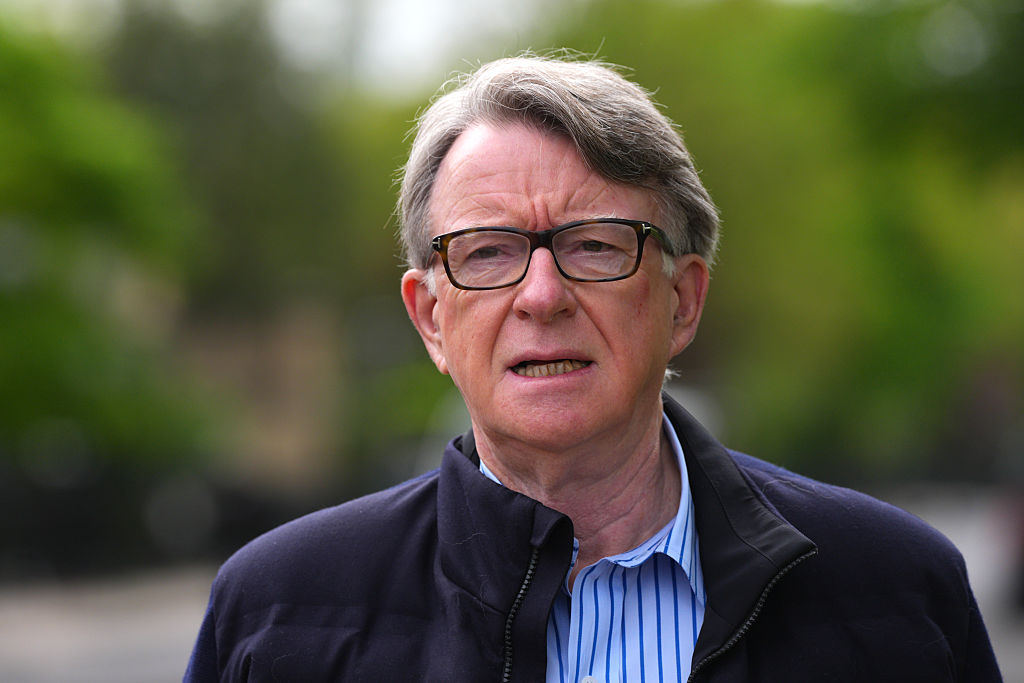
I have just been contacted by a source who knows much more about what happened with Peter Mandelson’s vetting. It supports the case that I made in my summary of the case last night and Sam Coates made in his thread yesterday that the crucial decision was Keir Starmer’s political decision to appoint him. In essence, Oliver Robbins – the top civil servant who overruled Mandelson’s failed security vetting – was rubber-stamping a decision which had already been made.
Things are much less clear cut than Downing Street has been claiming for the last three days
I have heard too from an ally of Mandelson who believes Robbins’s dismissal was “egregious” for exactly the reasons which follow.
Some in Whitehall naturally objected to a political appointment from the outset but by no means everyone in Whitehall did so. Many saw the point of appointing a political heavyweight (who might win a trade deal, get the planned ceding of the Chagos Islands to Mauritius over the line and help negotiate a UK-US technology deal). In so far as his relationship with Jeffrey Epstein was concerned, the rationale was that it was unlikely to be any impediment to him getting on with Donald Trump. This, in summary, is what Starmer and Morgan McSweeney, Starmer’s then chief of staff, concluded but it is not an explanation which the prime minister has advanced since.
As far as the vetting is concerned, there were two phases, one conducted by officials and the second by UK Security Vetting, an independent organization. Robbins was only around for the second phase, the conclusions of which leaked on Thursday.
A source who knows what happened explains:
DV [developed vetting, which determines whether the subject gets security clearance] is a process not an event, it raises red flags which are then ironed out by mitigating decisions which are the responsibility of the sponsoring department (FCDO) to apply. It is not pass or fail like a driving test. And by law it is a confidential process held close by a very few professionals in Whitehall.

This is the key bit:
At the end of the process, clear mitigations (in Mandelson’s case concerning his prior private sector work for Global Counsel not anything to do with Epstein) were proposed and accepted by him and subsequently implemented.
The ironing out process worked and Whitehall arrived at agreement about the mitigations. There was therefore no need for Robbins to raise anything with Starmer or seek to reverse Starmer’s decision to appoint Mandelson – a difficult thing to do in any circumstances given that the appointment had already been announced.
It would only have been necessary for Robbins to go to No. 10 if it had NOT been possible to agree and put mitigations in place. So, as far as I know, Robbins followed the system and applied the law.
The key point here is that the things red flagged by UK Security Vetting had already been raised by officials and restrictions put in place on what material Mandelson could handle. Not only had Starmer overridden concerns, Downing Street was clearly aware of what they were and had put in place restrictions to deal with them. The fury which seems to have seized Starmer this week only makes sense if he is being disingenuous or forgetful.
There has been a suggestion that Mandelson’s security clearance was limited. My understanding is that the mitigations put in place did not involve limiting STRAP level Top Secret material on Russia and China, where Mandelson had business interests. Instead, the restrictions related to specific former clients. Mandelson’s deputy head of mission in Washington had to have knowledge of or supervise contacts with those clients.
On this basis things are much less clear cut than Downing Street has been claiming for the last three days.
The Mandelson ally says of Robbins: “His sacking is egregious.”





Comments