Venezuela’s deposed president, Nicolás Maduro, never enjoyed the charisma or genuine popularity of his predecessor, “El Comandante” Hugo Chávez. So all the murals, billboards and installations dotted around Caracas urging the release of the 63-year-old statesman – along with his wife Cilia Flores – from American captivity, don’t exactly feel like a grassroots effort.
“Bring them home!” reads one mural, evoking the Israeli hostages kidnapped by Hamas. Meanwhile, a stopwatch installed in Caracas’s Bolivar Square counts how long it has been since the presidential couple were abducted by the US army in early January. Maduro currently resides in the Metropolitan Detention Center in Brooklyn – a notorious New York jail that has also held Luigi Mangione, Ghislaine Maxwell and the disgraced rapper Diddy – awaiting trial on charges of narco-terrorism and conspiracy to import cocaine.
When a team of American commandos snatched the leader – a carefully planned operation rehearsed using a replica of Maduro’s safehouse – many in the Venezuelan diaspora were overjoyed: finally a tyrant getting his comeuppance, they thought. For 13 years, Maduro clung to power by fabricating elections and terrorizing his opponents, all while the economy spiraled out of control under his terrible mismanagement. A quarter of Venezuelans are believed to have fled abroad.
Trump is still determined to reassert America’s might over the Western hemisphere
“People are much happier now,” the Venezuelan repairing my laptop in Quito, Ecuador, told me before my trip:
Most of my friends left the country, went to Europe, to Spain, to England, to whatever place you can imagine in the world. Ninety percent of my friends are now outside [Venezuela] because it was very difficult to survive in a country that was practically in a civil war. But now I’m thinking of going home for the first time in ten years.
“We love it,” a young nurse in Caracas said of the raid:
It was the only way [Maduro] would leave power. Now [the government] will do what Trump says; they won’t decide on their own, they’ll follow instructions. So I hope things will get better soon.
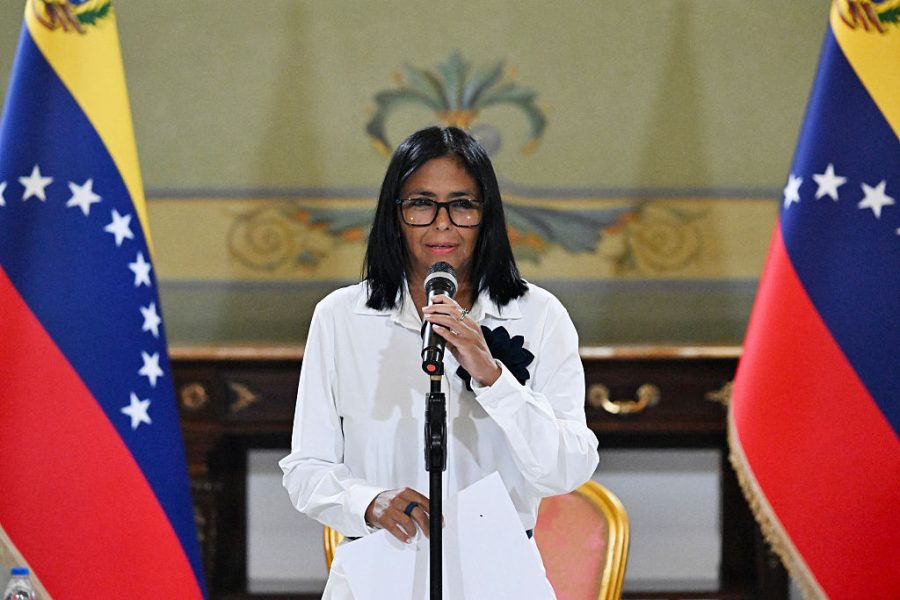
But the United States did not carry out regime change: in fact, the very same ugly mugs who were running Venezuela under Maduro are still in charge. The ruling clique had reportedly struck a secret deal with Trump’s administration to stay in power once Maduro was removed. His deputy Delcy Rodríguez has taken the reins of acting president. Originally only supposed to serve a 90-day transitional tenure, she’s now getting comfortable, surrounding herself with loyalists. Others were promoted, including the military officer Gustavo González López – dubbed by some “Venezuela’s chief torturer” – who has now been appointed defense minister.
Alejandro, a 32-year-old call center worker from Maracay, a short drive southwest of Caracas, has no particular love for the Maduro regime: he was once tortured with a plastic bag over his head for refusing to unlock his phone after police suspected he was at a protest (Venezuelan police are infamously brutal, at one point being responsible for more than one in five homicides in the country). But neither does he harbor any illusions about Team America swooping in to save the day.
“They just wanted to get rid of him [Maduro] so [Trump] can get the oil,” Alejandro said thoughtfully:
We’re still waiting for something to happen because until now, we haven’t seen any change in the economy. There are still a lot of problems with lights, electricity that they’re not taking care of.
As if to emphasize his point, a blackout occurred in our area the very next day.
The United States is effectively now in charge of Venezuela’s oil revenue. Donald Trump’s executive order requires it be deposited with the US Treasury solely to purchase American products, while state profits can only be reinvested with Washington’s approval. Hugo Chávez, a die-hard opponent of yanqui imperialismo who once called George W. Bush “the devil himself,” must be spinning in his grave.
Although there’s hope that US involvement will encourage outside investment, ordinary Venezuelans are yet to see the benefits. In early April, protesters marching on the presidential palace in downtown Caracas to demand raises to their salaries and pensions were met by the usual bully-boy cops and tear gas.
“The average Venezuelan makes around $270 a month, but the price of a basic basket of goods is over $600,” explained Laura Dib, Venezuela director at the human rights advocacy organization Washington Office on Latin America (WOLA). “So inflation is still very, very high, and the situation is really hard to survive on.”
“Maduro was a stupid guy; I hope he will have a long life in jail, but the only difference now is the United States is taking our oil for free,” said Diego, a student in Caracas. “Everything else is the same: bad salary, bad economy, bad politics.”
Meanwhile, Trump has put the genuine Venezuelan opposition, led by María Corina Machado, on ice, seeing Rodríguez as someone he can more readily do business with. “We want to have a new election, a truly free election, and that María Corina will try to be our next president,” Diego continued:
She is a very intelligent woman, very nationalistic; she wants to protect our country, for our country to grow up. But this is not happening with Delcy Rodríguez, so we are in the same situation. I want Maduro to stay in jail for at least 30 years because he was a very bad man. Very bad. But we want Delcy in jail too. You were with him for 20 years, and you didn’t know anything? Do you think we are stupid? So yeah, it’s very depressing.
Still, there has been a little progress. Political prisoners have been released, though the process has been somewhat opaque: the government claims to have freed 7,000, but human rights groups such as Foro Penal report only a fraction of that. It’s worth remembering that Maduro, too, freed prisoners en masse when he needed good PR. At least 473 are still detained and the repressive laws remain. Dib said:
There have been several changes that must not be overlooked. For example, with the amnesty laws, human rights organizations went to the National Assembly to provide their observations to the bill, which is something that hadn’t happened in a decade. These organizations were considered enemies of the state. So there has been some opening of civic space… but now the implementation of the law has been a disaster.
If the US does not put democracy or the protection of human rights at the center of this transition, but rather just focuses on economic and geopolitical interests, then as time passes, the window of opportunity [for democracy] also closes.
During the Cold War, the United States backed an array of horrific dictatorships, including the Salvadoran death squads and Batista in Cuba, in the name of fighting communism. Now that ideological component is over (Venezuela remains, at least nominally, socialist), but Trump is still determined to reassert America’s might over the Western hemisphere. Secretary of State Marco Rubio has promised the post-Maduro Venezuela a democratic transition, but for now, Caracas appears to be just another American puppet.


Comments