Over the course of their lives, Americans have an average carbon footprint of 1,300 tons of CO2. Paris Ortiz-Wines, a young woman from San Francisco, has already canceled hers out. She could hop on a flight every week for the rest of her life, eat ribeyes at every meal and sip almond milk all day long, and still be in the clear. Back in 2021, Ortiz-Wines played a key role in the campaign that stopped the closure of California’s only nuclear power plant, Diablo Canyon. This has already saved more than 30 million tons of CO2 emissions.
Ortiz-Wines is part of a new generation of women advocating for nuclear energy, even though surveys show most women are skeptics. Call them the Nuclear Power Rangers. Engineers, community organizers, influencers, even models, they have atomic levels of gumption and are helping move the dial on our most misunderstood energy source. And that’s not an easy mission: there are a lot of villains to blast into oblivion.
Science unequivocally proves that nuclear power is super safe and super clean. But, as Oliver Stone argues in his eye-opening documentary Nuclear Now, it’s been demonized. For decades now, an unlikely tag team has sought to snuff out nuclear energy: oil lobbyists and pro-renewables green activists. The sworn enemies buried the hatchet to take down what each sees as the competition. Do-gooding celebrities, from Jane Fonda to Jackson Browne, joined in too.
As a result, anti-nuclear disinformation has spread far and wide. Nuclear power, we hear, is expensive and unreliable. And, of course, it’s lethal. Accidents like Chernobyl and Fukushima are cherry picked when, in fact, nuclear power has led to fewer deaths globally than wind power, let alone oil or coal.
Today, the atom supplies barely 9 percent of the world’s electricity. Yet every passing day makes us realize how much more of it we need, whether that’s to combat climate change and reach net zero, power AI or achieve energy independence.
True, public opinion is changing, but not fast enough. Nuclear power consistently garners less backing than renewables – and is especially unpopular with women. Polling commissioned by Radiant Energy Group has uncovered a “gender gap.” Across 20 countries, just 26 percent of women are for it. By comparison, 45 percent of men are. Why? Richard Ollington, formerly at Radiant and now at Emys Energy, suggests this might be down to a heightened perception among women that it’s dangerous and dirty.
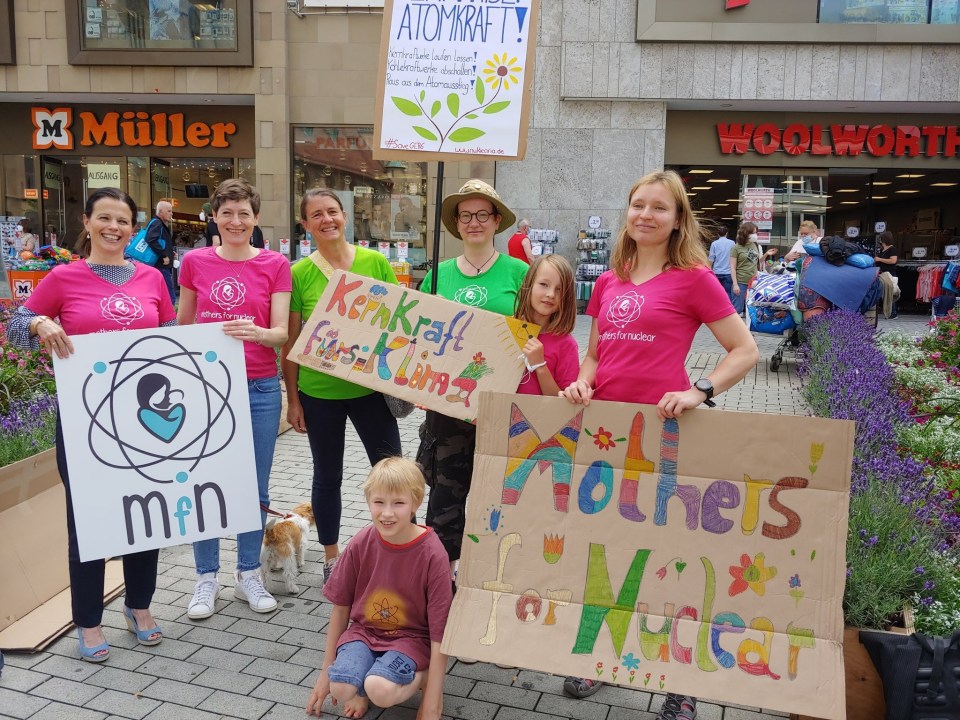
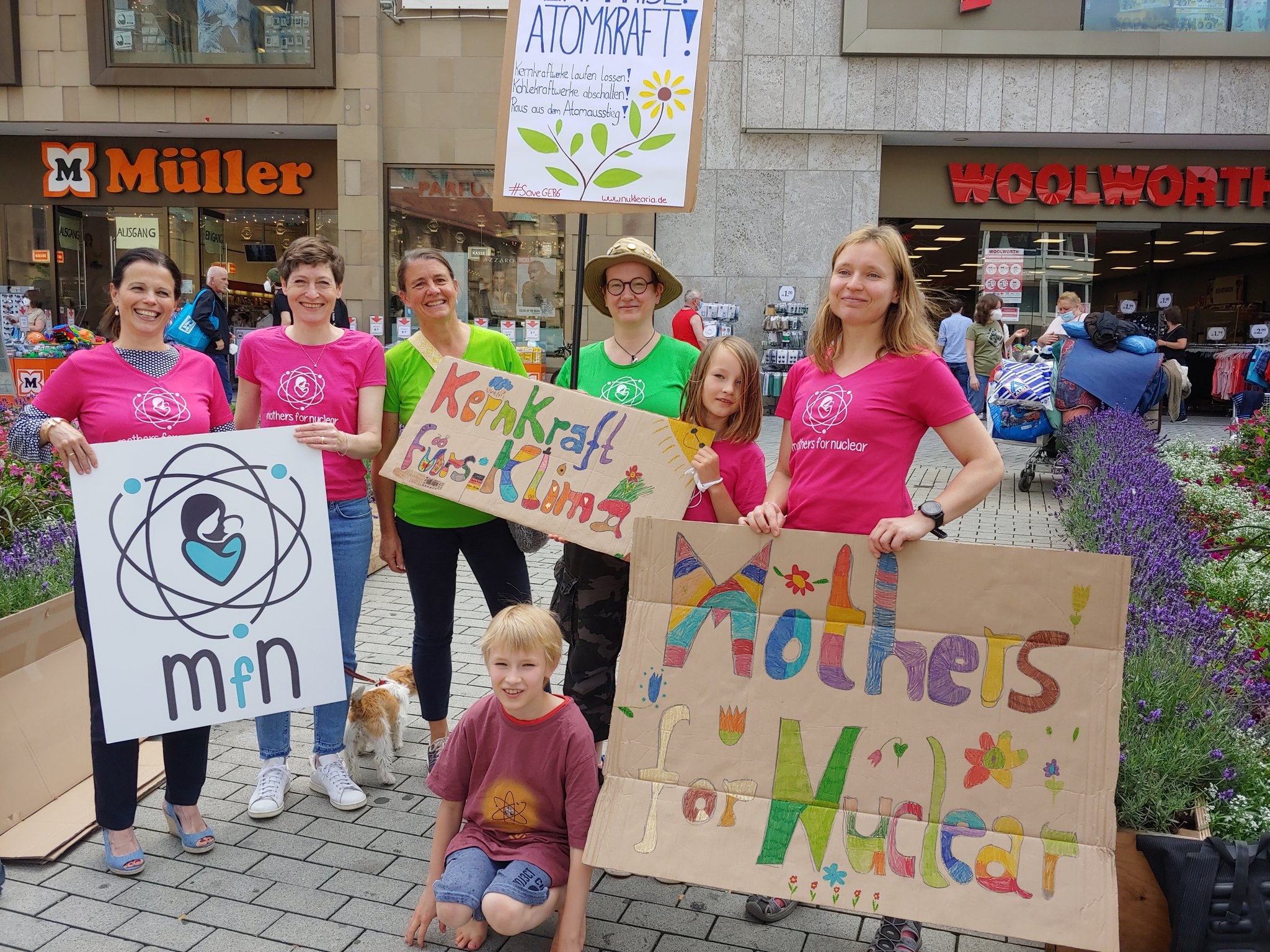
Until recently, the nuclear industry did little to change the narrative. “We didn’t promote the value message,” says Heather Hoff, an operator at Diablo Canyon and the co-founder of Mothers For Nuclear. “It’s been, ‘We operate the plant safely and effectively, and we don’t talk to anyone about it. We fly under the radar.’”
As such, the Nuclear Power Rangers figured they better fly high and perform aerobatics as well. There are, of course, prominent male advocates of nuclear power, but it’s women who are really leading the charge. In a male-dominated sector – only 24 percent of employees worldwide are women – this might sound counterintuitive. And yet, just like in Silicon Valley, it’s often outsiders who disrupt ossified industries.
Hoff started Mothers For Nuclear in 2016 with her Diablo Canyon colleague Kristin Zaitz because “our industry wasn’t good at communicating with women.” When the two learned that California authorities were decommissioning Diablo Canyon, they realized they had to step up. “We have, like, half our population that doesn’t support nuclear,” she remembers them thinking. “If we boost that up, we’re good to go!”
To that end, Mothers For Nuclear crafted an uplifting message: nuclear power will usher in a bright future. “I have this hope that, by supporting nuclear, that’s like the root of everything,” Hoff says. Ortiz-Wines, who has spearheaded pro-nuclear campaigns in 32 countries, concurs. “Nuclear in general provides more societal benefits. And if we have healthy societies, that means we can have healthy humans.”
For the Nuclear Power Rangers, the medium is as important as the message. Take the model Isabelle Boemeke, who also had a starring role in the campaign to save Diablo Canyon. She produces social media content that entertains as much as it informs. In one viral TikTok video, she uses her skincare routine to debunk myths about radioactivity. Or take Jenifer Avellaneda, a nuclear engineer whose online moniker is “Nuclear Hazelnut.” Her posts use pop culture savvy, she tells me, “to make nuclear energy more approachable and more human.”
The Nuclear Power Rangers were initially ignored by the very sector they were trying to boost
It might seem an obvious strategy in hindsight, but the Nuclear Power Rangers were initially ignored by the very sector they were trying to boost. The campaign to save Diablo Canyon, for instance, received no industry funding. Cut to today, and companies are contacting Hoff and Ortiz-Wines for advice. It’s the ultimate form of vindication. “I think that’s huge,” Hoff gushes.
What’s also huge is the vibe shift in climate activism that the Nuclear Power Rangers are heralding. They are optimistic that the planet can be saved. And why wouldn’t they be? The stakes are too high to be mopey. Think of them as the anti-Greta Thunbergs.
The green movement too often resembles a doomsday cult these days. Rather than offering solutions, they offer self-flagellation sessions to keep busy until the Rapture. No wonder that more and more young people suffer from “eco-anxiety.” Ortiz-Wines, who studied environmental science and came up in the environmental movement, can relate. “I felt so hopeless when I learned about climate change,” she says.
The good news is that we can solve the climate crisis if we massively scale up nuclear power. “Nuclear is inherently beautiful,” Ortiz-Wines concludes. “In dark times, when we think everything is going wrong, it is so refreshing to have a vision you can subscribe to.”




Comments