When it comes to Agatha Christie adaptations, there are normally two possible responses to the denouement. One is a deep satisfaction that the unlikeliest suspects were the inevitable culprits after all. The other’s the same as that – except approximately a quarter of an hour later you suddenly find yourself thinking: ‘Hold on a minute…’
But with Agatha Christie’s Seven Dials, neither was the case. The unlikeliest suspects remained laughably unlikely even as their guilt was revealed – and the ‘Hold on a minute’s came not after the show finished, but with pretty much every twist of a plot that, almost impressively, kept finding new levels of preposterousness to scale.
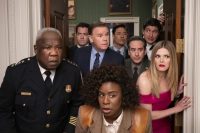
The setting was the mid-1920s – which naturally meant that in a country house, assorted bright young things were dancing the Charleston and exchanging such dialogue as ‘Hello, Bundle’ ‘Hello, Socks’ as their elders looked on with pursed-lipped disapproval.
The following morning, one of the BYTs was found dead, an empty bottle of sleeping draught beside his bed. So had he committed suicide? The answer was, of course, no – although the only person who thought he hadn’t was his soon-to-be betrothed, Lady Eileen ‘Bundle’ Brent (Mia McKenna-Bruce). And with that, she set about unearthing the truth, despite being constantly advised to leave it to the professionals/understand this was no job for a woman/not be so silly by everyone she met. Oddly, it was advice she failed to take, opting instead to reduce her advisers first to head-shaking exasperation and then to head-shaking admiration, with the not-very-sub subtext of virtually every scene being ‘What a girl!’
Deploying her dimples to great effect, Bundle also bagged an invitation to a top-level government meeting where the guest of honour was a Cameroonian scientist who’d developed a formula to make steel indestructible, thereby apparently putting an end to war. But only if the formula was in the hands of the good guys (i.e. the British). Should the bad guys (i.e. some foreigners) get hold of it, the outcome could be ‘catastrophic’.
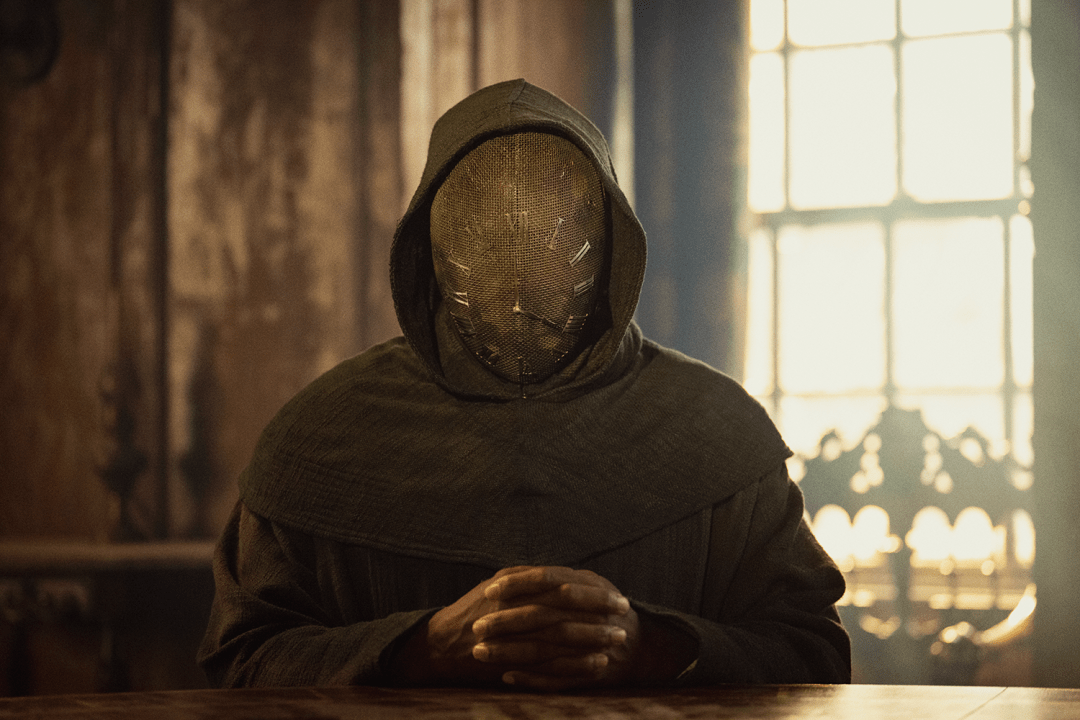
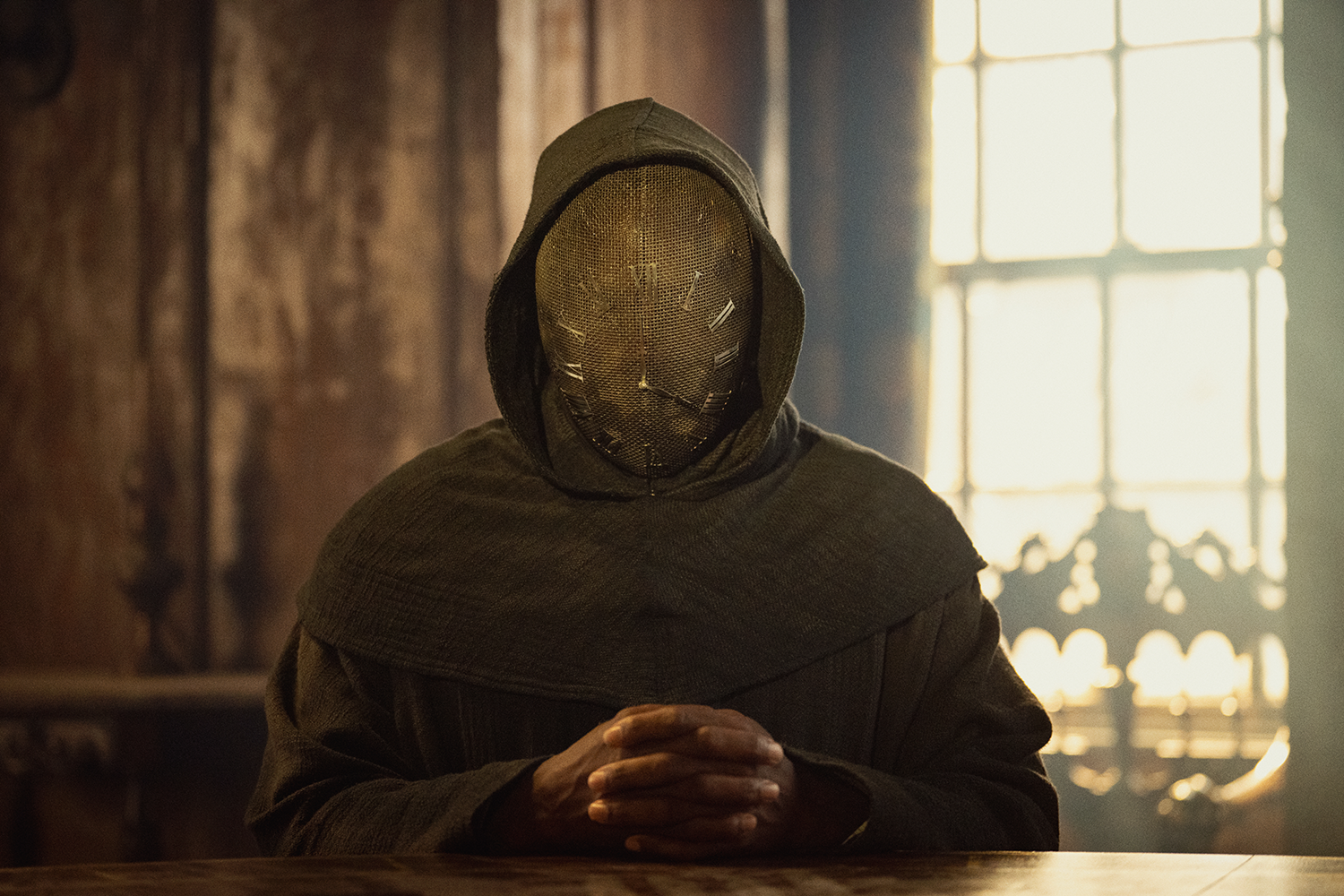
Meanwhile, Bundle had also discovered the existence of a secret society called the Seven Dials. Using such old-school methods as peering through keyholes, picking locks with a hairclip and hiding in handily located cupboards, she learned that its cloaked members sat at a round table plotting away – and, even though they met in private, wearing clock masks.
But Bundle’s skillset didn’t end there. She could also drive fast in car chases, handle a pistol and lay out blokes a foot taller than her with a single left hook. Several Mexican stand-offs later (guns seemingly being as common in 1920s Britain as in the Wild West), those wildly implausible culprits were exposed.
In the circumstances, it was again almost impressive that the programme managed to keep a straight face, for all the world as if it were a properly clever conspiracy thriller – rather than, say, a farrago of nonsense. McKenna-Bruce made Bundle an undeniably appealing heroine, and had solid support from Helena Bonham Carter as Bundle’s ineffably haughty mother and Martin Freeman as the enigmatic Superintendent Battle. Yet, for all their efforts, this was still the worst Christie adaptation I can remember. Certainly, no rope has ever been made that’s strong enough to support the amount of disbelief we needed to suspend.
Early on, a suitably stereotypical Northern industrialist explained that money can always buy class. This lavish production, visibly dripping with Netflix cash, proved how wrong he was.
According to the makers, Game of Thrones prequel A Knight of the Seven Kingdoms, is intended to be a sweeter, more light-hearted show than the original – and after one episode it already looks likely to pull off that not terribly difficult task.
Peter Claffey plays Dunc, the squire of Ser Arlan of Pennytree until just before the programme began with him burying his dead master and wondering what to do next. In the event, he plumped for pretending that Ser Arlan had recently knighted him and heading to Ashford for a tournament he hoped would make his fortune. En route, he met young Egg (Dexter Sol Ansell), a surprisingly posh stable boy, who he’s now made his own squire.
Granted the light-hearted stuff does feel a bit effortful: Dunc, for instance, is very tall and so keeps humorously bumping his head on door lintels. Nonetheless, he’s definitely quite sweet as his navigates his wide-eyed, innocent-abroad way through sneering bullies, cackling wenches and the kind of drunken feasts where everybody roars with laughter for no obvious reason while chomping on chicken legs.
As with Game of Thrones, the dialogue is a deft mix of olde English and modern slang and the cinematography unfailingly sumptuous. But, as with Game of Thrones too, I can never quite suppress the heretical thought that, underneath the surface swagger, it essentially consists of the purest corn.

Comments