Game of thrones

A triumphant adaptation of Game of Thrones

From our UK edition

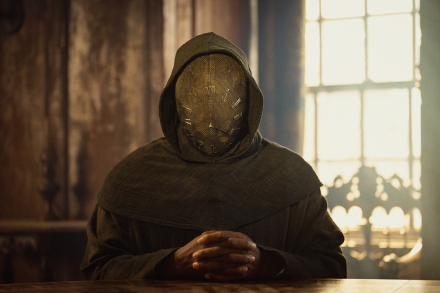
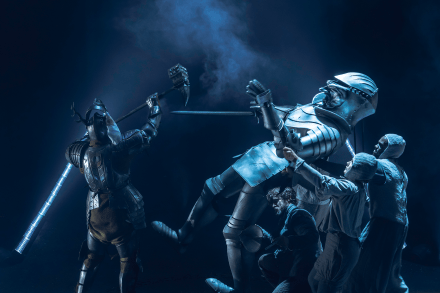
Wasn’t it Philomena Cunk who first observed that Shakespeare’s greatest work is Game of Thrones? She had a point. When I told friends that the Royal Shakespeare Company was adapting George R.R. Martin’s saga for the stage, the GoT fans lit up. The non-fans were incredulous, and not in a good way. Now Game of Thrones: The Mad King has landed, nearly four hours of it, and it represents a gamble for the RSC. Nearly a decade after peak Thrones, a vast inbuilt audience can no longer be assumed. This new stage version needs to please both camps if it’s to become the money-spinner that the company clearly (and justifiably) intends it to be. I’d like to imagine that I’m the target audience.
George ‘R&R’ Martin takes it easy

Now that the Stranger Things disappointment has died down – slightly – George R.R. Martin and his merry band of Game of Thrones cohorts have recaptured attention in what we must call the Thrones universe. After the warily positive but underwhelming reception that the major spin-off House of the Dragon received, A Knight of the Seven Kingdoms’s six-episode offering is in a lower key than either of its forbears. No dragons, no enormous battles, no big stars, just a small-scale relationship drama focusing on the hapless “hedge knight” Ser Duncan the Tall, aka “Dunk” and his child squire, Egg, whose origins are rather less lowly.

george r.r. martin knight seven kingdoms

The worst Agatha Christie adaptation I can remember

From our UK edition

When it comes to Agatha Christie adaptations, there are normally two possible responses to the denouement. One is a deep satisfaction that the unlikeliest suspects were the inevitable culprits after all. The other’s the same as that – except approximately a quarter of an hour later you suddenly find yourself thinking: ‘Hold on a minute…’ But with Agatha Christie’s Seven Dials, neither was the case. The unlikeliest suspects remained laughably unlikely even as their guilt was revealed – and the ‘Hold on a minute’s came not after the show finished, but with pretty much every twist of a plot that, almost impressively, kept finding new levels of preposterousness to scale.

First came the dire wolf – the wooly mammoth is next

With all the insane news this week surrounding President Trump’s tariff and trade drama, only one non-political story was significant enough to break through the news cycle: a Texas-based company called Colossal Biosciences has bred three dire wolves and is currently keeping them in a secret 2,000-acre natural habitat somewhere in the United States. That’s right: dire wolves. An extinct species. A beast so mythical that we only really know of it from Game of Thrones. In fact, as we learned in an interview with a comic book magazine, Game of Thrones creator George R.R. Martin has even visited the dire wolf reserve. There is a non-AI-generated photo of him online cradling a dire wolf pup and weeping tears of joy.  Immediately, skepticism blew up online.

What is the point of the George R.R. Martin extended universe?

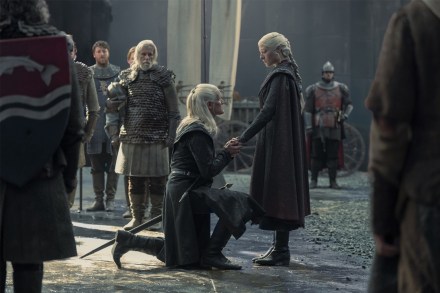
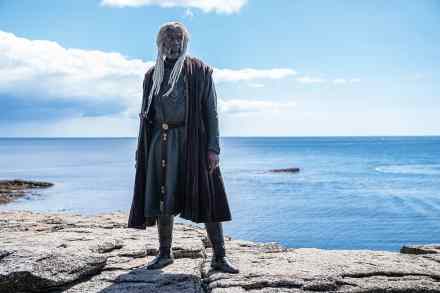
And so House of the Dragon has come to the end of its second season. It is fair to say that, for all the intrigue and fruity British character actors on screen (first place as far as I’m concerned: the great Simon Russell Beale as Ser Simon Strong, “the only gentleman in an ungentlemanly world”), the series is still finding its feet and has yet to provide the visceral thrills that might be expected of it. As my esteemed colleague Matt McDonald described it, “the second season was basically all foreplay. The first season ended with ‘wow, they’re about to fight some dragons.’ Then this season ends after one dragon fight and the promise ‘oh wow, now they’re really going to fight some dragons.’” There are undoubted improvements in this more confident second outing.

house dragon george r.r. martin

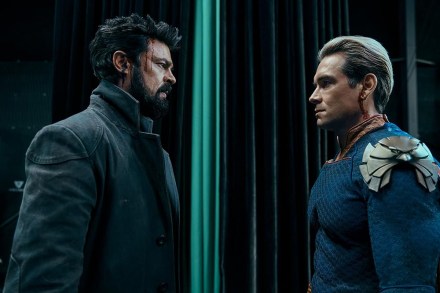
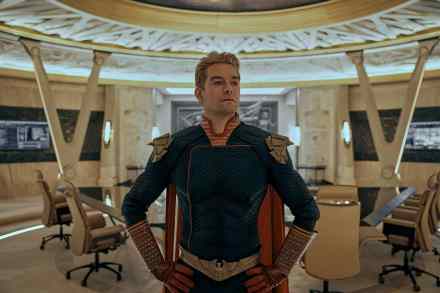
The Boys is empty shock value

Some shows, like Game of Thrones, are only great so long as they stick to their source material. Others succeed by respecting the lore and cannon of a beloved novel or comic, but tell an original story in that universe. HBO’s Watchmen is the pinnacle example of this; however, the first season of The Boys may be the only show that succeeded precisely by not being like its source material. The Boys comics shares Watchmen’s premise of exploring an alternative reality where superheroes are real; but whereas Alan Moore considered this premise richly, and opposed the concept of superheroes on philosophical grounds — against the worship of power and great man theory of history —  that isn’t so for Garth Ennis.

boys

This month in culture: June 2024

The Fall Guy In theaters now Ryan Gosling’s career is rather bizarre if you think about it, from drippy romcom protagonist in The Notebook to brooding car noir hero in Drive to laughable failure in The Nice Guys to musical star in La La Land and Barbie. Now he takes a stab at renewing his hardass ways in The Fall Guy, an adaptation of Lee Majors’s 1980s series which pairs him with Emily Blunt and is, in a way, an homage to the careers of “stars who do their own stunts” even if Gosling does not do so himself. There’s even a stunt show planned for Universal Studios’ Hollywood theme park based on the movie, prior to its release.

culture

Shōgun will be your new favorite show

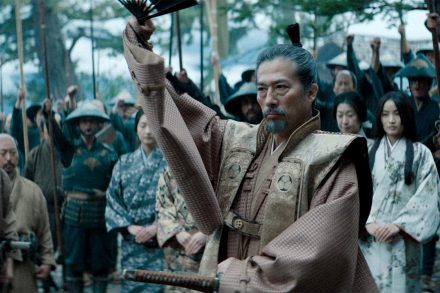
Since the vast success of Game of Thrones, every streaming service has tried its best to come up with an epic series that will be held in the same estimation as the earlier seasons of Thrones. (The HBO flagship drama's rise was rivaled only by the rightful contempt in which the final series is still held, which one day will be the subject of a genuinely jaw-dropping long read or book.) There have been some close calls (House of the Dragon, Outlander), some misses (Lord of the Rings) and a couple of outright horrors; I doubt that you could pay me, or anyone else, to sit through the diabolical Wheel of Time again. But now Hulu has finally joined the action, with an apparently unlimited budget, to adapt James Clavell’s much-beloved bestselling 1975 novel Shōgun over ten episodes.

shōgun

Can The Crown redeem itself in its final hours?

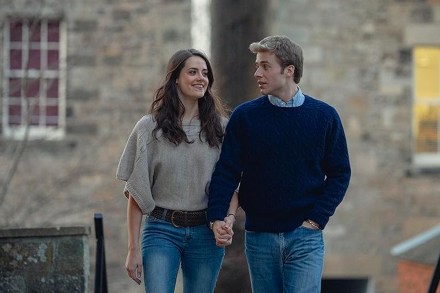
Netflix’s royal saga The Crown has been one of its biggest hits of the past few years. Sacrificing subtlety for big, dramatic arcs, with award-winning performances by a cast that has, in a stroke of genius on the part of its creator Peter Morgan, changed every two seasons, it’s been the most gripping and rich account of the post-war British royal family ever put on screen. It has been helped both by an enormous budget and the useful way in which the present-day battles between Prince Harry and Meghan Markle and the rest of the Firm have come to mirror The Crown’s increasingly eventful power struggles among the various branches of the family.

the crown

Dungeons and Dragons makes a comeback in theaters

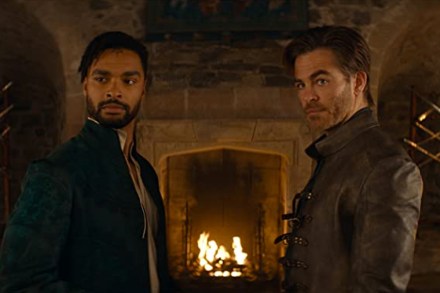
I have a confession, or perhaps a boast. I have never played the roleplaying game Dungeons and Dragons, and now, at the grand old age of forty-one, I doubt I ever shall. But there’s no doubt it’s a cultural phenomenon that has long since transcended any suggestion of being the preserve of adolescents, literal and overgrown alike. Since it was created in 1974, sales of the game have grossed billions, and it has been played by tens if not hundreds of millions of people worldwide. To be an aficionado is to find yourself in broad company — but how does that translate at the movies?  The first answer to this question came in 2000, when a film that starred Jeremy Irons as the villainous Mage Profion was released in cinemas.

dungeons

Shaping up nicely for some truly epic bloodletting: House of the Dragon reviewed

From our UK edition

House of the Dragon got off to a pretty uninspirational start, I thought: no major characters brought to a shocking and premature end; no bone-chilling spookiness like that White Walker opening scene in the frozen woods; far too much dreary, half-inaudible talking round long tables in ill-lit halls. If this hadn’t been the long-awaited prequel to Game of Thrones, I doubt I would have bothered watching the second episode. But I did and guess what? More dank, chiaroscuro interiors; more old men out of Shakespeare history plays mumbling into their beards; more complicated, almost-impossible-to-follow-unless-you’ve-read-the-books disquisition on inheritance, lineage and succession.

House of the Dragon: So far, so unexciting

From our UK edition

About halfway through the first episode of House of the Dragon I found myself squirming in my chair, covering my eyes and muttering ‘Why the hell am I watching this vile schlock?’ I think this is probably a good sign. One of the main attractions of its predecessor Game of Thrones was that it kept taking you to places you didn’t want to go – incest, crippled children, mass murders at weddings, sacrificial daughters, lead characters culled long before their time – and on this score at least, House of the Dragon looks unlikely to disappoint. But I’m less sure, so far, about the court intrigue.

Game of Thrones was the last water cooler show

I realize this is an unpopular opinion, but I actually didn’t hate the ending of Game of Thrones. Sure, the showrunners fumbled some of the character arcs and made some odd decisions (King Bran? Really?). But the broad thematic arc of the series was perfect. Daenerys’s dark turn into madness and mass murder and the subsequent destruction of the Iron Throne served as a hopeful proclamation that, even in our bloody, jaded, pornified world, the true faith lives on. The show understood, on some level, that neither the ideal redistribution of power nor its unfettered aggrandizement could ever be our salvation. Martin made his name as the anti-Tolkien, but it was all a ruse. If his intentions were truly insidious, his story would “look fairer and feel fouler.

The quiet end of the Golden Age of television

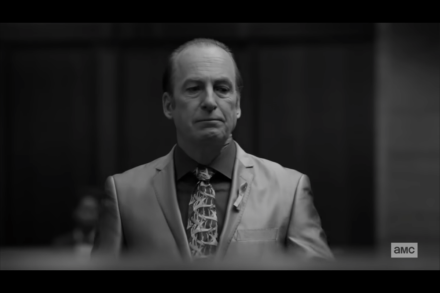
This week's finale of AMC's Better Call Saul represented a quiet end to the Golden Age of Television. It's a fitting end for Prestige TV — marked by lavish sets, sex, violence and episodes as expensive as feature films — to end with a small black-and-white ode to a spin-off. Bob Odenkirk's performance as Jimmy McGill/Saul Goodman, a pivotal bit character in Breaking Bad a decade ago, was marked by over-the-top colorful courtroom flair, but it ends with somber black-and-white drama and a quiet prison cell, serving almost as a muted on-screen act of penance for all that came before.

prestige tv golden age television better call saul

The sad decline of my one-time favourites

From our UK edition

I don’t think it’s my imagination: it really is getting harder and harder to find anything worth watching on TV. But then, why should it be otherwise? Entropy has afflicted every aspect of our culture from holiday flights to the supply chain to the efficacy and integrity of our political and legal system to the quality of pop singles, so we should hardly be surprised if the quality of material on the gogglebox has taken a dive too. One metric of this is the decline in quality of long-running TV series. Game of Thrones was not the exception but the rule. Even the series I sometimes consider to be the best thing ever on TV – Sky’s Gomorrah – became simply unwatchable by its fifth and final season.

Latest proof that western civilisation is over: Sky Atlantic’s Domina reviewed

From our UK edition

I’ve been looking at the reviews so far of Sky’s new Romans series Domina and none seems to have noticed the most salient point: it’s crap. This is almost more depressing than the fact that the series got made in the first place, for what it suggests is this: our culture is now so debased that even our arbiters of taste can no longer tell the difference between quality and mediocrity. Domina follows the story of Julius Caesar’s great-nephew Octavian, from when he was a member of the triumvirate to his apotheosis as Caesar Augustus. You’d think you couldn’t possibly go wrong with such fascinating historical material, rich with gore, scheming, politicking, backstabbing and will to power. But Domina says: ‘Hold my cervisia!

A time for Ice and Fire

No one likes to watch television with me, because I am that sick pedant who delights in pointing out anomalies and plot-line errors, never more so than when the show in question is connected in some way to a cherished book. That’s when my pedantry enters an almost superhuman phase, as I educate the room about literally every single deviation from the original literary source. HBO’s Game of Thrones series was an absolute gold mine in this respect, because it came out just after I’d finished devouring the books in George R.R. Martin’s epic series. If you haven’t read those books, you should do so now — as you may never again have this much spare time on your hands.

a song of ice and fire

Instagram is ruining tourism. Could fandom save it?

It was shortly after noon on a Sunday in Edinburgh, and I was attempting to remedy my jet lag at the local BrewDog outpost with a pint of sour ale and a large helping of pizza. I’d flown in on the red-eye from New York to attend a conference, hadn’t had much sleep, and initially thought I was hallucinating when I saw that one of the few other patrons in the bar was a notably tipsy woman wearing wizard robes, waving a wand around as she talked to her drinking companions. They were, I noted, red and gold robes: Gryffindor. (Professor Minerva McGonagall, Gryffindor House’s notoriously strict faculty overseer, would be unlikely to approve of such drunken behavior in public.

fandom tourism

Daenerys did nothing wrong

YASSSSS! SLAY KWEEEN! [insert several hand clap emojis here] After a two-week break at a Tantric Orgasmic Virtue Eco Retreat in the Yukon, I finally got around to watching Season 8 of Game of Thrones. I had heard that people were disappointed at how it ended to the point of creating a petition to change the results very much like Brexit, and I have to say, I was not in the least bit disappointed at not being disappointed. One thing that confused me however, was the way that many influential social justice bloggers were angry at how the character of Daenerys was portrayed. They accused the show of falling into the sexist trope of a woman being mad and hysterical, claiming that the writers had ‘failed women’. In my opinion that could not have been further from the truth.

daenerys

The blistering bathos of Game of Thrones

The fans had been waiting months to hear the end of the story. It was the only story in town, the only story in every city, in every corner of the nation – the most important story in the world. They were desperate, needy and impatient to know how it ended: they were fans. Rumors said that a boat from England would bring the final installment of Charles Dickens’s The Old Curiosity Shop to America. Crowds of fans gathered at the docks in New York, or perhaps in Boston. It was true. There was a boat. A great hush spread among the crowd. At once the solitary figure of the packet’s captain appeared on deck. As the boat grew ever closer to the shore a dreadful noise began to stir amongst the fans. The captain, overcome with emotion, had tears streaming down his face.

game of thrones seven hells expect