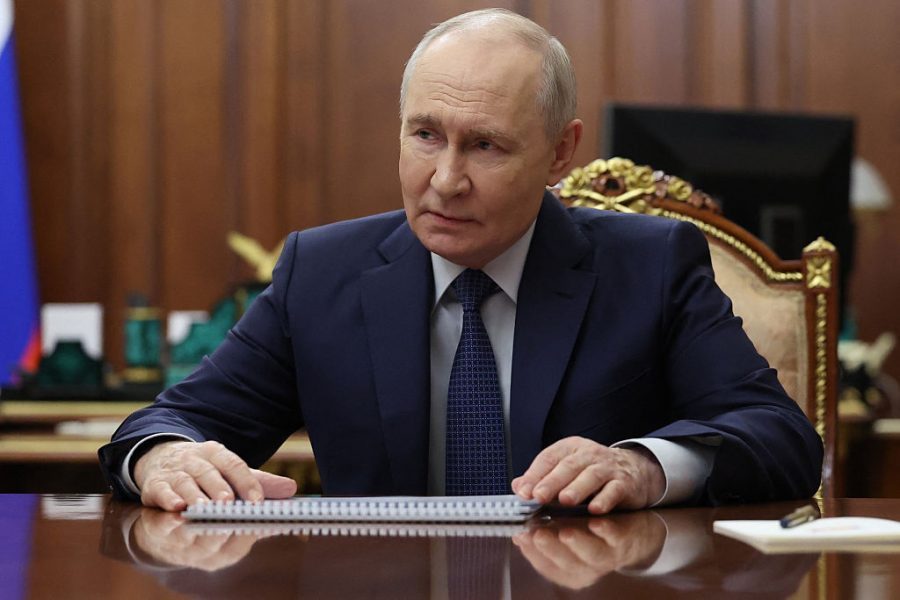
Boris Johnson is right. The West’s ‘half-heartedness’ and ‘irresolution’ are to blame for holding Ukraine back and convincing Russia’s Vladimir Putin that he can win.
Still parroted by the current administration is the slogan popularised by Johnson: Britain stands with Ukraine ‘for as long as it takes’. But what does that mean? Does it mean Britain is willing to stand with Kyiv until it has restored its 1991 borders, including Crimea, the eastern and southern regions illegally occupied by Russia? Or does it simply mean liberating the eastern regions and forgetting about Crimea?
Everyone should be championing the former, and there is no question we are in this fight to help liberate Ukraine from Russian aggression. To paraphrase the Prussian general Carl von Clausewitz, however, no rational actor conducts war without clearly defining its objectives.
Western leaders have been tiptoeing around Putin’s so-called ‘red lines’. Decisions to provide Kyiv with artillery, tanks and long-range capabilities such as Storm Shadow were delayed because world leaders feared that equipping Ukraine to stay in the fight would drag the rest of Nato into a wider war.
Western leaders have been tiptoeing around Putin’s so-called ‘red lines’
Speaking at the RUSI Long War Conference this week, Johnson confronted the West’s inaction head-on. The former prime minister made a case for deploying European troops to Ukraine immediately in non-combat and logistical roles, miles away from the front line, even before a ceasefire deal has been agreed. Crucially, he also spoke of bringing Ukraine into Nato.
At a meeting of the Coalition of the Willing leaders earlier in the month, discussions were centred around the deployment of an allied multinational force in Ukraine as part of post-war security guarantees. This plays right into Putin’s hands. On countless occasions, the Russian tyrant has said that any foreign troops deployed in Ukraine are unacceptable, claiming that deploying troops suggests the West is not interested in peace.
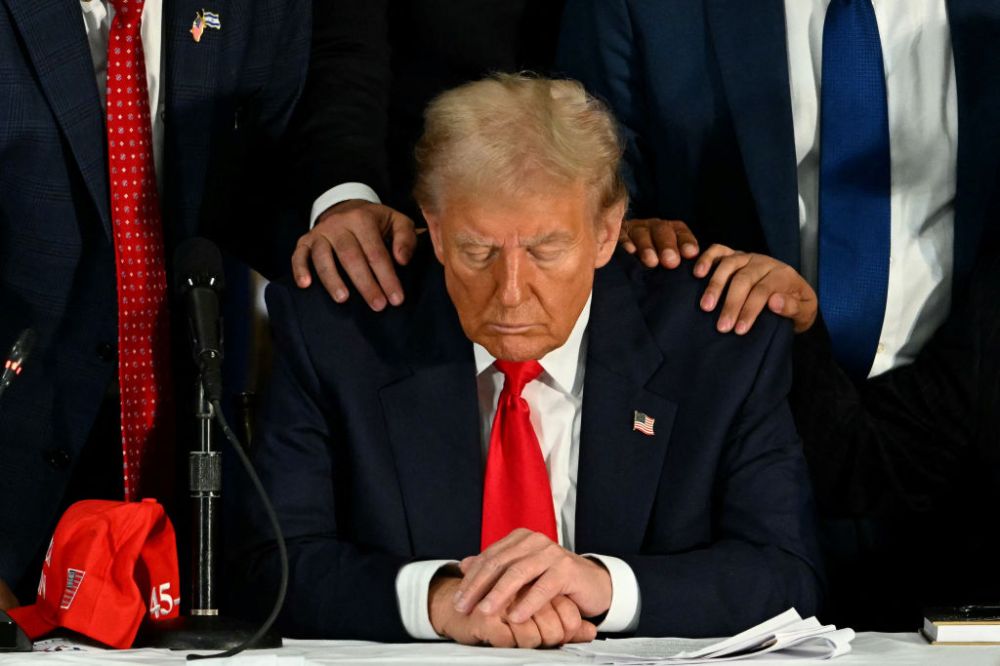
But as Johnson rightly says, who is Putin to say whether or not there should be foreign troops in Ukraine? That’s for the Ukrainians to decide. And ironically, the only foreign army fighting in Ukraine right now is Russian. Allowing Putin to dictate the terms of the conflict is the trap the West has fallen into. It’s up to the Coalition of the Willing, Nato and Ukraine to decide what the correct security guarantees for Ukraine after this conflict are. Putin should not be given a veto.
Putin has been delaying entering any form of serious peace talks, because he believes Western patience will run out and Ukraine fatigue will sink in before Russian manpower is exhausted. And with his friend Donald Trump calling for countries to stop funding Ukraine, Putin is getting exactly what he wants. However, even deploying a small presence miles away from the front lines, centred around training, logistics and backfilling, would flip a switch in Putin’s mind that actually the West is serious. Troops on the ground would commit us to an outcome in a way slogans never have.
Asked whether deploying soldiers to Ukraine, before a ‘peace deal’, risks dragging Nato into a war, Johnson rightly emphasised the fact the alliance is ‘incomparably stronger than Russia’. Moscow is now losing more than 2,000 men a day, and 1.6 million have been killed or wounded since the full-scale invasion began. Nato members have approximately 3.3 million active military personnel compared with Russia’s roughly 1.32 million. The alliance has a range of state-of-the-art combat vehicles, artillery and equipment, compared with Putin’s ill-equipped army, filled with conscripts, convicts and North Korean troops.
An escalation by Putin would not just be reckless but self-destructive. Casualties on that scale and a failure to take Donetsk’s fortress belt, or even all of Luhansk, demonstrate an already overstretched army. A ‘special military operation’ which was supposed to take only a matter of days and in which his troops failed to take the cities of Kyiv, Kharkiv, Odesa or Zaporizhzhia and still couldn’t take the rest of the Donbas. The reality is that Russia is losing tens of thousands of men a month, with very little battlefield success to show for it.
If the Coalition of the Willing wants to live up to its name, then it needs to capitalise on and exploit the weakness of Russia by sending troops to Ukraine now, arming it to the teeth with air defence missiles, giving it the means to strike military targets deep inside Russia, and handing Kyiv the €140 billion (£117 billion) in frozen Russian assets. Crucially, it must also begin talks on when Ukraine will join Nato.
The Coalition of the Willing has a choice. Live up to its name or continue to let Putin decide the terms of peace.



Comments