Tim Stanley

Tim Stanley is a leader writer at the Daily Telegraph and a contributing editor at the Catholic Herald. Tim Stanley’s Whatever Happened to Tradition? History, Belonging and the Future of the West is out now.

Reasons to be optimistic | with Michael Gove, Tim Stanley, Steve Baker & David Goodhart

From our UK edition

40 min listen

Post-holiday depression, failed New Year’s resolutions and battered bank balances: January’s Blue Monday has long been branded as the most miserable day of the year. Headlines warn of ongoing war, political turmoil and economic gloom – but could they be mistaken? Join The Spectator and special guests as they defy the doomsters to deliver an optimist’s guide to 2026. Almost three-quarters of people worldwide believe that this year will be better than the last. Are they right?
primary

A bad primary makes for a worse general election

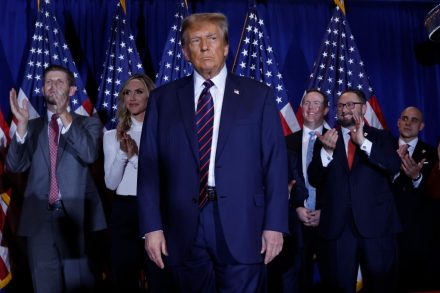
The US primaries are over. Trump whacked Nikki Haley in New Hampshire; if she could win anywhere it was there, and she didn’t, so she’s done. Joe Biden didn’t even bother. The result? The most inadequate, boring primary season in living memory. North Korean elections are more unpredictable than this. For those of us who love politics, primaries are usually more interesting than the November general election. In the general, candidates run to the center; in the primary, they run to the edges, articulating a philosophy and galvanizing its constituency. You get contests of insider versus outsider (Clinton versus Obama, 2008); establishment versus radical (Clinton versus Sanders, 2016).

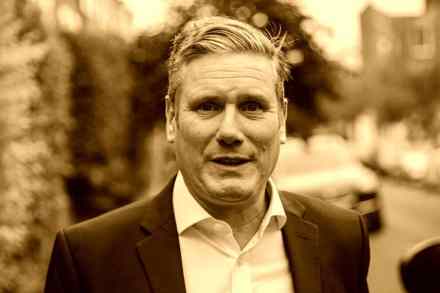
How successful was Keir Starmer’s visit to Washington?

From our UK edition

25 min listen

Freddy is joined by The Spectator World’s deputy US editor, Kate Andrews, and The Telegraph columnist, Tim Stanley, to talk about Keir Starmer’s much-anticipated meeting with Donald Trump in Washington. Across the board, it has been read as a success – at least domestically, that is. The victories include movement on the Ukraine backstop, some positive discussions around the UK avoiding tariffs, and a second state visit is on the horizon as well. The biggest win, though, was the number of compliments that the president gave Starmer, including – puzzlingly – about his accent. The Spectator World’s Ben Domenech secured an interview with Donald Trump after the Starmer meeting, in which he was similarly effusive about the PM: ‘I thought he was very good.

Farage vs Musk

From our UK edition

18 min listen

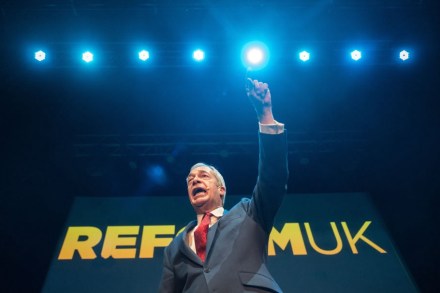
How do you solve a problem like Elon? We have spent much of the past week talking on the podcast about Labour vs Musk, and the tech billionaire’s vocal criticism of how the government is dealing with the grooming gang scandal. But Reform UK are having their own issues with the volatile owner of X. There have been questions over whether Musk could still bankroll the party after he called for Farage to step down following a disagreement over Musk’s support for the far-right activist Tommy Robinson – but in the last 24 hours, it seems the tech billionaire has rowed back a little on his stance and has returned to reposting Farage’s tweets.

JD Vance appeals to trad America

From our UK edition

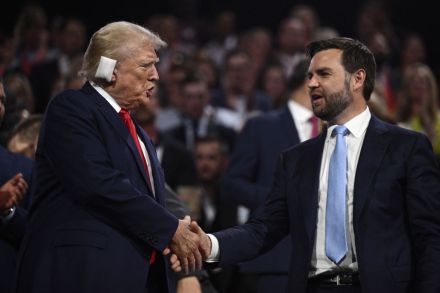
I’m meant to maintain some air of objectivity at Trump’s selection of JD Vance for vice president, but I can’t be bothered. It’s just excellent. By appointing him, Trump guarantees that the Republican party will never go back to being neo-con warmongers run by Wall Street. To channel Kamala Harris, I believe Vance shows us what the Republican party could be, unburdened by what it has been. The biography is well versed – white trash made good, author of Hillbilly Elegy, convert to Trump – but the philosophy is under-appreciated. The first thing to know is that he has a philosophy. How rare is that?!

Would I die for Britain? No thanks

From our UK edition

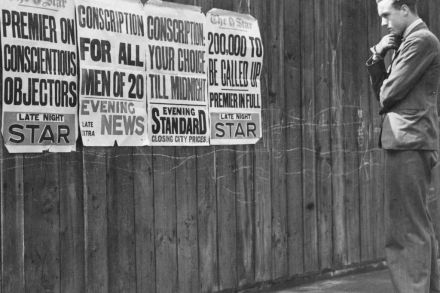
The West’s military posture has moved from ‘thick’ to ‘suicidal’. The recent speech of General Sir Patrick Sanders, the head of the British Army, in which he suggested that Britain needs a ‘citizens army’ to see off Russia, has forced the Government to deny that it wishes to introduce conscription – in advance of a great power conflict that Grant Shapps says is perhaps five years away. The media is casually debating ‘would Britons refuse to serve?’, on the basis that Gen Z is too neurotic to fight. The better question is ‘should we serve?’, on the grounds that our generation of leadership is so staggeringly dumb. What did Phil Ochs sing?

The Pope’s pursuit of relevance is embarrassingly outdated

From our UK edition

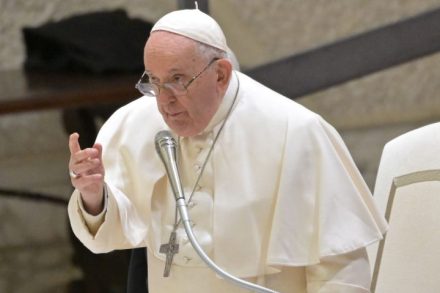
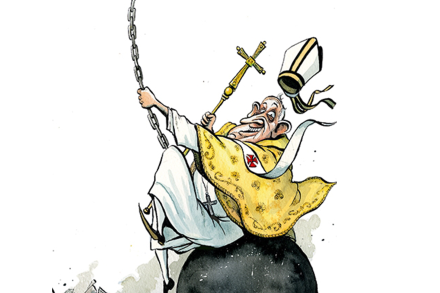
The Pope is old and unwell. In whatever time he has left, he surveys his years as pontiff and counts only failure. What does he leave behind? Collapsing attendance, theological confusion, a few sentimental encyclicals and a positive meeting with Whoopi Goldberg. Francis called a synod and it gave him nothing. So, in a last throw of the dice, he declares that priests can bless gay relationships – sorta, kinda, maybe not. It’s all a muddle. The priest is not blessing the relationship but the partners; it must have no ritual; weddings are ruled out, for the teaching on marriage is unchanged. To effect this fudge, Francis has broken with the spirit of the Second Vatican Council by going over the heads of the bishops to empower the priests to offer the blessing.

What have the Conservatives done for us?

From our UK edition

Assuming this is the Conservative party’s last conference in power, I decided to investigate what kind of country they leave behind. Thirteen years on, are we richer, poor, happier or sadder? I started by asking MPs to name their biggest achievement. No one said ‘the economy’; Ukraine and Brexit were popular. Two replied: ‘Kept Labour out’, which, considering Ed Miliband and Jeremy Corbyn ran the opposition, is low hanging bananas. Nevertheless, ‘winning’ is what the Tories have done best. They slipped into office via a coalition, won a majority, then a minority, and finally a historic victory built on Red Wall seats that had backed Labour since the Norman Conquest. Despite this, it’s tricky to say what they stood for.

The lost shepherds

From our UK edition

40 min listen

On the podcast this week: In his cover piece for the magazine, journalist Dan Hitchens examines whether Archbishop Justin Welby and Pope Francis can heal the divisions threatening to tear apart the Church of England and the Catholic Church. He is joined by Telegraph columnist Tim Stanley to ask whether these two men – once heralded as great unifiers by their respective Churches – can keep their flocks in order. (01:05)  Also this week:  In his column, The Spectator’s associate editor Douglas Murray questions whether the English countryside can be considered exclusionary, after the news that the green and pleasant land will be studied by ‘hate crime’ experts. He is joined by the explorer and broadcaster Dwayne Fields to ask is the countryside racist?

The Union has no substance

From our UK edition

It’s always useful to be told what we’re allowed to think. The news from the Kate Forbes leadership campaign is that you can’t make it in politics unless you swallow sex changes and celebrate same-sex marriage.  Fascinating. Especially since the former is actually very controversial – hence the backlash against the SNP’s gender ID reform – and the latter has only been the law since 2014. Even more interesting is that Forbes’ insistence that she wouldn’t try to reverse equal marriage isn’t enough. She is being pilloried not for her politics – which, in the sense of wishing to separate faith from existing legislation, is quite liberal – but for her incorrect values.  No, it is not enough to tolerate equal marriage.

The Conservatives know they are beat

From our UK edition

The mood at the Tory conference is grim to funereal, and for good reason. They know they're beat. There's a sense that something has changed in British politics and we ain't going back. Labour is revived; the Tories are divided and unpopular. But it's about more than just a 45p tax cut, which was a bad idea, or the U-turn, which was suicidal (if a centre-Right government can't pass a tax cut with an 80-seat majority, it's dead in the water). The reality is that Britain doesn't want what the Conservative party is now selling. Their economic message is actually sound; it's infuriating that they can't seem to articulate it. In short, the west is in decline. We're not productive or innovative enough; too many people are now chasing too few products, most notably energy, causing inflation.

Water woes: who’s to blame for the shortages?

From our UK edition

39 min listen

In this week’s episode:Who’s to blame for the water shortages?James Forsyth, The Spectator’s political editor and Ciaran Nelson from Anglian Water join us to discuss the UK’s deteriorating water supply. (0.29)Also this week: Is it time for some old-fashioned Tory state-building?Tim Stanley from the Telegraph shares his vision for a Conservative future. He’s joined by Annabel Denham, Director of Communications at the Institute of Economic Affairs. (11.19) And finally: What’s behind France’s new sexual politics?Jonathan Miller writes about a new civil war in France between the nudes and prudes. He’s joined by Louise Perry, columnist and author of The Case Against the Sexual Revolution. (23.08)Hosted by Lara Prendergast.

It’s time for Tory socialism

From our UK edition

The Conservative leadership contest has descended into a low-tax auction, which is not a good thing. The implication is that the Conservatives think government should be minuscule at the very moment when private enterprise is letting us down – the energy companies are raking in cash and spending it on stock buybacks – and the state seems to be on its knees. We live in a country where it’s become widely accepted that if you call an ambulance, it won’t show up for several hours; the borders are wide open; social care is under-funded; and the police have ceased investigating certain crimes. If anything, this is a moment to rediscover an older Tory tradition of state-building.

Baby doomers: why are couples putting the planet ahead of parenthood?

From our UK edition

38 min listen

In this week’s episode: Why are a growing number of people putting the planet before parenthood? Madeleine Kearns writes about this phenomenon in this week’s issue and thinks that some of these fears might be unfounded. Tom Woodman author of Future is one of these people that Madeleine’s piece talks about. Tom has very real worries about bringing a child into the world. It's not only the least green thing he could do but also that the standard of living for that child could be severely limited due to a climate catastrophe. (00:47)Also this week: Has Boris Johnson brought Conservatism full circle? That’s the argument Tim Stanley makes in this week’s Spectator. He joins Lara on the podcast along with one of the MPs mentioned in the piece, Steve Baker.

Brexit has ended Thatcherism. And about time, too

From our UK edition

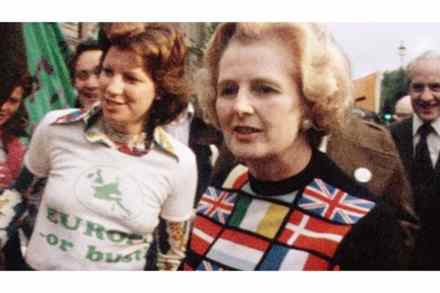
A Conservative government is raising taxes to fund the NHS and telling business to pay its workers more. The world is upside down, and classical liberals are furious. Steve Baker, one of those MPs, tweeted a picture of a pile of books including Hayek, Popper and Von Mises and said ‘This is what we believe’, reminding us of a time when Conservatives sought to shrink the government, not grow it. Until recently, most of us thought Margaret Thatcher and Conservatism were synonymous. We were wrong. While Hayek, Popper and Von Mises are definitely part of the conservative canon, and classical liberals part of the family, they dominated the right at a specific moment in response to specific challenges — i.e. the threat of communism.

How Labour wins

From our UK edition

Labour can win the next election. The winds that blew apart their electoral coalition in 2019 can change in their favour; Brexit has destroyed old certainties but also made anything possible. The party needs first to analyse honestly what went wrong and then conjure up a new, yet old-fashioned progressivism to fix it. The most popular narrative is that Labour was undone by a mix of Jeremy Corbyn and Brexit: Corbyn was too radical and inept; Brexit drove the patriotic working-class into the arms of BoJo and the populist Right.  At this week’s conference, this story will be endorsed by several factions.

Joe Biden and the grand battle of ideas

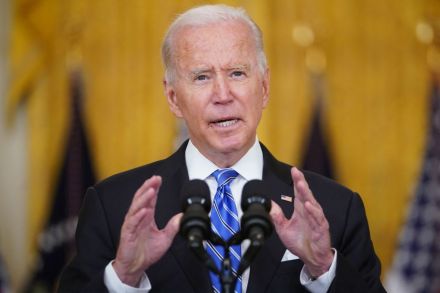
Well, Donald Trump doesn’t seem so bad now, does he? I don’t say that because Joe Biden has turned out to be as competent or less, but because at his press conference in reaction to the fall of Kabul, he sounded Trumpian. By which I mean, honest. Honest that staying in Afghanistan so long was a mistake, that their government was corrupt, that if its army wasn't prepared to defend itself then we shouldn't do it for them, and that this is what a withdrawal looks like: horribly, brutally honest. The endgame was a disaster because America’s intel was wrong, so the US had less time to get out than it thought, and because Biden lacks the acuity to respond to changing conditions. Biden looks like Brezhnev after heart-attack number seven.

biden

Pope Francis is losing his culture war

From our UK edition

Since I wrote about the Pope’s declaration of war on the Old Rite, something unexpected and beautiful has happened. Many bishops have held the line. Far from all: some have gleefully welcomed the opportunity to extinguish the pretty rite, and intellectual justification has come, predictably, from the Jesuits, who haven’t been sound since The Exorcist. But so many other bishops have judiciously, almost seditiously, chosen to interpret the Pope’s instruction to the letter while ignoring its spirit, and given immediate dispensation to the priests who already say it to continue. Others, I'm told, have written or telephoned Old Rite-saying priests to offer personal comfort and reassurance. This is how you quietly turn the tide in a culture war. Ignore the bullies.

The Pope’s merciless war against the Old Rite

From our UK edition

I am going to have to boil this down as crudely as I can, because it's a complex subject with a simple message, but the Pope is attempting to make it as hard as possible to say, and thus attend, the Old Rite Mass. This is the form of Mass most Catholics went to before the 1970s. It was replaced with a New Rite and the Old was driven more-or-less underground. In 2007 Pope Benedict XVI decided that priests who wanted to say the Old should be allowed to. Francis has rescinded that: now you must get the bishop's permission and things will be weighed heavily in favour of the bishop saying no. Why does this matter for Catholics and non-Catholics alike?

What Walter Mondale meant

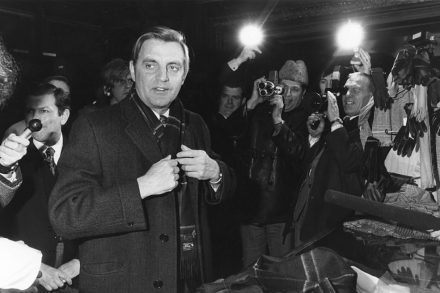
Walter Mondale, who has died aged 93, is destined to be a trivia question: 'which die-hard liberal did Reagan beat by a landslide in 1984?’ That’s unfair. He had brains, looks and a presidential temperament. He was just out of time. Here’s my Mondale anecdote. I interviewed him for my PhD in 2005 at his office in Minneapolis. He offered me a coffee; I said yes, and was then stunned when he got up from his desk and made it himself. This is unheard of in US politics. 'I can’t wait to tell the folks back home that a vice president of the United States made me coffee,’ I said. Mondale sighed. 'Nowadays,’ he replied, 'it’s nice just to have something to do.’ He had a great sense of humor; the problem was it was deadpan and it paled in comparison to Reagan’s.

walter mondale