
There is a wave of books asking how social media platforms shape the stories we tell about ourselves and, through that shaping, what new kind of self they are producing. Megan Garber’s Screen People argues that the language and ethos of entertainment have permeated every aspect of life, so that we now see each other as characters in an ongoing show whose continuity we are responsible for maintaining.
Kathryn Jezer-Morton’s The Story of Your Life, out in August, makes the related case that algorithmic platforms have disciplined what counts as a shareable experience into what Jia Tolentino’s blurb calls a rigid, optimized, phone-shaped norm. I haven’t read either yet, but I’m willing to bet they’re basically right. We think in a televisual frame: Spotify provides the soundtrack of our lives, we accuse people of “main character syndrome,” we reference the invisible “writers’ room” and “seasons” constantly.
If television introduced this framing, then social media fortified it.
We are reaching a grand ending and what’s ending is the deal we’ve been living under for the last 300 years
I think this is the last critique of social media we’re going to get. The era in which we treated our screen-lives as fake is ending. Not because anyone won the argument, but because the objects on the other side of the screen have started to seem like they have interiors of their own – and that pull, I’ll argue, is dragging us back into our bodies rather than further into the feed. In fact, I will say this: social media as we know it is dead. Technology-saturated lives are not.
To see why the narrative-self critique is the last of its kind, it helps to walk through the others. Setting aside the brief moment when everyone thought Twitter was going to democratize the world (remember the Arab Spring?), there is a laundry list of concerns that have swirled around these platforms for 20 years and change. Narcissism, with Jean Twenge and countless cover stories about millennials being “over-wired,” and the changing definition of “friend” thanks to MySpace and Facebook. Jonathan Haidt’s Anxious Generation, the fraying of community. Extraction, governmental and corporate: Edward Snowden, Tristan Harris reframing the apps as casinos, Shoshana Zuboff’s Surveillance Capitalism, the Social Dilemma. Radicalization and polarization – the latter named by Eli Pariser as the filter bubble in 2011 but dominant from 2016, after Brexit and Trump and Cambridge Analytica gave the West something to organize the anxiety around. Stagnation: culture stuck, taste flattened, attention shot, brain rot, the death of the long read, the death of the album. Disembodiment, the extinction of experience. And, more bookish, orality and post-literacy. Finally, how the platforms have altered our self-perception by training us to be the protagonists of an ongoing narrative whose audience is somewhere outside the room. If the novel created the “interior self,” then social media externalized it. We are all making fictions of our lives.
All of these critiques arrive late. Marshall McLuhan said we drive into the future using only the rearview mirror, and that is exactly what these books are doing: naming, now, conditions that have already been the water we swim in for years. By the time a fear gets a hard cover, the formation it describes is usually on its way out. The narrative-self critique is no exception. It’s a description of where the screen put us; it isn’t a description of where we’re going next.
Where we’re going next is the question everyone is now asking about AI. The predictions are stacking up. We’ll log off, which I thoroughly agree with. We’ll retreat into Yancey Strickler’s “dark forests” or other private iterations of the internet, which I agree with too. We’ll become slaves to brain rot, on which the jury is still out.
I’d like to offer another path, though, and it requires a detour through an older book.
Victoria Nelson’s The Secret Life of Puppets, published by Harvard in 2001, makes a historical argument. Western culture officially stopped believing that objects could carry spiritual content somewhere around the scientific revolution, and never actually stopped doing it. The belief got pushed underground, where it kept leaking back into the culture through fantasy and horror and science fiction. The Old Testament prohibition on “graven images” was meant to put a stop to this kind of object-worship, and in our officially secular culture we tell ourselves it has. Nelson argues that it hasn’t – the appetite just lost its sanctioned channels and went looking for unsanctioned ones.
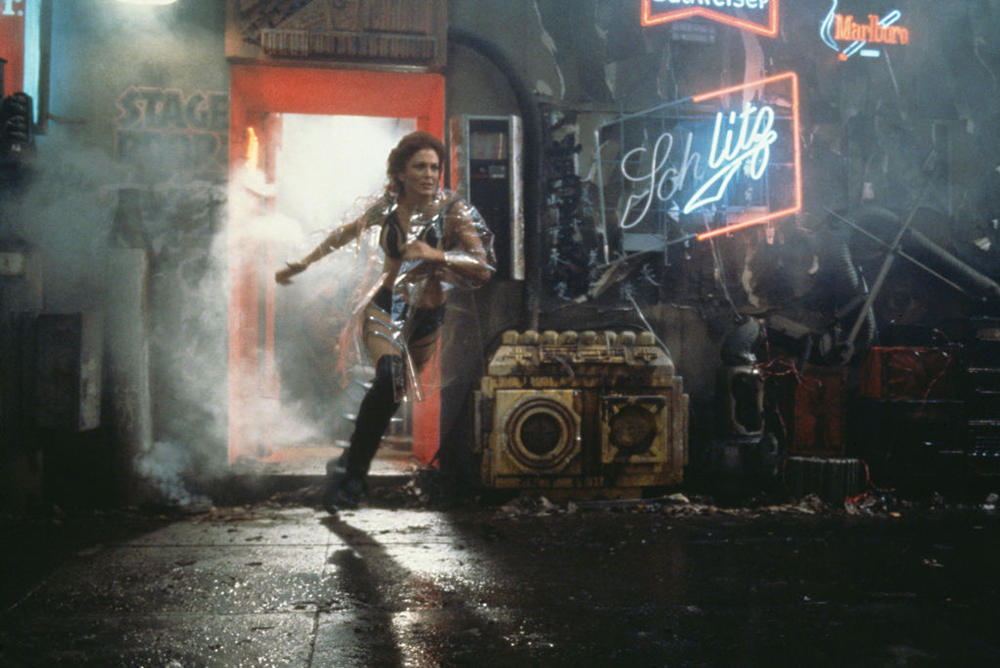
The figure it leaked through most reliably, Nelson shows, was the human-shaped artificial object: the puppet, the doll, the automaton, the cyborg. These figures carry, in her phrase, “the burden of our outlawed but tenacious belief in the holiness of graven images,” and behind that, in the immortality of the human soul.” She tracks the lineage forward to Blade Runner’s sympathetic replicants and ultimately to the post-1990 cyborg as Divine Human, a kind of secular saint. AI is what that appetite finally produced once the technology caught up – the most plausible vessel for it the culture has ever managed to build.
This is what people are reaching for when they say “techno-animism.” Animism is the old, nearly universal human habit of treating objects as if they have spirits – and Nelson’s whole point is that we never actually stopped doing it, we were just in denial of it. We lost our official outlets and the impulse went looking for unofficial ones. AI is the first technology good enough to actually satisfy that hunger at scale.
That’s why AI-generated people are so scary. It isn’t that people can’t tell they’re fake, at least mostly. It’s that something very old in them has found, finally, a vessel that works.
We’ve been told for 20 years that all of this is fake. The selfie is fake, the friendship with the YouTuber is fake, the avatar is fake, AI is fake. I’ve never bought into that framing, but I see what people mean – it’s qualitatively different than its analogues in meatspace. But it hasn’t held up. The objects kept getting more real, and our attachments to them kept refusing to behave like attachments to fictions.
Now we are reaching a grand ending. And what’s ending is the deal we’ve been living under for the last 300 years – the one where the world is dead matter and we’re the only things in it that think. The Romantics argued against it and lost; the argument was never going to be what ended it.



Comments