Social media

The return of animism

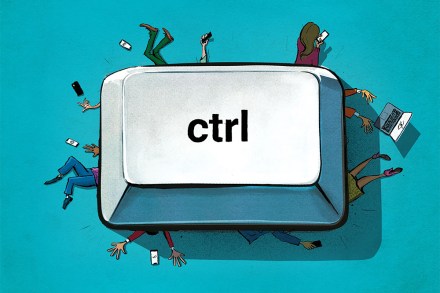
There is a wave of books asking how social media platforms shape the stories we tell about ourselves and, through that shaping, what new kind of self they are producing. Megan Garber’s Screen People argues that the language and ethos of entertainment have permeated every aspect of life, so that we now see each other as characters in an ongoing show whose continuity we are responsible for maintaining. Kathryn Jezer-Morton’s The Story of Your Life, out in August, makes the related case that algorithmic platforms have disciplined what counts as a shareable experience into what Jia Tolentino’s blurb calls a rigid, optimized, phone-shaped norm. I haven’t read either yet, but I’m willing to bet they’re basically right.

Lorna Hajdini and the willing suspension of disbelief

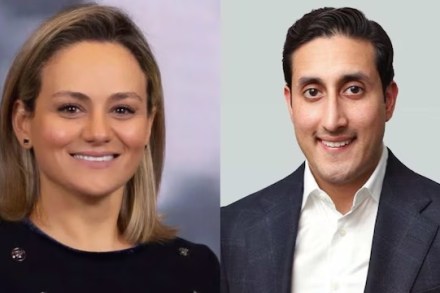
"A lie can get halfway around the world before the truth has a chance to get its pants on." That old saw is now hopelessly out of date. These days, an apparent malicious falsehood can become global news in a matter of seconds, especially if it contains suggestions that pants might have come off. Human beings love to share shocking gossip, and internet technology means that we can do so at terrifying speed and scale. Social media now resembles the lower-rent tabloids of old, rife with fantastical pieces about aliens or sex slaves and the occult Take, for instance, the incredible tale of the feline JPMorgan executive who "sexually harassed" a junior male staff member.

Iran is winning the meme war

The opening strikes on Iran forced the country’s military to operate without a centralized command structure. Despite this enormous setback, something like a unified approach has emerged, and nowhere is that more evident than on social media.  Iran’s embassies have become meme factories, centers of information warfare churning out images and videos designed to do just one thing: mock the US and Israel and, in particular, Donald Trump. Courtesy of Iran’s overseas missions, we’ve now seen Donald Trump as a minion from Despicable Me; a Lego man fleeing a Lego Jeffrey Epstein; and a Pirate of the Caribbean trying, and failing, to hijack the Strait of Hormuz.

The arrogance of the tech-skeptics

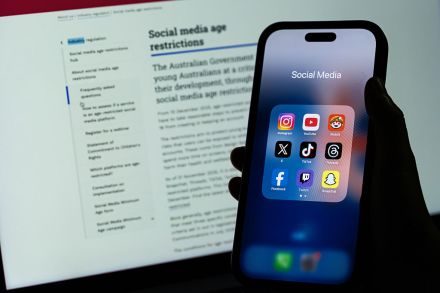
If you’ve been paying attention to social media lately, then you already know the score: smartphones are corrupting our children, we need legal intervention immediately. Roughly half of US states have enacted some form of age-gating for social media or pornographic content. Australia banned under-16s from social media platforms outright, France and Indonesia followed suit and the United Kingdom is now asking people for their papers to read moderately offensive blog posts. You don’t need me to rehash this. The phones have nuked the interior lives of Gen Z, Gen A and the hitherto unborn Generations B and C. Every opinion lands somewhere between “protect the children” and “this is Reefer Madness for iPads.

Age-verification for social media puts kids at risk

The Heritage Foundation’s tech policy team has endorsed European-style age verification laws for social media, likening them to alcohol and tobacco age restrictions. This is a comparison worth taking seriously – just not in the way Heritage intends.Walk into a bar, and a bouncer checks your ID. In about 15 seconds, you’re inside. That’s it. Online age verification would be a very different experience, requiring the collection, storage and verification of sensitive personal documents at scale. This is a breach of privacy and free expression for adults. It also puts minors – a population 35 to 51 times more likely than adults to fall victim to identity theft – at risk.

Age-verification

What do the White House’s cryptic X videos mean?

The White House X account has won notoriety as a coven of young memesters scandalizing the nation. There have been meme images of leading Democrats decked out in sombreros, and clips featuring footage of Iranian military hardware being blown up interspersed with WiiSports.  Now the antics have been taken a step further. There is currently widespread talk of the United States “unleashing hell” on Iran once markets close this weekend, after its initial 15-point peace offer was rejected. There is even some frenzied speculation that things might go nuclear.  Not the best time then, to release a set of cryptic videos that seem to hint at some approaching cataclysm. One, at four seconds long, showed a pitch-black screen overlayed by TV static.

cryptic white house x videos

Won’t someone please think of Dubai’s influencers?

The human spirit is incredibly resilient really. Even in the depth of our concern over the Israeli-American war against Iran, the worry about what might come next, we can still find time to feel a warm and comforting sense of schadenfreude over the large number of British women with stapled-on lips who are cowering in their Dubai apartments as the Iranian shells come raining down. The name under which these women collectively labor is "influencer," a term which, like "content creator" is close to meaningless and both could be usefully replaced by "shitgibbon" or "unemployable." We laugh at their sense of entitlement, their shock that the real world has intruded upon their private Idaho You do not know these people, any of them, I suspect.

dubai

What Spain’s social media ban gets wrong

Spain’s Socialist prime minister Pedro Sánchez is proposing a ban on under-16s using social media, following the example set by Australia last year. Speaking at the World Government Summit in Dubai earlier this week, Sánchez said: "Today our children are exposed to a space they were never meant to navigate alone… We will protect [them] from the digital Wild West." The Spanish premier’s announcement comes at a time when several other European nations are also attempting to combat the harmful effects of social media on children. France’s ban on under-15s using social media is expected to become law later this year, while Greece, Portugal and Denmark have signaled their intention to enact similar legislation.

AI marketing is driving me to distraction

For years, retailers have been behaving like needy friends. My phone would ping. “Hi there!” an email would read, “We’ve missed you.” Who could this be? I would wonder happily, before realizing that the warm and loving message was from someone in the marketing department of the emporium from which I’d once bought a couple of pairs of expensive shoes. Emma usually, or Olivia. With the advent of artificial intelligence, though, personalized, over-the-top PR is getting much, much worse. At least in the past you’d needed an actual Emma to send these emails, some girl who’d gone into marketing, typing enthusiastic nonsense all day. There was at least a human who had “reached out” – they always “reach out.” AI is just so needy.

Britain’s X crackdown is no joke

The internet suddenly went down in Iran last night, as courageous Iranians continued to rise up against the Ayatollah. The UK government was apparently inspired. Not by the rebels, whose plight the Prime Minister has remained remarkably quiet about – but by the mullahs’ digital crackdown. Call me a conspiracy loon, but I dare say Labour’s ire for X isn’t simply about the site’s supposedly insufficient safeguarding policies Britain’s Labour party has issued its most serious threat yet to social-media giant X – whose owner, Elon Musk, has become this rudderless government’s go-to bogeyman.

Will tech companies bend to Australia’s social media ban?

It’s all too easy to get hooked by the online world, to fall headlong into it, to spend hour upon hour immersed in it. Cyberspace has its good uses, but it also has its bad ones. Staying in control of your social media life is difficult enough as an adult, but for children it can be an especially dangerous world in which to dwell. Too often children are glued to their phones and devices, staring, scrolling, disengaged from the world around them. Many children are exposed to online harm, including bullying, grooming and shaming. Appallingly, many children are emotionally and psychologically damaged from social media exposure. Terribly, and tragically, some have taken their own lives as a result of what has befallen them online.

New York Fashion Week’s shimmer feels noticeably dimmed

Crossing streets with lattes in hand, camera lights flashing, perfectly curated outfits meant to be noticed, and a crisp chill in the air means one thing: New York Fashion Week has arrived. The September Fashion Week has long stood as the pinnacle of American fashion prestige. As the leaves turn red and brown, style photographers capture eclectic ensembles in motion, A-listers march through the streets and assistants carefully place nameplates on front-row seats beside pristine runways. But this year the week’s shimmer feels noticeably dimmed. The big names still show up – Michael Kors, Calvin Klein, Tory Burch. But in recent years they’ve been eclipsed by smaller, edgier and distinctly New York-based designers.

fashion

Social media has automated the nation’s psyche

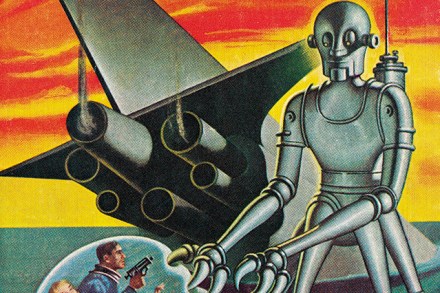
It feels increasingly, in any conversation on or offline, as if you’re speaking to a robot. Sometimes you are, but more often, and more ominously, the person you’re speaking to is real – it’s just that their thoughts, words and reactions have become robotic. The Botification of the American Mind, you might call it, and for the past five years we’ve been trying to understand how this botification has happened. The most obvious root cause is that our social media is no longer populated by humans, meaning the generative AI revolution has exponentially increased the amount of fake accounts on everyone’s feeds.

social media

Stephen King, The Long Walk and Charlie Kirk

Under normal circumstances, the author Stephen King should have been feeling pretty good about things and himself at the moment. The latest film of one of his works, Francis Lawrence’s horror-thriller The Long Walk, opened in American cinemas this weekend and has been met with almost unanimously rave reviews, many of which have called it a more socially aware, darker Hunger Games. He recently published a Maurice Sendak-illustrated retelling of Hansel and Gretel, which brings his trademark dark and macabre sensibilities to the age-old fairytale. And his last novel, Never Flinch, was, naturally, a bestseller – as all his books have been since he first published Carrie, over half a century ago in 1974.

Wishing Trump dead only makes him stronger

Maybe you heard that Donald Trump died over the weekend. First, the internet began to buzz over some bruising on the President’s hand during an executive-order signing ceremony. Then people started noticing that no one saw Trump on Friday, and that he didn’t have any events scheduled over the weekend. J.D. Vance gave an interview with USA Today in which he said, “if, God forbid, there's a terrible tragedy, I can't think of better on-the-job training than what I've gotten over the last 200 days.” Trump has become so ubiquitous in our lives that there was only one conclusion to reach from his temporary semi-absence: He is dead. A TikTok video making that claim got 600,000 likes. There were tens of thousands of Twitter posts on the topic, almost trying to will it into reality.

Donald Trump

A Gen Z defense of America

I am twenty-one. Not being on social media, I am ill-informed of the true depth of rage and fear available to the human psyche. Even so, I’ve heard that the planet will overheat. My pastor tells me the churches will sit empty, and the WSJ warns I’ll never buy a home. Boomers bemoan the laziness of my generation. Given these prophecies of doom, it is no wonder that we are a bit anxious. But if we were ever to look up from our screens and allow the evidence within sight to form our perception of reality, we might be pleasantly surprised: America’s social fabric is strong, and so are we.  I went on a run on the prairie today.

gen z

LinkedIn is one big re-education camp

You just graduated college – time to find a job, buck-o. Print out those resumes, and hit the streets hungry. Pass them out to everyone and anyone. Be willing to do what others won’t. Landed your first gig? Show up each morning bright eyed and bushy tailed, no matter how humiliating, and consistently go above and beyond. But most importantly, stay true to yourself. This is the bumper sticker “job advice” boomers have been giving to successive generations for the last 50 years. It’s arguable how useful it ever was, even in their own time. But it’s not until LinkedIn that this contrived work ethic became formalized and permanentized in the digital square – so much so that we’re forced to ask, will we ever have a normal job culture again?

LinkedIn

After Elon Musk, America is never going to be the same

Only certain days qualify as the greatest days in American history: July 4, 1776 will always lead the way, as will the day the Constitution was ratified. So will the day of the Emancipation Proclamation, VE Day, the moon landing and a small handful of others.  Yesterday, June 5, 2025, will join that select company, because yesterday was the day that the world’s richest man, on a media platform that he owns, accused the President of the United States of Jeffrey Epstein kinds of behavior. As I looked at my phone blowing up, I realized that America was never going to be the same. Elon Musk, as we all watched in real time over the last few months, made one of history’s most tragic miscalculations.

elon musk

Inside the parents versus social media conflict at the FTC

Washington, DC The battle between social-media companies and parents found itself center stage at the Federal Trade Commission, Wednesday. A panel of four speakers discussed the state of play in America's fight to protect children online – and where it should go. On the stage at the FTC were Senator Marsha Blackburn of Tennessee; Dawn Hawkins, the National Center on Sexual Exploitation's senior advisor; Michael Toscano, director of the Family First Technology Institute for the Institute of Family Studies, and Maurine Molak, the founder of David's Legacy Foundation. Every day in 2021, 100,000 minors received sexually abusive content from adults on Facebook and Instagram, Blackburn said on the stand, referencing internal documents released by the Department of Justice.

FTC Are Kids in Danger Online? panel parents

How much is ‘Truss Social’ learning from Truth Social?

Zuckerberg, Musk, Trump… Truss? Cockburn was surprised to hear from across the Pond that Liz Truss – who served as prime minister of the United Kingdom for just 49 days – had plans to set up a social media site. “What I am doing is establishing a new free speech network, which will be uncensored and uncancellable, to actually talk about the issues people don’t want to talk about,” the former PM said at a conference in England last month. The move would see Truss compete with X, Parler, Gettr, Gab and, yes, Truth Social, Trump’s social media app. How will she pull it off? With some American assistance, it seems. Cockburn understands Truss’s network is set to be part of the media conglomerate John Solomon and Mark Meckler are working to establish.

liz truss