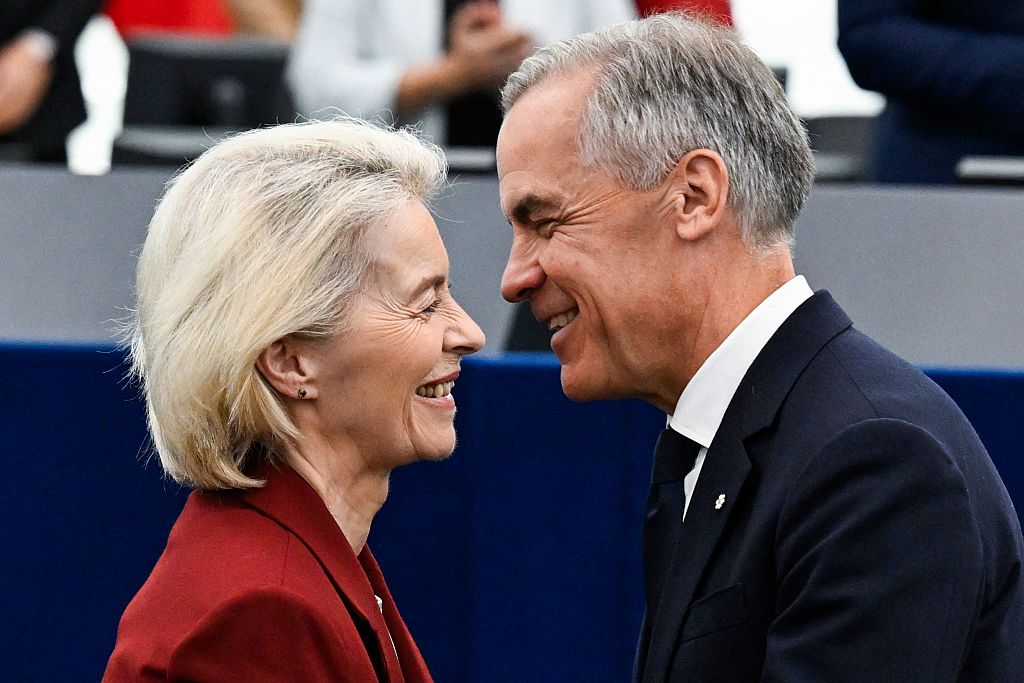
EU President Ursula von der Leyen has offered Canada ‘associate membership’ of the EU. No one knows what ‘associate membership’ means and the Germans have subsequently said the term needs reconsidering, but the general idea seems to be that Canada will have some sort of very close relationship with the EU, not wholly unlike the countries applying to the EU or on the outskirts of the bloc – placing Canada in a class with countries such as Egypt, Serbia or Ukraine.
Exactly what this would add to the existing Canada-EU trade agreement, CETA, or how likely EU member states would be to ratify any such ‘associate membership’ agreement with Canada remains unclear, not least because even CETA is yet to be ratified by ten EU member states a decade after it was signed.
Von der Leyen herself mentioned manufacturing, technology, energy policy, economic security and defence as potential areas of cooperation. Some of these match known Canadian aspirations for collaboration. For example, Canadian Prime Minister Mark Carney, perhaps drawing on his past experience as a central banker, has said he wants to work with the EU to develop new payments systems, as well as on AI, cloud computing, space and energy security. There are various schemes for easing Canadian gas exports to Europe. And Canada is also interested in a worker migration agreement and further mutual recognition of professional qualifications.
The exact details remain to be worked out, but the general signal is clear. With the massive deterioration in Canada-US relations under Trump and repeated overt US threats to Canadian sovereignty, Canada is seeking other mates in the world.
Back in January at Davos, Carney spoke of his plans to build ‘middle power’ alliances, saying ‘middle powers must act together because if you are not at the table, you are on the menu’. Perhaps he conceives of collaboration with the EU in those terms – though the EU is less an alliance of middle powers and more a great power under construction.
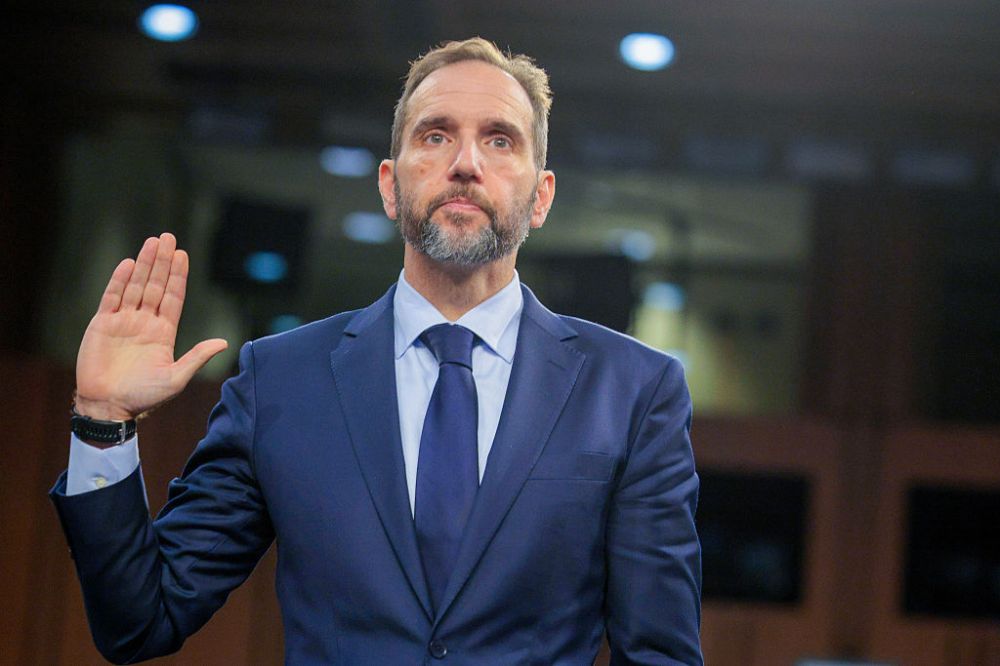
The US response has been predictably incandescent, with Trump calling the notion of Canada becoming an associate member of the EU ‘laughable’ and a ‘hostile act’, and threatening very heavy tariffs or the suspension of all trade with the EU in certain areas if it proceeded. European powers expanding their influence in North America could readily be presented to the American public as a violation of the Monroe doctrine or its more incoherent ‘Don-roe’ descendent.
Deeper EU-Canada collaboration than the CETA trade agreement presents many challenges. Consider, for example, the case of climate policy. Perhaps one might imagine Canada joining the EU’s Emissions Trading System (one of the key things the UK is likely to do under the UK-EU ‘Reset’ agreement). Canada does have a federal commitment to a 2050 net zero target, but it does not have one national mechanism to achieve it. Different Canadian provinces use very different mixes of taxes and emissions trading systems. But matters are even worse than that. Quebec’s cap-and-trade system is linked to California’s and is moving towards linkage with Washington state. Would Canadian Associate Membership of the EU involve linking these schemes to the EU ETS, replacing them, or merely obtaining EU recognition that Canadian carbon pricing was equivalent?
Similar questions arise wherever Canadian systems are integrated with those of the United States. Automotive production is organised around North American supply chains and US standards. Electricity networks and reliability arrangements cross the border. Agricultural, financial and digital rules reflect Canada’s geography even when they do not simply reproduce American policy. And at the other end of the spectrum, Canada does not even possess completely free trade within Canada.
In other close agreements that go beyond free trade deals, of which the ‘Reset’ agreement with the UK is a well-known example, the EU is seeking to get its partner to accept dynamic alignment with EU regulation – the EU setting the rules and the partner agreeing to follow them without any direct say in what they are. How far would Canada be prepared, in pursuit of greater resilience against Washington, to accept EU rules over which Canadians had no vote and limited if any say?
Only time will tell. And Canada may be only the beginning of EU ambitions in this area. Roberta Metsola, president of the EU Parliament, said on Thursday that Australia and New Zealand could follow Canada into associate membership. This creates the possibility of a curious CANZUK-EU arrangement, with all the CANZUK (Canada, Australia, NZ, UK) countries sitting in an intimate relationship with the EU but none quite being members, and all of CANZUK-EU collaborating to protect itself from the US. Strange times indeed, and perhaps stranger to come.






Comments