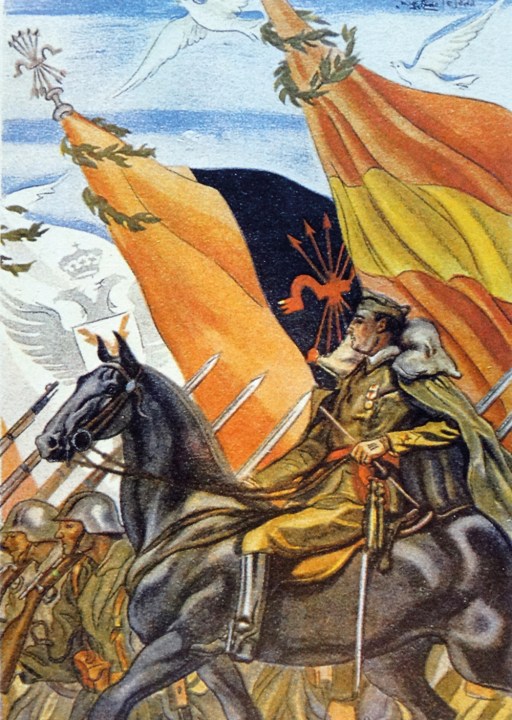
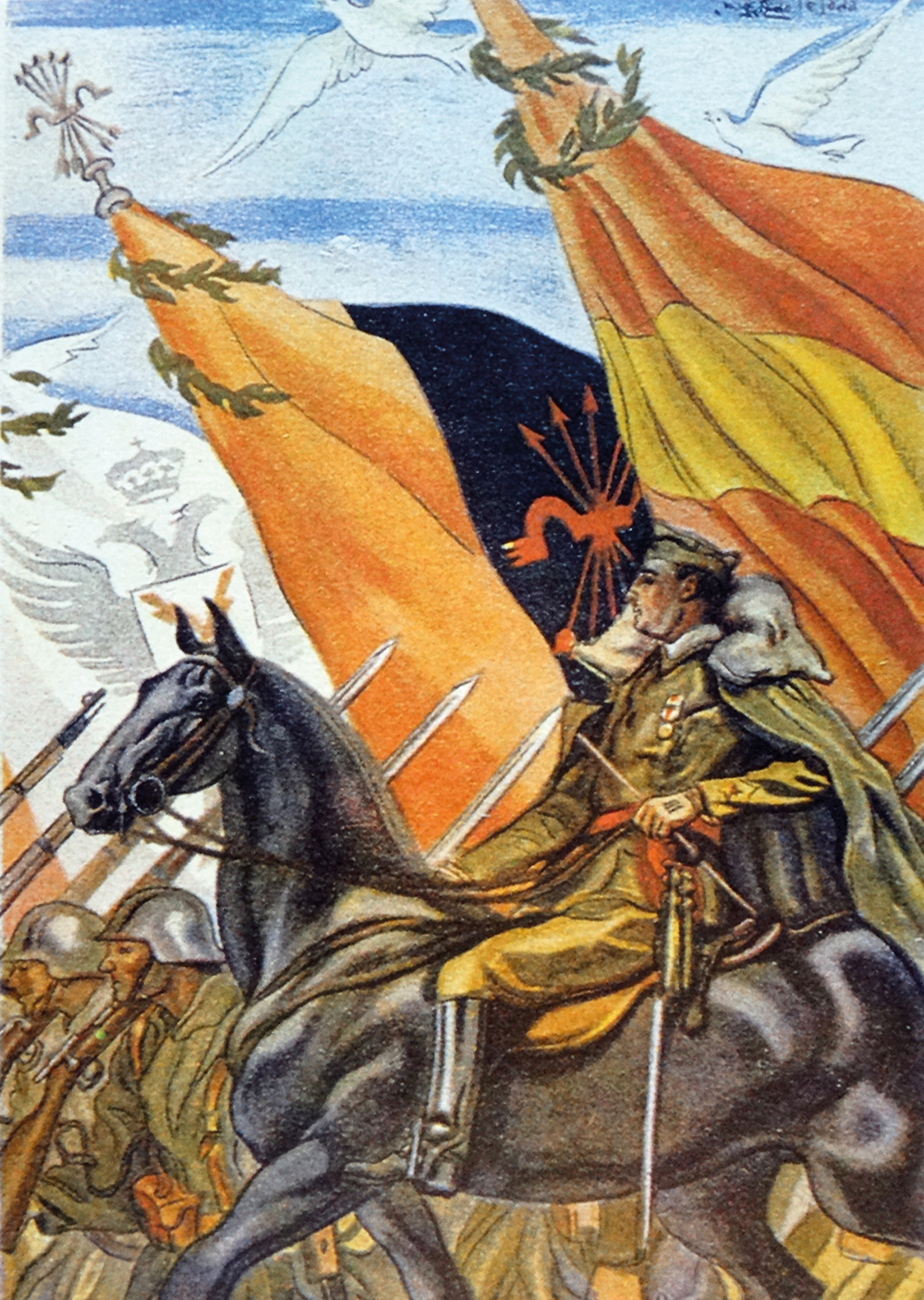
General Franco died on 20 November 1975, and with the 50th anniversary just passed, this biography – the first in years – of the man who ruled Spain with an iron fist for nearly four decades is timely, incisive and authoritative. Written by a former Madrid correspondent of the Economist, it’s also an up to date and highly accessible introduction to 20th-century Spanish history.
Born in 1892 into a middle-class family, Francisco Franco shared a bedroom with his younger brother Ramon, who later won international fame as Europe’s ‘equivalent of Charles Lindbergh’. There were few signs, however, that eminence also awaited Francisco. A weedy child, who dutifully got by at school, he had a difficult relationship with his domineering Freemason father. Even when Franco had become the all-powerful head of state, his father could be found in Madrid’s bars fulminating against his son as an inept, boastful cabron (shit).
Entering the military academy in Toledo as a 14-year-old, Franco was bullied mercilessly. He graduated 251st out of 312 cadets. But once he saw action in Spain’s Moroccan protectorate, his cool head, conspicuous courage and tactical flair brought ‘meteoric ascent’. At 33, he became the youngest general in Europe. Meanwhile, he’d acquired a beautiful, wealthy, devoutly Catholic wife – ‘his first and only girlfriend’ – whom he wooed with ‘the same determination that he applied to military manoeuvres’. The couple slept with the wizened relic of Saint Teresa’s arm on top of their bedroom cupboard. Unsubstantiated rumours suggested that, because of Franco’s war wounds, their only child, a daughter, could not have been his.
The evident shortcomings of the Second Republic (1931-36) sparked Franco’s interest in politics. Before long, he was pronouncing ‘firm ideas on subjects about which he knew little’; his knowledge of economics derived from conversations with a local bank manager. He even claimed that Britain had introduced Freemasonry to Spain as part of a cunning plan to turn ‘Spaniards against Spaniards’.
Eventually, Spain’s descent into chaos and violence under the socialist Republican government outweighed his initial reluctance to join the military uprising that led to civil war (1936-39). ‘Spain needs saving, and here I am,’ he announced. Once the other generals had appointed him generalisimo, Franco swiftly welded conservatives, reactionaries and fascists into a single party that did not tolerate debate. ‘It is I who, answering only to God and history, decide,’ he declared. He exasperated his allies Hitler and Mussolini by dragging out the war so that he could exterminate more left-wingers. His unshakable faith in the efficacy of the firing squad – he didn’t even save his own cousin, once his childhood playmate – led to the execution of 130,000 Republicans during the war and a further 20,000 after it.
After their meeting in 1940, Hitler said he’d rather have teeth pulled than spend time with Franco again
During the second world war, Franco argued that supplying tungsten was of greater value to Germany than military support; after their face-to-face meeting at Hendaye, south-west France, in 1940, Hitler said he’d rather have teeth pulled than spend time with Franco again. Franco was right to be careful: these were years, Giles Tremlett notes, when ‘Britain could decide whether Franco’s regime fed its people or not’. But Franco did eventually dispatch troops to support Hitler on the Eastern Front.
Post-1945, Franco blamed Spain’s pariah status on a global conspiracy organised by a ‘Masonic superstate’. Meanwhile, after well over a century of political and social chaos, he demanded order, obedience and social conservatism. One school book showed the Virgin Mary promising Franco’s mother the birth of a son ‘with the heart of a Caesar and the wisdom of a sage’. While the 5ft 4in-dictator’s now ample hips and buttocks had turned him into ‘a deformed ball of fatty tissue’, his autarkic economic policies condemned thousands to starvation. It was only US support (in return for Cold War military bases), tourism and the opening up of the economy that finally, in the 1960s and 1970s, turbo-charged the country, creating for the first time a substantial middle class.
Power, Franco complained, had been thrust upon him, preventing him from ‘enjoying life like… other Spaniards’. But he clung to it, Tremlett observes astutely, to ensure that nobody else could wield it, keeping his promise to go straight from the job ‘to the cemetery’, by dying – unlike Hitler and Mussolini – from natural causes.
Surveying the decades of repression, corruption and cronyism, Tremlett concludes that ‘the balance is overwhelmingly of harm: to the economic welfare, personal freedoms and cultural and intellectual life of the Spanish people’. But elsewhere he records Spaniards’ displays of genuine support for Franco, suggests many believed that he’d been the best possible solution for a country that was difficult to govern and notes that they ‘were freer, and better off, than people living in the communist regimes behind the Iron Curtain’.
Comments