Hitler

How Volkswagen drove its own demise

I moved on from most of my father’s automotive prejudices. He refused to buy from the Japanese ‘who treated our prisoners so cruelly’, French and Italian cars would ‘always let you down in the end’ and Fords were gaudy creations of ‘big-headed Americans’. Instead, it was Volkswagen (VW) I never trusted. Stupidly stuck in a bygone era, I couldn’t get over that infamous 1938 photograph of Adolf Hitler, smiling with childlike delight, leaning over a miniature Beetle. Beside him, in a smart civvy suit, SS Colonel Ferdinand Porsche gleefully shows off the prototype. The foundation of Volkswagen is the definitive portrait of a dictator and his sycophants. Okay, it’s 88 years later and I don’t like hearing about people losing jobs, even at VW.

There will be blood – the vital work of field transfusion units

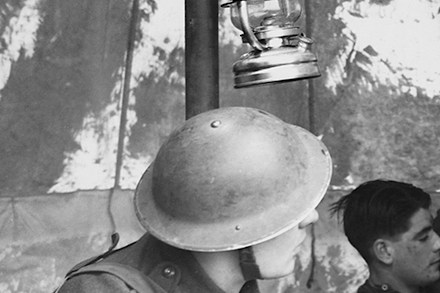
Most conventional World War Two military histories focus on weapons, materiel and even the manpower needed for a decisive victory over Hitler and the Axis powers. Little has been written about blood as a strategic resource. However, a pioneering service of specially trained medics who worked dangerously close to the front lines, pumping blood into the veins of battle casualties, not only saved lives but contributed significantly to winning the war. They did this by returning men to the front line and boosting morale by persuading them that, if wounded, they had the maximum chance of life.

blood

Why should it be shameful to study the Classics?

From our UK edition

Mary Beard opens this book with a recollection of her first meaningful encounter with the ancient world. It was 1960, and she was five years old, visiting the British Museum with her mother. Peering into one of the glass cases, she spotted an unassuming, oddly triangular loaf of bread from ancient Egypt. Seeing her struggle to obtain a better view, a curator lifted the object out. ‘Never under-estimate how powerful the simple act of unlocking a museum case can be,’ Beard reflects 66 years on. She describes Talking Classics as ‘more a memoir than a thesis’, but it is also a thought-provoking meditation on wonder. It was thauma, she reflects, that Aristotle held responsible for sparking philosophical thought to begin with.

The unstoppable rise of stupidity

Hold the front page: I’ve found a very good contemporary novel to occupy my time. Such things have become vanishingly rare, even if one is grateful for David Mitchell’s metafiction, the occasional blast from Michel Houllebecq and Ben Marcus’s engaging lunacy. By and large, modern novels lack depth, originality of form and language, political unorthodoxy (i.e. freethinking) and a vaulting fictional imagination. Where, today, would you find the J.G. Ballards, the David Storeys, the Anthony Burgesses? In the sensitivity reader’s rejected pile, I suspect.

Why Hitler’s suave architect escaped the noose at Nuremberg

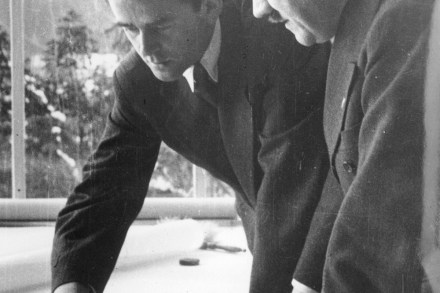
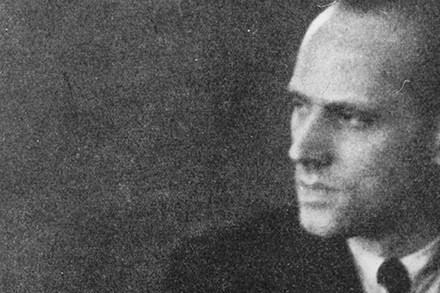
At the Nuremberg trial of the main Nazi war criminals, one man stood out: Hitler’s favourite architect and later armaments minister, Albert Speer. He cut a gentlemanly figure in a gallery of rogues. The strutting, smirking Hermann Goering reminded Rebecca West, who attended the trial, of ‘a tout in a Paris café offering some tourists a chance to see a black mass’. Julius Streicher, the Jew-baiting brute, was like ‘a dirty old man of the sort who gives trouble in parks’. On the same bench, all declaring their innocence in the face of overwhelming evidence of monstrous crimes, were the lantern-jawed SS leader Ernst Kaltenbrünner, the sour-faced ex-champagne salesman Joachim von Ribbentrop, Fritz Sauckel, the thuggish slave labour chief, and the rest of the sorry gang.

Caught between Hitler and Bomber Command – the Berliners’ cruel predicament

From our UK edition

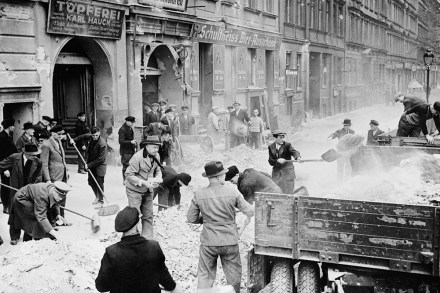
Can you be a true, thoroughgoing patriot and still want your country to lose in a war? It’s a dilemma that faced countless thoughtful people in the past century who lived under totalitarian regimes, and I know is torturing many Russians today. It’s the stark question at the centre of Ian Buruma’s subtly nuanced and beautifully written book about the lives of Berliners in the second world war as their city was being destroyed by a combination of aerial bombardment and the manic cruelty of their own leaders.

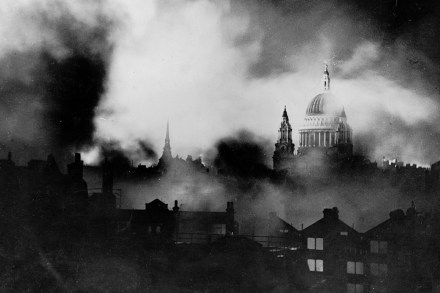
Blitz spirits: Nonesuch, by Francis Spufford, reviewed

From our UK edition

If you read books for a living, the calling probably started with a moment of utter entrancement: a novel you couldn’t bear to set down; a few unforgettable days, as Bleak House, Earthly Powers, The Woman in White or Titus Groan worked its unsuspected magic on its millionth reader. Such books are rarer these days, but they do still happen, and Francis Spufford’s Nonesuch is an absolute corker. Randall Jarrell once wistfully imagined a novel that would ‘bear up under the weight of hundreds of thousands of readers a plot that higher critics could call crude and that bewitched families could pad over in house slippers’. Nonesuch does the trick, and I won’t be the only reader whom it keeps up until 3 a.m. It’s a novel of immense confidence.

The diminutive dictator who ruled Spain with an iron fist

From our UK edition

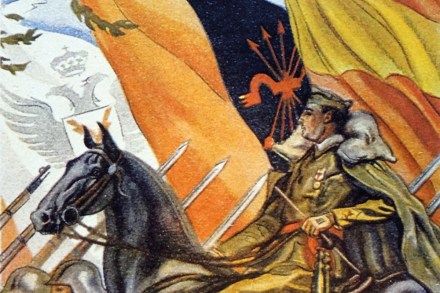
General Franco died on 20 November 1975, and with the 50th anniversary just passed, this biography – the first in years – of the man who ruled Spain with an iron fist for nearly four decades is timely, incisive and authoritative. Written by a former Madrid correspondent of the Economist, it’s also an up to date and highly accessible introduction to 20th-century Spanish history. Born in 1892 into a middle-class family, Francisco Franco shared a bedroom with his younger brother Ramon, who later won international fame as Europe’s ‘equivalent of Charles Lindbergh’. There were few signs, however, that eminence also awaited Francisco. A weedy child, who dutifully got by at school, he had a difficult relationship with his domineering Freemason father.

When Piers Morgan met Nick Fuentes

Russell Crowe’s new film is about trying to suss out hidden fans of Hitler, but what happens when the person being questioned makes no attempt to hide? Toward the end of Piers Morgan’s live interview with Nick Fuentes last night, Morgan, in what seemed like a pre-prepared line, accused his guest of trying to “come across as a moderate” — just ten minutes after Fuentes called the old Bohemian corporal “very fucking cool.”  To that line, Morgan told Fuentes that "I think [Hitler] is very fucking a monster." Yet Fuentes burst out laughing in reply: "And that’s a clip! 'I think he’s very fucking a monster?' Do you hear yourself? Can we all grow up?

The extraordinary courage of Germany’s wartime ‘traitors’

From our UK edition

I once interviewed the late Enoch Powell for this magazine (the article never appeared, for reasons I forget). One thing he said on that occasion stuck with me. He remarked that loyalty to one’s country should be unconditional. I asked him what he thought people should do if their country were taken over by a criminal regime. After a short pause Powell replied that some people were luckier than others. I failed to press him further on this point, but it struck me as an unsatisfactory answer, and it still does. Jonathan Freedland has written a very good book on precisely such unlucky people: German patriots who hated Hitler and everything he stood for.

Is Net Zero ‘mania’ over? And Labour’s migration crackdown

From our UK edition

50 min listen

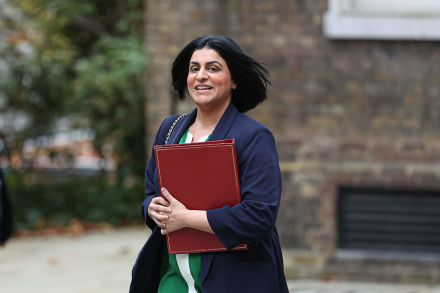
This week: a Commons showdown over asylum – and a cold shower for Net Zero orthodoxy. After Shabana Mahmood’s debuts Labour’s new asylum proposals, Michael and Maddie ask whether her barnstorming performance signals a new star in Starmer’s government – or whether the Home Secretary is dangerously over-promising on a problem no minister has yet cracked. Is her Denmark-inspired model workable? Can she get it past the Labour left? And are the right-wing plaudits a blessing – or a trap? Then: at COP30, the great climate jamboree struggles to command attention. As Ed Miliband charges ahead with his Net Zero agenda, the pair question whether Britain has finally passed 'peak Net Zero mania'. Is the UK hobbling itself economically while China cashes in?

Auschwitz-themed novels are cheapening the Holocaust

From our UK edition

Israel would not have been born when it was – 1948 – without Hitler’s genocidal war on European Jewry. Dispossessed Jews had to be provided with a home. In the rush to establish a Jewish state in Palestine, safeguarding Arab nationalism was not the most pressing concern. Israel’s foundation thus marked a turning point in the fortunes of the world more grievous than anyone could have anticipated. Most European nations supported Israel during the Arab-Israeli war of June 1967, when President Nasser of Egypt moved his troops into Sinai on the Israeli border and, as part of a violent pan-Arabist ideology, vowed to eliminate Jews (and Christians).

When Freud met Hitler

From our UK edition

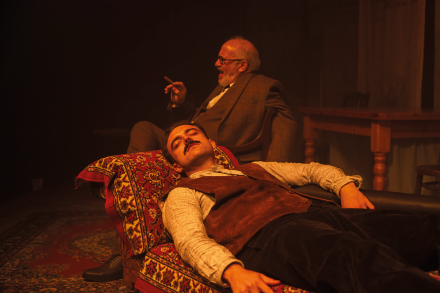
A new play by Lawrence Marks and Maurice Gran, the writers of Birds of a Feather, feels like a major event. This is a period drama that examines an imaginary association between Hitler and Freud and develops into an enquiry about the nature of evil. As Hitler grows into adulthood he gravitates towards the Freud family, muscling in on their summer holidays The play opens with a scene from Hitler’s childhood, as his father, Alois, thrashes the young boy while his mother watches and weeps helplessly. This tableau is oddly hilarious because it explains in simple domestic terms the unimaginable horrors of the 20th century. As a teenager, Hitler meets Freud by accident and shares his dream of becoming a painter and an opera composer. ‘A Renaissance man,’ chuckles Freud.

Art and radicalism in 1930s Britain

From our UK edition

What is art for? How can it, should it, relate to the political framework of its time? How far can it shade into ‘propaganda of the imagination’? These are some of the questions threading through Andy Friend’s compelling account of the first decade of the Artists International Association, or AIA, a vital but under-explored British movement welding art and politics against the growing threat of international fascism.  The story opens in 1933 in the candlelit rooms of Misha Black above Seven Dials, Covent Garden, where a dozen impecunious jobbing artists met to discuss a sensational report from the Soviet Union.

The internet doesn’t know what a Nazi is

Two things happened online in the past week or so, both online, both quite mad. First was the spread of a podcast clip – hosted by “men’s health” influencer Myron Gains – featuring a rainbow coalition of Gen-Z Americans discussing whether Germany’s 1930s Jews had done something to make the Nazis hate them. They reimagined Hitler as someone who simply had to perpetrate a genocide because the Jews deserved it. The second event was an American Eagle jeans advertisement starring Sydney Sweeney. One of these moments caused a meltdown about the rise of Nazism, and it wasn’t the podcast.

Nazi Germany (Getty)

There was no escaping the Nazis – even in sleep

From our UK edition

Soon after Hitler came to power in 1933, Charlotte Beradt, who as a Jewish journalist and a communist had been barred from publishing, found her sleep wracked by nightmares that unmistakably reenacted the terrors of the Nazi regime. Deprived of her regular employment, her own dream experiences prompted the subversive if dangerous idea of recording the dreams of her fellow citizens. ‘I began to collect the dreams that the Nazi dictatorship had, as it were, dictated,’ she wrote. Citing a dictum of a Nazi official that in Hitler’s Germany no one has a private life except while asleep, the material she collected demonstrated how dreams ‘as minutely as a seismograph’ can record impinging external realities.

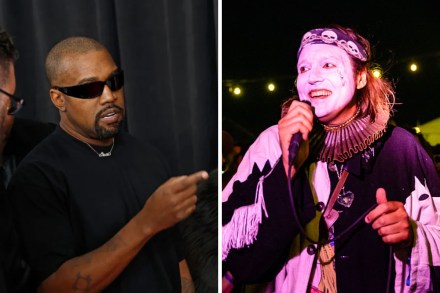
Kanye West and Arcade Fire: a tale of two cancellations

At first glance, Kanye “Ye” West and the Arcade Fire’s lead singer Win Butler might seem to have little in common. Ye has built his increasingly deranged career on provocation and confrontation, and that has now reached its nadir in his latest single, “Heil Hitler,” in which he declares that “All my niggas Nazis, nigga Heil Hitler.” After listing the various perceived wrongs that have been done to him, Ye states, all too accurately, “So I became a Nazi, yeah bitch, I’m the villain.” Inevitably, it ends with the song sampling a Hitler speech, in which the Führer cried that, “Whether you think my work is right... if yes, then stand up for me as I stood up for you.” The song has attracted outrage, upset and genuine confusion as to Ye’s mental state.

win butler arcade fire kanye west

What did Leni Riefenstahl know?

From our UK edition

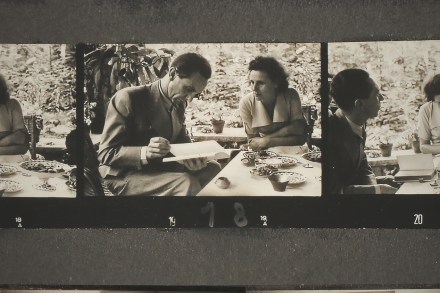
Leni Riefenstahl: what are we to make of her? What did she know? Often described as ‘Hitler’s favourite filmmaker’, she always claimed that she knew nothing of any atrocities. She was a naive artist, not a collaborator in a murderous regime. This documentary wants to get to the truth. But even if you’ve already made your own mind up – I had! – it’s still a mesmerising portrait of the kind of person who cannot give up on the lies they’ve told themselves. Riefenstahl died in 2003 at the age of 101. A striking, Garbo-esque beauty in her youth she looked like a haunted Fanny Craddock by the end.

What would Livy have made of Trump’s treatment of Harvard?

From our UK edition

It is not surprising that Donald Trump holds the law in contempt. That is what happens when you have a criminal as President. His treatment of Harvard University is an example: he has cancelled a very large grant, saying Harvard is guilty, as charged, of doing nothing about student riots, on the back not of evidence, but simply a collection of opinions. For nearly 250 years, the Roman plebs (about 99 per cent of the free population) fought a battle to have some say in the way Rome was governed against the wealthy elite who made up the Senate, Rome’s ruling body. Under the kings (753-509 bc), they had no rights at all, but with the inception of the Republic, the real battle began. The story is told by the Roman historian Livy.

Only Hitler could have brought the disparate Allies together

From our UK edition

‘Allies,’ declared Stalin on 8 February 1945, the fifth day of the Yalta Conference, ‘should not deceive one another.’ In order to defeat Hitler, Mussolini and the Japanese, the British, Americans, Soviets, French and Chinese had indeed all worked closely together. But in his meticulous, scholarly and highly enjoyable history of the second world war, Tim Bouverie makes plain just what this entailed: a collaboration that was both deep and rivalrous, riven by secret deals, prejudice, changing loyalties and betrayals, conducted by people who at different times admired, feared and despised one another, while in public most often remaining models of civility.