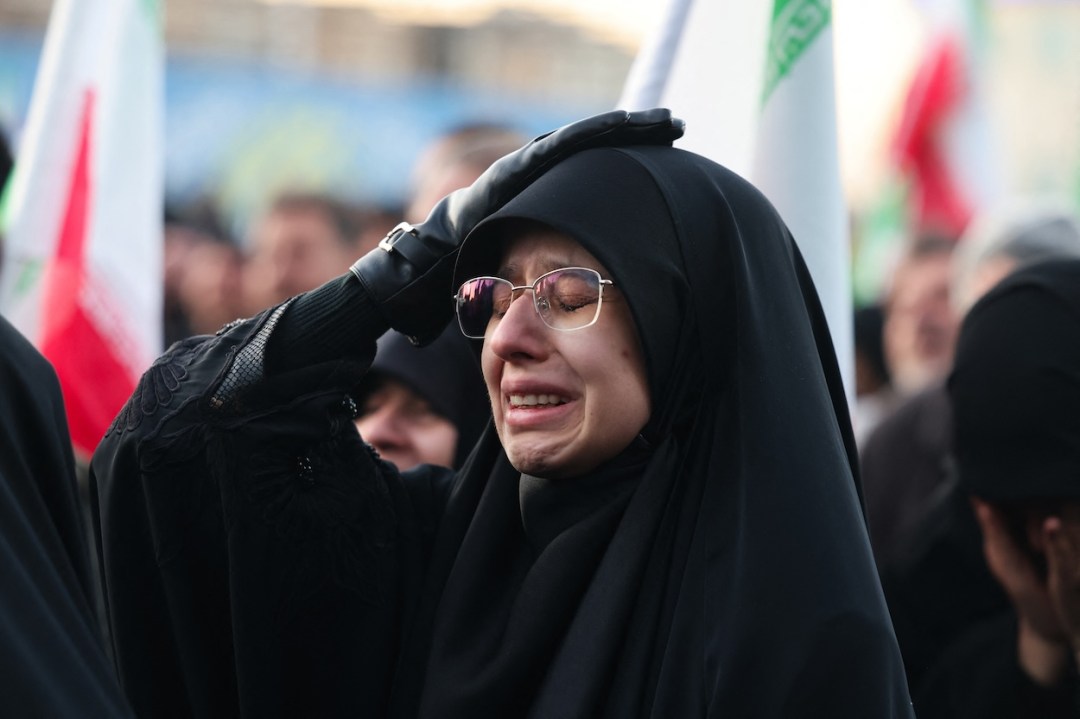
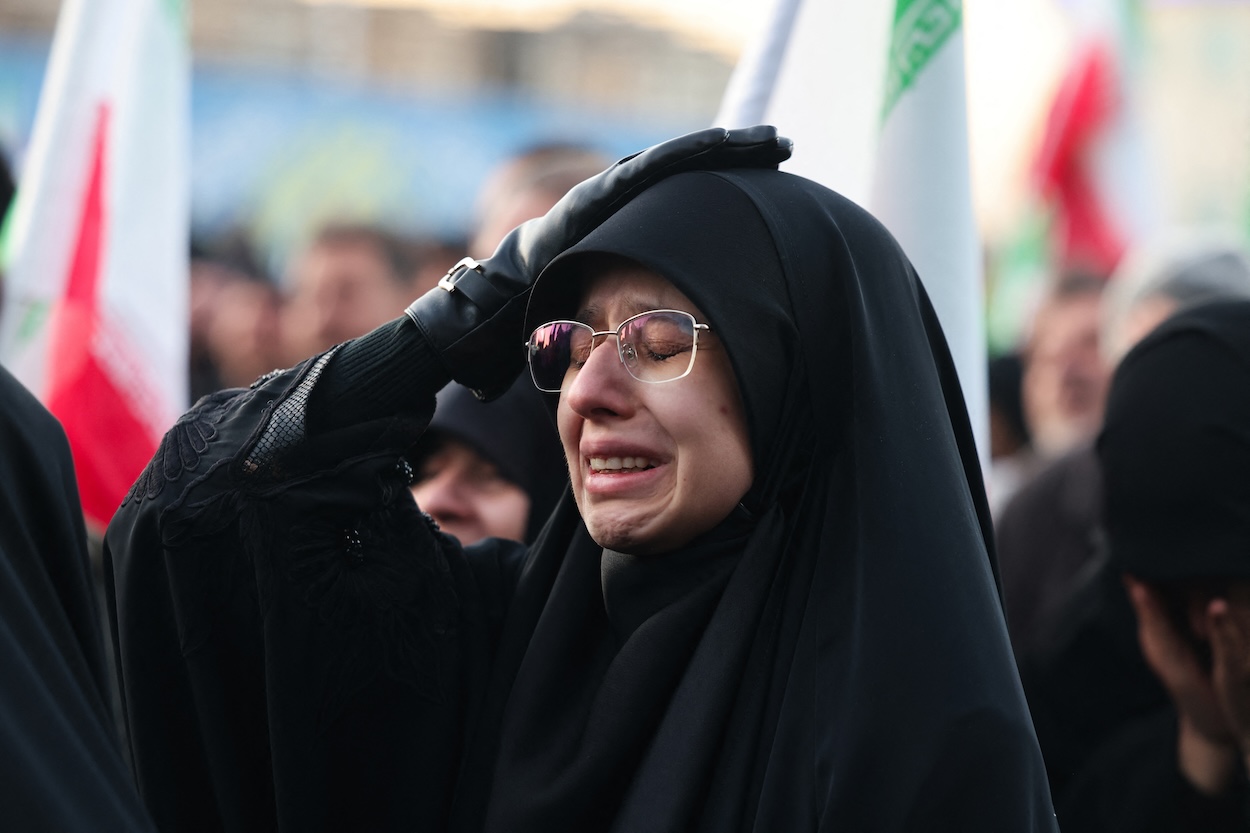
Supporters of regime change in Iran have long argued that if the United States and Israel weakened the country’s rulers then the Iranian people would finish the job. But the likely outcome is instead a wounded regime, one that emerges more paranoid, more repressive, and more convinced that only force ensures its survival.
Iran has experienced mass protests every two to three years for more than a decade. What often begins as economic unrest frequently evolves into broader anti-regime demonstrations, drawing thousands of Iranians into the streets. People outside the country see these protests and believe they could ultimately topple the government. Such arguments come from parts of the Iranian diaspora, as well as neocons in Washington and Israeli officials. But this assumption is dangerously simplistic. Such thinking is detached from Iran’s recent history and the broader record of revolutions.
After a quarter century of regime-change wars, Washington has absorbed only half the lessons
The regime’s leaders have been quick to crush protests before they gain momentum, perhaps because many of them once participated in their own sustained protest movement against a coercive state. The playbook has been to detain large numbers of protesters, shut down the internet, imprison human rights activists, and execute protesters following sham trials. These tactics have repeatedly succeeded in suppressing protest movements before they can threaten the state’s grip on power. The large protests that erupted across Iran earlier this year, which in some places escalated into rioting, represented the most serious challenge to the regime in years. The authorities’ fear was palpable but they followed that same playbook: security forces cut internet access and killed thousands of demonstrators in a nationwide crackdown, managing to quell any uprising.
The success of these tactics might be surprising when you look at the Syrian civil war. Bashar al-Assad’s violent crackdown in Daraa in March 2011 transformed localized protests into a nationwide uprising that became a civil war. Part of the difference lies in the nature of the Iranian state itself. The Islamic Republic of Iran is not simply the rule of a single individual but an entrenched system of overlapping institutions.
The assassination of Ali Khamenei will not break that system in the near-term. Instead, it empowers other actors within it, particularly the Islamic Revolutionary Guard Corps (IRGC). Other uprisings have seen leaders removed while leaving the underlying state intact. The Egyptian revolution of 2011 forced out Hosni Mubarak but the military and security establishments remained. Similarly, several post-Soviet “color revolutions” produced leadership change without dismantling the deeper state structure.
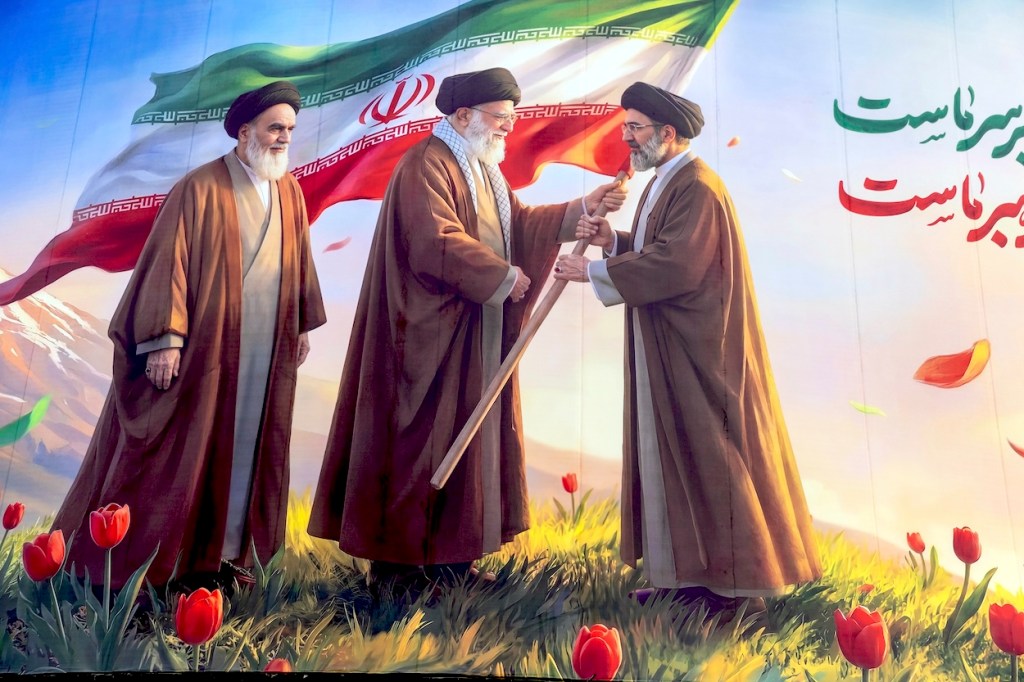
True systemic collapse is rarer and usually requires additional conditions. The Romanian revolution, which overthrew Nicolae Ceausescu, succeeded because the regime lost the loyalty of its military and the backing of its external patron, the Soviet Union. Likewise, the fall of Bashar al-Assad was tied to the unwillingness or incapacity of Russia, Iran, and Hezbollah.
Meanwhile, the US and Israel’s military attacks on Iran have created a rally around the flag effect among some Iranians. The Islamic Republic has spent decades under sanctions and diplomatic isolation. It is far more self-reliant than either Syria or Romania, with a resilient informal economy, a homegrown military-industrial base, and a segment of the population that feels their own fate is tied to regime survival.
Finally, successful revolutions depend on leadership capable of organizing and channeling popular anger. Iran’s own 1979 revolution coalesced around Ruhollah Khomeini, who commanded a devoted base and was able to divide his adversaries. Iran’s contemporary protest movements, by contrast, have been decentralized and leaderless. Their spontaneity is a testament to dissatisfaction among large segments of the population with Iran’s leadership, but it has also made it harder to translate mass anger into a coordinated political alternative capable of replacing the existing system.
After a quarter century of regime-change wars, Washington has absorbed only half the lessons. It no longer believes it can remake nations, but it still believes in destroying them in the hope that it can control them. Perhaps this is why President Trump chose war when there was a deal on the table. The Trump administration claims it is concerned about the Iranian people. But despite threats of intervention, Washington did nothing as the Iranian regime killed thousands of protesters last January.
Instead, the administration viewed the assassination of Ali Khamenei as a way to replicate what it attempted in Venezuela. Yet the removal of Maduro did not dismantle Venezuela’s repressive state apparatus. Just as the White House has shown little concern for the continued repression of Venezuelans by armed Chavista colectivos, it is unlikely to concern itself with the continued repression of Iranians by Basij militias. Nor did the administration show much concern for the suffering of Iranians during years of “maximum pressure” sanctions. It was never really about the Iranian people.
Even some supporters of regime change have begun to confront the realities of a destructive war with no clear end. Iranian activist Masih Alinejad, who has cozied up to the Trump administration, posted on X during one of the heaviest nights of bombing, “Silence, fear, and suffering, this is what ordinary Iranians are living through tonight.” In an interview with an Israeli news channel, she urged Israel and the United States not to target civilians and not to “abandon these people to a wounded regime and an unfinished task.” Yet that is exactly what will most likely happen.
The Trump administration appears to have abandoned hopes of regime change. Israeli Prime Minister Benjamin Netanyahu said, “you can lead someone to water; you cannot make him drink,” when asked about the absence of a mass uprising against the regime. Even Lindsey Graham, one of Washington’s most consistent advocates of regime change in Iran, has voiced caution about striking the country’s oil infrastructure, warning that oil will be essential if Iranians are to rebuild after the regime falls. It does not appear the White House is listening.
What is likely to emerge for Iranians is something darker. The United States and Israel have degraded Iran’s military capabilities, and may even secure a deal, but at the cost of plunging the region into war. What remains in Tehran will likely be a regime more paranoid, more insular, and more convinced that negotiation offers no long-term security. An aging supreme leader in his eighties seems to have been replaced by one in his fifties, now with something to prove. The regime’s coercive institutions, above all the IRGC and the Basij, will emerge stronger than ever, and the system will have gained the one thing it needed most: a mobilizing narrative that reinvigorates a regime that was slowly decaying.



Comments