Dictatorship

The disgrace of Juan Carlos of Spain, a modern-day Don Juan

From our UK edition

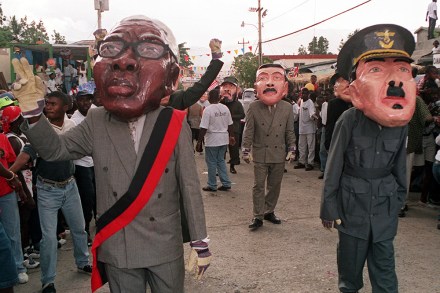
The life of Juan Carlos I, Spain’s 88-year-old former king, who reigned from 1975 until his abdication in 2014, falls into two parts: richly deserved triumph followed by richly deserved disgrace. Building on his 2004 biography, Juan Carlos: A People’s King, Paul Preston’s account of this extraordinary life is magisterial. The son of Don Juan de Borbon, the exiled heir to the Spanish throne, Juan Carlos was born in Rome in 1938. With a view to the eventual restoration of an authoritarian monarchy, he was sent to Spain, aged ten, to be indoctrinated in General Franco’s political tenets. He also had to endure the dictator’s long lectures on the mistakes made by previous Spanish monarchs.
How Syria’s dream of freedom ended in further repression

From our UK edition

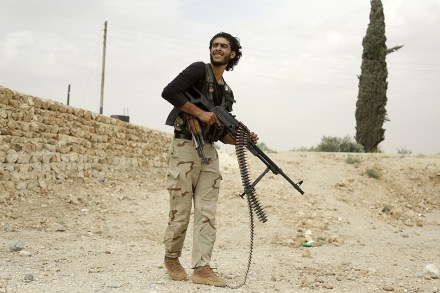
Anand Gopal has form when it comes to war. In Afghanistan, distrustful of President Bush’s ‘good vs evil’ and ‘you’re either with us or against us’ narrative, he did what every good reporter does: ‘I learned the language, grew a beard and hit the road like a local.’ The result was No Good Men Among the Living: America, the Taliban, and the War through Afghan Eyes, a Pulitzer and National Book Award finalist. In its refusal to stick to the script – especially American and British propaganda about all the ‘progress’ which later proved so illusory – the book recalled Michael Herr’s classic Vietnam exposé, Dispatches.

With no coherent strategy, Britain seems perpetually adrift in the world

From our UK edition

The British state seems perpetually befuddled. Every international crisis catches it in its sudden glare like so many headlights trained on a nervous rabbit hopping hopelessly around a motorway. One moment Russia is invading Ukraine, then Hamas attacks Israel, Israel flattens Gaza, America knocks out Venezuela, then attacks Iran, while all the time China leers over Taiwan. Each new event leaves us spinning. Whose side are we on? What do we want? How do we get it? We use grand words to navigate our way in the confusion: ‘the special relationship’; ‘the national interest’; ‘the rules-based order’. But if these once signified some grand story we could all relate to they now feel empty and confusing.

The diminutive dictator who ruled Spain with an iron fist

From our UK edition

General Franco died on 20 November 1975, and with the 50th anniversary just passed, this biography – the first in years – of the man who ruled Spain with an iron fist for nearly four decades is timely, incisive and authoritative. Written by a former Madrid correspondent of the Economist, it’s also an up to date and highly accessible introduction to 20th-century Spanish history. Born in 1892 into a middle-class family, Francisco Franco shared a bedroom with his younger brother Ramon, who later won international fame as Europe’s ‘equivalent of Charles Lindbergh’. There were few signs, however, that eminence also awaited Francisco. A weedy child, who dutifully got by at school, he had a difficult relationship with his domineering Freemason father.

Kamala’s brand new, same old last-minute policy platform

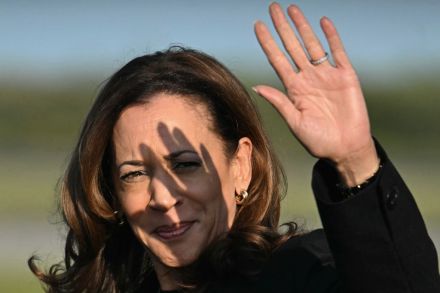
After weeks of studious silence, Vice President Kamala Harris has been issuing a flurry of policy proposals that she’s touting as “A New Way Forward.” But is it really new? Or is it the old way forward? In the early hours of Monday morning, she unveiled a series of proposals for the first time on her website about the economy, immigration and foreign affairs. Harris is careful to contrast her proposals, again and again, with what she terms “Trump’s Project 2025 Agenda.” Poor Trump. He has repeatedly disavowed the Heritage Foundation tome calling for everything from banning IVF to purging the civil service. But it hasn’t helped as the Harris campaign presents it as his campaign platform.

kamala

Why state bureaucracy is crucial to our happiness

From our UK edition

Most days, outside the local courtroom where I live in Finchley Central, a man holds up a placard that says in big black capitals: ALL OUR BRAINS ARE MICROCHIPPED BY THE SECURITY SERVICES. It’s a foolish conspiracy theory, of course, but it’s also a symptom of the fear and loathing of the state which has grown in recent years and which, according to this lucid and persuasive book, threatens to return us to a time when we were governed by the whims of a monarch whose wishes were implemented arbitrarily by his family, friends and flatterers. The problem, say Stephen E. Hanson and Jeffrey S. Kopstein, is not that this presages an end to democracy.

What America should heed from Julius Caesar’s assassination

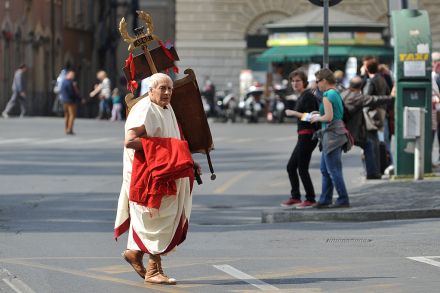
It being the Ides of March, I thought it might be worth reflecting briefly on the most famous event that occurred on this day: the assassination of Julius Caesar in 44 BC. One of the great ironies surrounding that bloody event is that, for all of the upheaval it occasioned, it failed utterly in its stated purpose. The conspirators sought — or said they sought — to overthrow a dictator and restore the Republic.  “The Republic,” “the Republic,” “the Republic”: that was the phrase they uttered ad nauseam. But the Roman Republic, devised to govern a city state, was overwhelmed by the cosmopolitan responsibilities of empire. By Caesar’s day, the Republic was a tottering and deeply corrupt edifice.

ides of march caesar

Zimbabwe’s politics satirised: Glory, by NoViolet Bulawayo, reviewed

From our UK edition

NoViolet Bulawayo’s first novel We Need New Names, shortlisted for the Booker in 2013, was a charming, tender gem, suffused with the guileless hilarity of children and the shock of tragedy in Zimbabwe, the author’s birthplace. Her follow-up, Glory, features animals as characters. I was initially mystified. Who would try to match Orwell’s allegorical masterpiece Animal Farm? Art Spiegelman succeeded in Maus, his graphic novel about the Holocaust, but each species represented one race, so the symbolism packed a punch – German cats hunting Jewish mice. Here the species are often random, apart from the savage dog police. But the use of animals at least lends humour to a heavy subject: the betrayal of the people of Zimbabwe.

The techniques of totalitarianism are still fully in play today

How to Become a Tyrant (Netflix) is ideal history TV for Generation No Attention Span. Presented in six bite-sized chunks by Peter Dinklage, aka the ‘Imp’ Tyrion Lannister from Game of Thrones, it tells you most of the things you need to know about Hitler, Stalin, Mao, Gaddafi, Kim Il-Sung, Idi Amin and Saddam Hussein, without obliging you to think or grapple with any tedious detail. Instead of examining the dictators individually, it explores their careers thematically, looking for the ingredients they have in common. It’s split into half-hour episodes — ‘Seize Power’, ‘Crush Your Rivals’, ‘Reign Through Terror’, ‘Control the Truth’, ‘Create a New Society’, ‘Rule Forever’ — which mix contemporary film footage with attractive animation.

tyrant

Biden shouldn’t bow to tyrants like Erdogan

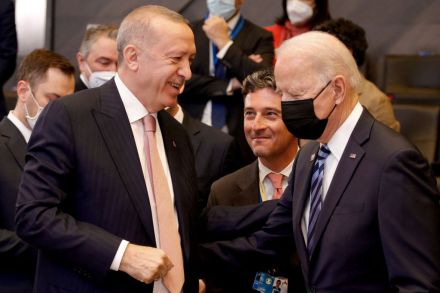
Back in 2015, when Turkey downed a Russian jet on the Syrian border, relations with Moscow nosedived. Russia imposed sanctions on Turkey, and its government-controlled media laid bare financial and military links between radical groups in Syria and high-level Turkish government officials. Russian pressure on Turkey was so crippling that Erdogan had to write a letter to Russian president Vladimir Putin to apologize. Putin knows how to handle bullies — because he is one. Not only did Russia's pressure force Turkey to toe line, but it also turned Turkey into one of Russia's biggest allies. Ankara even purchased S-400 Russian anti-air defense systems at the expense of alienating its Nato allies.

erdogan

When democracy worked in China

From our UK edition

Spectator contributors were asked: Which moment from history seems most significant or interesting? Here is Jung Chang's answer: My highlight of history would be the first 16 years of the Chinese Republic — 1912 to 1928 — when China was a vibrant democracy. This fact is generally unknown to the world, and I came to appreciate it fully only while researching my last two books, one on Empress Dowager Cixi, and the other on the three Soong sisters from Shanghai.  The democratisation process began with Cixi in the first decade of the 20th century, when she resolved to turn China into a constitutional monarchy. After her death, the Republic that came into being in 1912 put democracy into practice.

Kingdoms of the wicked

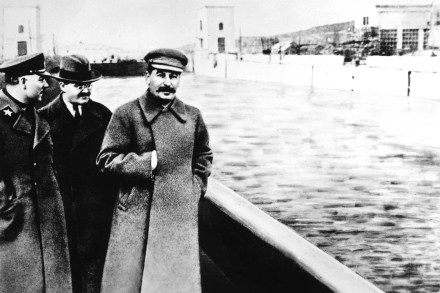
This article is in The Spectator’s January 2020 US edition. Subscribe here. Frank Dikötter has written a lively and concise analysis of the techniques and personalities of eight 20th-century dictators: Mussolini, Hitler, Stalin, Mao Zedong, Kim Il-sung (North Korea), François ‘Papa Doc’ Duvalier (Haiti), Nicolae Ceausescu (Romania) and Mengistu Haile Mariam (Ethiopia). As a comparative study of those individuals, it is enlightening and a good read. The title and parts of the foreword indicate that it aspires also to be a guidebook of dictator tactics. There are some weaknesses in this broader ambition. These eight men were not altogether uniform in their methods of obtaining, retaining or losing power, and certainly not in their abilities.

dictator