Catholicism

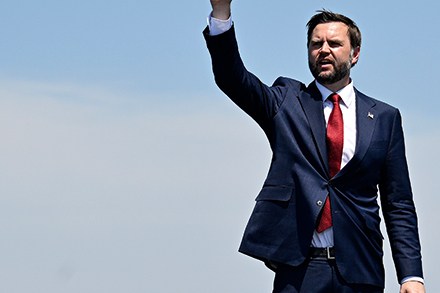
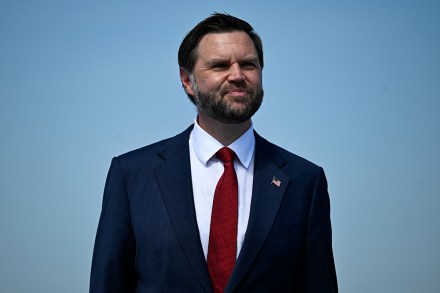
Why is Trump all but invisible in J.D. Vance’s Communion?

"Read Hillbilly Elegy," a friend messaged me a decade ago. "The author really gets it." So I did, and indeed he did. The young and then obscure J.D. Vance showed, through his family travails in Appalachia, how both Republicans and Democrats had in their different ways screwed blue collar, just-about-working-class families like his. The book went platinum and launched his public career. Three things saved the young Vance from the fate that awaited people like him: a fiercely defensive and religious grandmother ("Mamaw"), enlisting in the Marines, and evangelical Christianity. He fell away from this last, however, as he discovered that his fundamentalist faith may have had community love in spades but was very short on good answers to big questions.

communion

How does the Catholic J.D. Vance justify Trumpian policies?

‘Read Hillbilly Elegy,’ a friend messaged me a decade ago. ‘The author really gets it.’ So I did, and indeed he did. The young and then obscure J.D. Vance showed, through his family travails in Appalachia, how both Republicans and Democrats had in their different ways screwed blue collar, just-about-working-class families like his. The book went platinum and launched his public career. Three things saved the young Vance from the fate that awaited people like him: a fiercely defensive and religious grandmother (‘Mamaw’), enlisting in the US Marines, and evangelical Christianity. He fell away from this last, however, as he discovered that his fundamentalist faith may have had community love in spades but was very short on good answers to big questions.

The Catholic Church has turned on the faithful

The Catholic world has been in an uproar since February, when the Society of Saint Pius X, a Catholic order of traditionalist priests, announced its intention to consecrate bishops with or without papal approbation, for the second time since 1988. On May 26, the identities of their four candidates were revealed: one American, one Swiss, and two Frenchmen.  The Society acknowledges the extraordinary nature of its action, but insists that the Church is in a serious crisis. Without their own bishops, it says, no one will ordain priests trained exclusively in traditional Catholic doctrine and liturgy, and the faithful who rely on them will be left without recourse.

Pius X

Mapping the Emerald Isle: Land, by Maggie O’Farrell, reviewed

From our UK edition

Maggie O’Farrell’s two previous historical novels, Hamnet and The Marriage Portrait, made her a household name. Land marks a return to her Irish roots: ‘Every family has its myths and ours was that my great-great-grandfather had worked on the early maps of Ireland.’ The year is 1865 and 31-year-old Tomás, a mapmaker, accompanied by his ten-year-old son Liam, is in the employ of the English redcoats and tasked with surveying and mapping Ireland from top to bottom, rocky outcrop to drumlin.

Keir Starmer is downplaying the Islamist threat to Jews

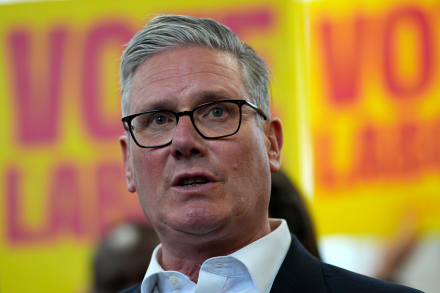
At Tuesday’s anti-Semitism ‘summit’ in Downing Street, Sir Keir Starmer achieved a personal first. He used the word ‘Islamists’. But in order to utter a word he had previously avoided in relation to the subject, Sir Keir had to approach it crabwise. Instead of identifying Islamists as the main ideological and physical threat to British Jews, he said: ‘We’re clear-eyed about the fact that anti-Semitism does not have one source alone: Islamists, far-left, far-right extremism, all target Jewish communities.’ Islamists were thus inserted into the conversation but also downplayed. It is obsolete not to recognise that the far right in Britain – for the moment at least – more or less leave Jews alone.

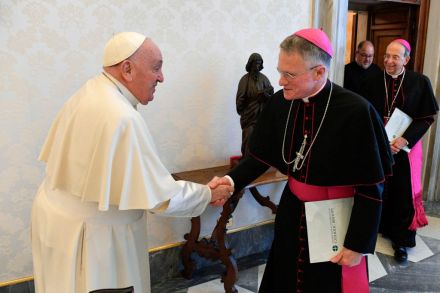
What’s really behind Trump’s clash with the Pope?

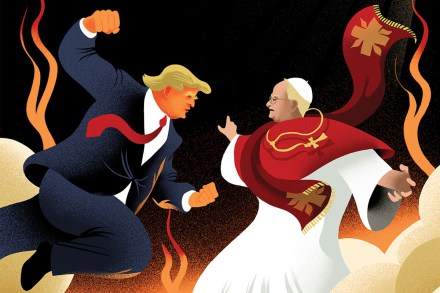
Donald Trump’s latest clash with the Catholic Church stunned even the most hardened veterans of culture-war X. According to the President of the United States, the Chicago-born Pope Leo XIV, the conspicuously holy spiritual leader of 1.3 billion people, is “WEAK on crime and terrible on foreign policy.” He also claimed that, “If I wasn’t in the White House, Leo wouldn’t be in the Vatican.” For commentators accustomed to the fog of modern diplomatic platitudes, such trash talk was the equivalent of a Holy Roman Emperor hurling insults at a medieval pontiff.

trump pope damian thompson

How Pope Leo XIV is quietly reshaping the Vatican

On the afternoon of Easter Sunday last year, Pope Francis was driven through St. Peter’s Square in an open-topped Popemobile. A few weeks earlier he had nearly died from pneumonia, so pilgrims were thrilled to watch him blessing babies. They told journalists that it was a miracle to see the 88-year-old Argentinian in such good shape. At 9:45 the next morning, the Vatican announced that Francis had just died from a stroke. And so began the preparations for a conclave that elected the second pope from the Americas. Cardinal Robert Prevost – “Bob” to his friends – was a Chicago-born dual citizen of the United States and Peru. Until 2023 he’d been bishop of the Peruvian diocese of Chiclayo.

pope leo xiv

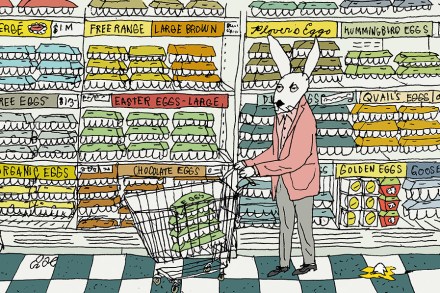
How different is Catholic and Protestant food at Easter?

I’m a New York-raised Italian Catholic, and my family’s inherited religious-cultural neuroses inform our meals every bit as much as the WASPs next door. This is particularly true at Easter, where centuries of European immigration have shaped the culinary traditions in New York. The Easter feast became a religiously sanctioned opportunity to indulge For my family, the Easter feast typically includes a herb-crusted leg of lamb (American only; New Zealand lamb is far too gamey), deviled eggs, rich scalloped potatoes, honey-glazed carrots, some fresh spring vegetables and an absurdly decadent chocolate dessert – all washed down with a robust Etna Rosso, generously poured.

Leonardo Sciascia and the reshaping of the detective novel

From our UK edition

Northern Italians sometimes speak of Sicily as the place where Europe finally ends. The island was conquered in the 9th century by Arab forces from north Africa, who left behind mosques and orchards of pistachio and almond. The Arab influence remains strongest in the Mafia-dominated west of Sicily where the sirocco blows in hot from Tunisia. Leonardo Sciascia, the Italian detective novelist and essayist, was born in Racalmuto in western Sicily in 1921. The town takes its name from the Arabic rahal maut, ‘dead village’, after Arab settlers found the area devastated by plague. It appears thinly disguised as Regalpetra in Sciascia’s work. For years the Mafia infiltrated the town’s sulphur industry, but the mines are derelict now and the landscape looks denuded.

Could military service become morally untenable for Catholics?

During his lengthy interview with the New York Times, President Trump was asked if there was anything that could check his power on the world stage. “Yeah, there is one thing,” he said. “My own morality. My own mind.” What are we to make of Trump’s morality? That’s between him and God, I suppose, and perhaps only the all-knowing could parse his mind. But it’s fair to wonder where morality factors into Trump’s foreign policy, and whether America’s moral justification of force has only ever been a convenient pretext for acting in our own interest.  At the World Economic Forum in Davos today, Trump said he “won’t use force” to take Greenland.

Pope

Why I’m keeping my Christmas decorations up until February

From our UK edition

It feels like the 57th day of January. Last week the coldest temperature of the winter so far (-12.5°C) was recorded about 20 miles west of my house. And according to every newspaper and social media feed I have scanned since new year, I should be purging my body of toxins by eating ‘plant-based meals’, abstaining from alcohol or otherwise giving up any semblance of comfort and joy. But there is another way. This may be ‘the worst time of the year… the very dead of winter’, as T.S. Eliot described the season in ‘Journey of the Magi’, but we are still in Christmastide – right up until 2 February, or Candlemas.   Twelfth Night used to be about fun and misrule, incorporating elements of the Romans’ midwinter festival Saturnalia.

The diminutive dictator who ruled Spain with an iron fist

From our UK edition

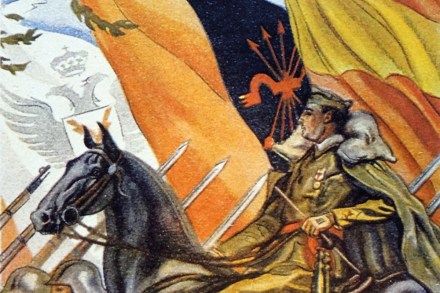
General Franco died on 20 November 1975, and with the 50th anniversary just passed, this biography – the first in years – of the man who ruled Spain with an iron fist for nearly four decades is timely, incisive and authoritative. Written by a former Madrid correspondent of the Economist, it’s also an up to date and highly accessible introduction to 20th-century Spanish history. Born in 1892 into a middle-class family, Francisco Franco shared a bedroom with his younger brother Ramon, who later won international fame as Europe’s ‘equivalent of Charles Lindbergh’. There were few signs, however, that eminence also awaited Francisco. A weedy child, who dutifully got by at school, he had a difficult relationship with his domineering Freemason father.

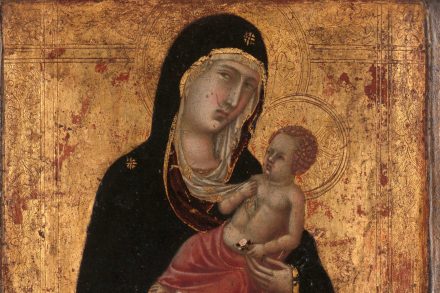
This Christmas, listen to Mary Did You Know?

A popular and poignant Christmas song, written late in the previous century for a church’s holiday program, incites passionate criticism from those who disagree with the way it phrases its message. Since first being recorded in 1991, “Mary, Did You Know?” has been performed by soloists and groups ranging from Carrie Underwood and Dolly Parton to Pentatonix, CeeLo Greene and Kathleen Battle. The lyrics are a series of questions to Mary, Jesus’s mother, asking whether she knew during his infancy about the profound impact he would make as an adult. Yet that powerful literary device annoys those who believe the song demeans its subject.

What do Oscar Wilde, Gwen John and Evelyn Waugh have in common?

From our UK edition

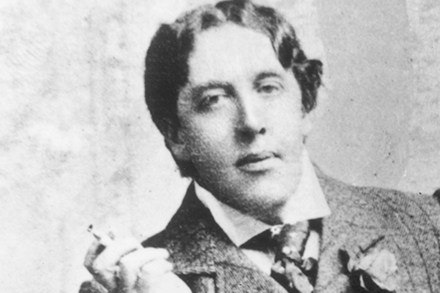
Religious conversions do not, for the most part, make for good anecdotes. An exception can be found in Patricia Lockwood’s memoir Priestdaddy, which describes the author’s father Greg’s road to Damascus experience in a nuclear submarine off the coast of Norway, where he watched The Exorcist 72 times: That eerie, pea-soup light was pouring down, and all around him men in sailor suits were getting the bejesus scared out of them, and the bejesus flew into my father like a dart into a bull’s eye. It was, Greg boasted, ‘the deepest conversion on record’.

The furious tug of war between 18th-century Whigs and Tories

From our UK edition

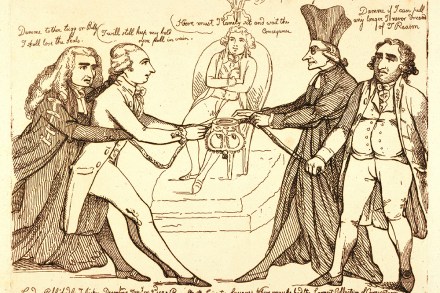
A foul-mouthed fantasist with a chin like an ironing board starts a wild conspiracy theory about the King’s brother. An alcoholic racing fanatic turns his gambler’s eye to the ballot box. A maniacal preacher gives such a polarising sermon that he paints himself as a second Christ and tours the country as a sex symbol. These are not the inventions of William Hogarth or Jonathan Swift; they are the figures who divided our political system in two, as George Owers tells us in his delightful new history of the birth of party politics. The Rage of Party traces the fevered rise of Whigs and Tories during the reigns of William III and Queen Anne.

Satanic verses: the origins of Roman Catholic black metal

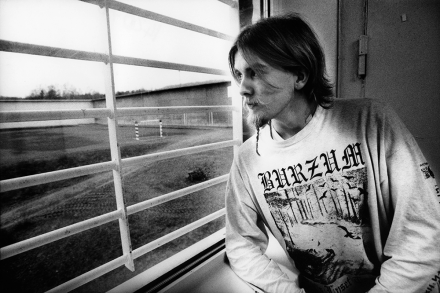
In his youth in the early 2000s, Emil Lundin became obsessed with the idea of recording the world’s ‘most evil album’. The lanky, long-haired Swede formed a black metal band and set to work. He faced an immediate obstacle. In making history’s most nefarious musical creation, he could hardly use Swedish, with its sing-song tones. English was also out of the question: he didn’t want to sound like Abba. That left Latin, the native tongue of the occult and, it is said, of demons. In a quest for suitably devilish lyrics, he pored over arcane texts. That led him to Latin editions of Sayings of the Desert Fathers – bad-ass early Christian monks – and St Augustine’s Confessions.

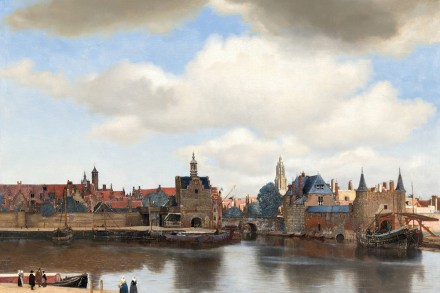
Are Vermeer’s paintings really coded religious messages?

From our UK edition

The Delft painter Johannes Vermeer, now probably the most beloved artist of the Dutch Golden Age, had an unusual career. His reputation in his lifetime was small. For some reason he painted almost exclusively for the van Ruijvens, so only those who knew the family would have been able to view much of the work. One foreign observer who did see a painting owned by a baker (probably handed over in security for a large overdue account) was incredulous at what the owner claimed was the value of a small picture by an unknown artist. After Vermeer’s death, and the sale of the collection for very little on the death of his patrons’ son-in-law, his name disappeared. He is hardly ever mentioned in any of the exhaustive and insightful 18th-century histories of Dutch painting.

A celebration of friendship – by Andrew O’Hagan

From our UK edition

When I interviewed Andrew O’Hagan ten years ago about his Booker longlisted novel The Illuminations, the most striking thing that he said was: Friendship is more important than almost anything. I always thought it was a sort of deliverance, having a good friend, that they would bring a generosity and an unprejudiced eye to your ambition, your hopes and your thoughts in a way that family can’t always do. I mean what is family but a lovable collection of prejudices, some in your favour and some not? Although I agreed with him, I was intrigued that someone who was both a parent and a sibling would feel this way. The importance of friendship is clearly an ongoing preoccupation.

Which are the ‘Twelve Churches’ that made Christianity?

From our UK edition

40 min listen

What links the Church of the Nativity in Bethlehem and St Peter's in Rome with the 16th Street Baptist Church in Birmingham, Alabama, and Canaanland in Ota, Nigeria? These are just some of the churches that Anglican priest and writer the Revd Fergus Butler-Gallie highlights in his new book Twelve Churches: An Unlikely History of the Buildings that made Christianity. The Anglican priest and writer joins Damian Thompson on Holy Smoke to explain how each Church not only tells a story but also raises a surprising dilemma for modern believers. Fergus aims to tell the history of the Churches 'warts and all' and argues that, from Turkey to Britain, today’s Christians must be prepared to defend their religious spaces.

Will Pope Leo stand up to Islam?

As Muslim migration roils Europe, some Catholic bishops are starting to notice. "For decades, the Islamization of Europe has been progressing through mass immigration,” Polish Bishop Antoni Długosz said July 13, adding that illegal immigrants “create serious problems in the countries they arrive in." Bishop Athanasius Schneider of Kazakhstan spoke more bluntly in March: "We're witnessing an invasion. They are not refugees. This is an invasion, a mass Islamization of Europe." Yet Pope Leo XIV lives in a different dimension. "In a world darkened by war and injustice . . . migrants and refugees stand as messengers of hope," Leo said July 25.