The war in Iran has revealed plenty about America’s ability to inflict damage on its enemies, Tehran’s capacity to resist pressure and Washington’s broader tendency to get itself stuck in the Middle East – a region several US presidents planned to extricate from. The conflict has been paused since April 7 due to a ceasefire that Trump extended earlier in the week. But it is nonetheless revealing a gradual systemic shift in the so-called international order that has been bubbling beneath the surface for years.
The movable object is none other than the transatlantic alliance which, through NATO, has bound the United States and most of Europe into a single security construct. That perennial institution, which security elites on both sides of the Atlantic have for decades held up as the pinnacle of what an alliance should be, is beginning to lose its luster. This is thanks to the weight of diverging geopolitical priorities, divisions within Europe itself and President Trump’s propensity to treat European states as the equivalent of a lazy 25-year-old who refuses to leave the house and get a job.
The war in Iran has exacerbated all of those elements, so much so that public acrimony is now par for the course. Mutual contempt now hovers over NATO and is fragmenting the alliance as its most important member, the United States, becomes steadily more irritated by what it views as a lack of support.
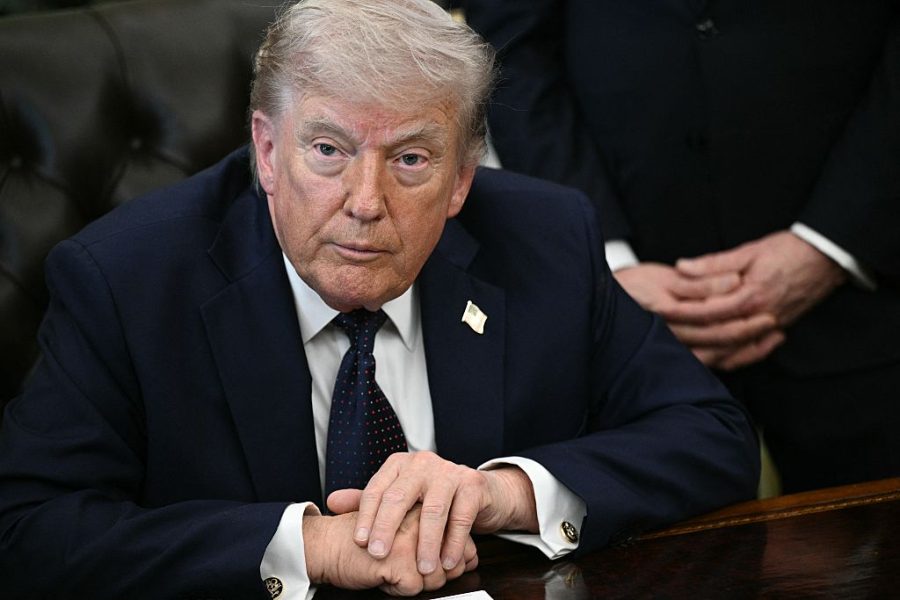
In the eyes of much of Europe, Trump is a human bulldozer
Trump has made no bones about his disgust for how European governments have responded to his calls for help in the Persian Gulf. Leaders like British Prime Minister Keir Starmer and Italian Prime Minister Giorgia Meloni, who Trump got along with on a personal and professional level, are now castigated as Neville Chamberlains of the 21st century.
But the animus is now moving beyond the rhetorical towards the concrete. The Trump administration is debating how best to penalize NATO allies who have refused to plunge into Trump’s war of choice in the Middle East. Europe, meanwhile, has seen the writing on the wall. It has launched deliberations at a steady pace about establishing an insurance policy should Trump actually pull the United States out of the alliance or downgrade Washington’s participation in it.
In Washington, US officials are tabling various proposals to not only punish European allies for their perceived disloyalty but also to coerce them into following in the American military’s footsteps. For instance, the Trump administration has weighed the option of withdrawing US troops from NATO countries that are insufficiently supportive of their Iran campaign.
In a similar vein, those that have aided and abetted the war in some way would get rewarded with larger American military deployments. This is a scheme that treats US troops as if they were mercenaries at the beck and call of the monarch in the White House. Another option reportedly under discussion is more country-specific: suspending Spain from the alliance. Spain has taken the place of Germany as Trump’s favorite punching bag due to its trade policies, outspoken prime minister and comparatively low defense spending.
The UK would similarly be put more firmly under Trump’s microscope as well. Under preliminary plans currently being bandied about, US officials are supposedly reviewing Washington’s stance on the Falkland Islands, the British-managed territory off Argentina. The State Department has not officially taken a formal position on its sovereignty yet.
Such a policy change, if enacted, would be a big spit in the face for the UK and likely rub a lot of Brits the wrong way. Moreover, when Argentina’s military dictatorship attempted to seize the Falklands more than four decades ago, it was the United States that denounced the action as an overt act of territorial aggression and agreed to provide London with diplomatic and military assistance after a US-sponsored peace process fell apart.
This was not an easy decision at the time. Argentina was a bulwark against Soviet-inspired communism in South America, and Washington knew that siding with the UK would alienate a significant portion of Latin America as a whole. Yet President Ronald Reagan did so nevertheless, defending the British military’s actions there as an appropriate response to an attempted land grab.
In the eyes of much of Europe, Trump is a human bulldozer who doesn’t care about history and despises the very concept of an alliance system. Even so, there’s a silver lining to all the doom and dysfunction. As much as transatlantic disagreements often cause inherent panic in the minds of security analysts, Trump’s words and rumored actions are forcing the continent to be proactive by preparing for a day when Nato might have fewer feet to stand on.
Germany, a country whose defense spending was so anemic that it was the butt of jokes, is now seeking to build the largest conventional land force in Europe by 2029 at the earliest. French President Emmanuel Macron is signaling his intent to make Paris’s nuclear deterrent more readily available to the rest of the continent. NATO bureaucrats are increasingly asking questions about how the alliance’s institutions would continue to function in the event of an American withdrawal.
Outside NATO, even the European Union is getting in on the action. Members of the bloc plan to conduct an exercise next month to test out how the pan-European institution would implement the body’s mutual assistance clause if EU soil was attacked.
You can despise Donald Trump to your heart’s desire. But one thing is for sure: none of this would be happening if he weren’t sitting in the Oval Office right now.





Comments