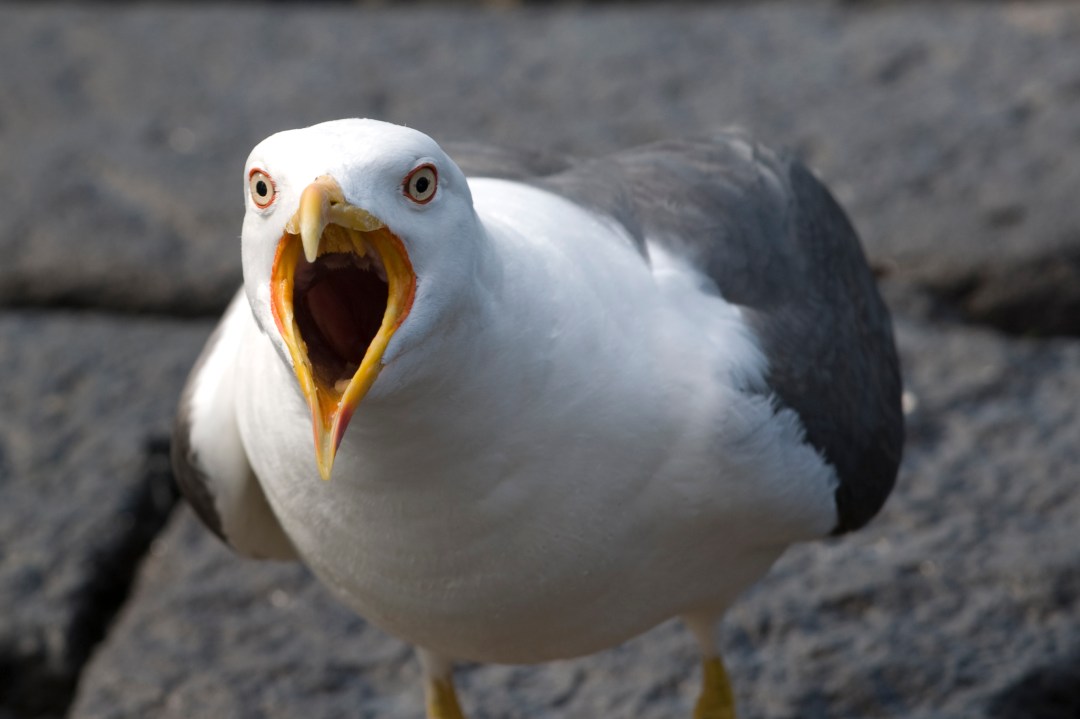
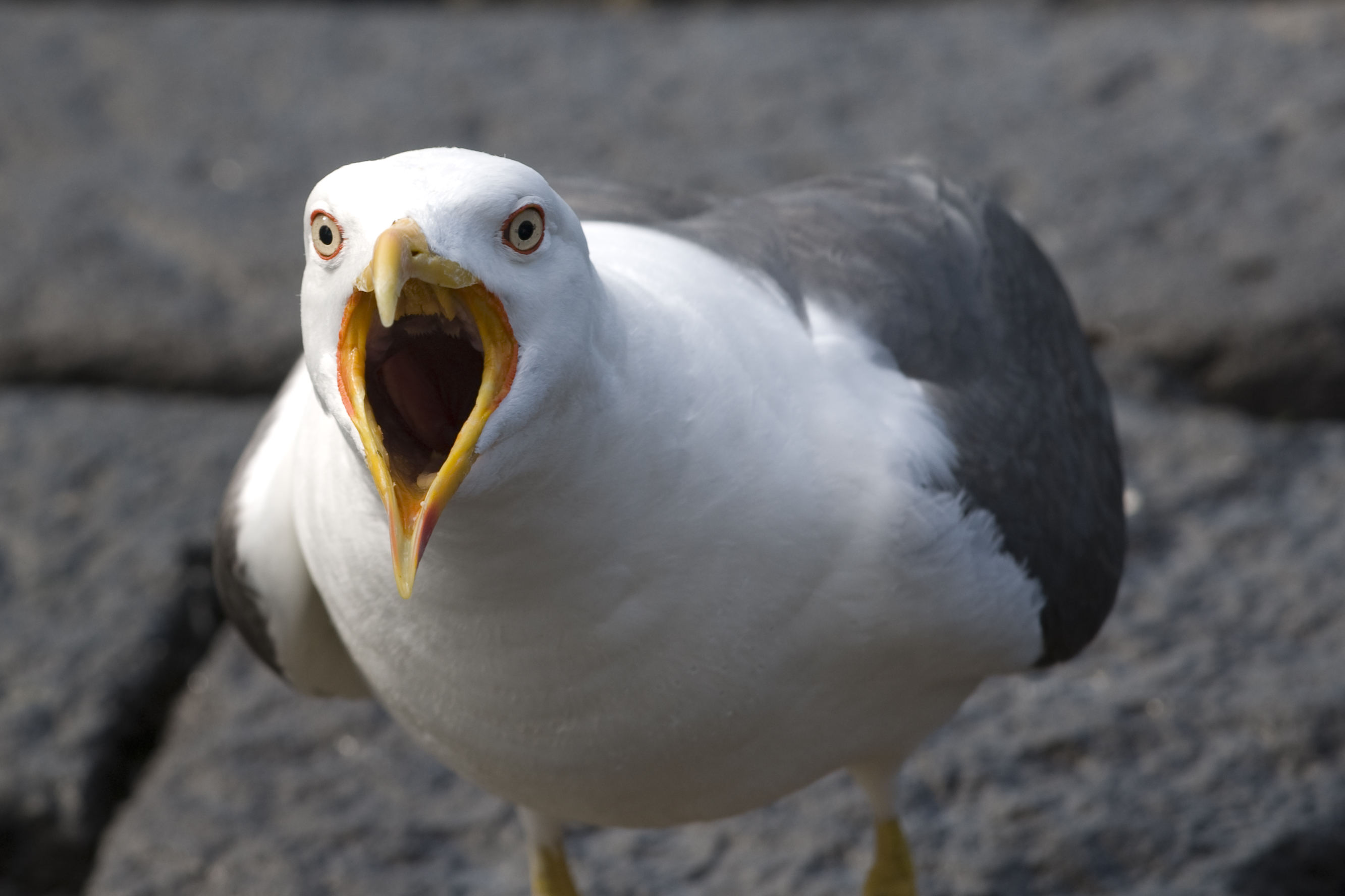
A seagull’s screech can be heard over a mile from the coast. I reckon my seven-year-old daughter’s seagull impression carries twice that distance. We call her screeches ‘bunker-busters’ because they have been known to pierce through four storeys, a pillow and noise-cancelling headphones. Months of shattered hangovers, terrorised wildlife and fractious calls from neighbours have paid off, however, because last weekend we all piled into the car and drove from the East Midlands to the European Seagull Screeching Championship in Belgium to watch her compete.
This eccentric event, now in its sixth year, was founded by ecologist Claude Willaert with the aim of improving seagulls’ reputation (summed up by Claude as ‘Make Seagulls Sexy Again’). It draws competitors from across Europe to De Panne, a surprisingly beautiful seaside town, by Belgian standards. It lies a few miles up the coast from industrial Dunkirk and is a well-to-do cross between Cannes, Hastings and Noddy’s Toytown. It’s an unlikely destination for 500 international seagull enthusiasts. But isn’t everywhere?
Crazy as it is, The European Seagull Screeching Championship is the perfect antidote to the genuine madness engulfing the world. I think that’s deliberate. Whatever the competition’s official aim, every attendee, drawn from 15 countries across the continent, was there to indulge in an afternoon of whimsy, shared bonds, common culture and love. And/or to get drunk. It’s the same vision that Remainers thought they were voting for in 2016, and, increasingly, I think it might be what we need in 2026.
The competition is held in a claustrophobic pub on the outskirts of town and two marquees had been set up on the pavement to provide for the inevitable overflow. The scene, from arrival to closing ceremony, was one of joyful chaos. Claude MC’d proceedings, seeming at all times on the very verge of losing control of the collective lunacy he was attempting to wrangle. Accordingly, he launched the event off with the Eurovision anthem, ‘sung’ by 500 or so attendees only in seagull squawks. Formalities over, the contest began in earnest, split into three parts, Juveniles, Adults and Colonies.
Each screech is judged by a panel of seagull experts. These included representatives of the Ostend Bird Rescue Centre (Seagull Team), the Coastal Policy Officer for the Province of West Flanders and a member of The Belgian Institute for Nature and Forest Research (Seabirds).
My daughter was one of the first called to the stage. She’d carefully chosen her clothes to be as seagull-like as possible (25 per cent of your overall mark is for how seagull-y you behave, the rest is for the screech itself). And she did brilliantly. Faced with four TV crews, the jury and 500 expectant faces momentarily hushed into silence, her now-familiar screech rended the air and prompted a huge roar from the crowd.
And with that it was over. We skipped the adult and colony contest to decompress over a Happy Meal. She didn’t win, but she walked on air for a few days, conscious of being part of something special. And I think we all were. Every country of Europe, pretty much, was represented, all dressed as seagulls, screeching, being wonderfully silly and supporting everyone else doing the same. This was the sort of joy you normally only see in religious settings.
Britain’s EU departure often feels like the first domino in a series of bonkers events taking the world to the edges of precipices unthinkable a decade ago. Back then, the idea of Britain going it alone felt exciting. Europe seemed better off without us too, now free to chase its ever-closer-union. Today, with both the EU and UK reeling from world events, I am, for the first time, starting to think that maybe I want a bit more of that seagull screeching unity. Whether it’s the European Union, or Mark Carney’s ‘second rate countries’ (or whatever it’s called), or something else, our Belgium visit reminded me of the power of shared optimism.
It’s a 50-minute drive from De Panne to Calais and due to the madly confusing autoroute signage I was flashed twice by French speed cameras. Thanks to the UK leaving the EU’s Cross-Border Enforcement Directive I won’t be receiving a fine in the post. But little part of me now thinks it would be worth it.




Comments