
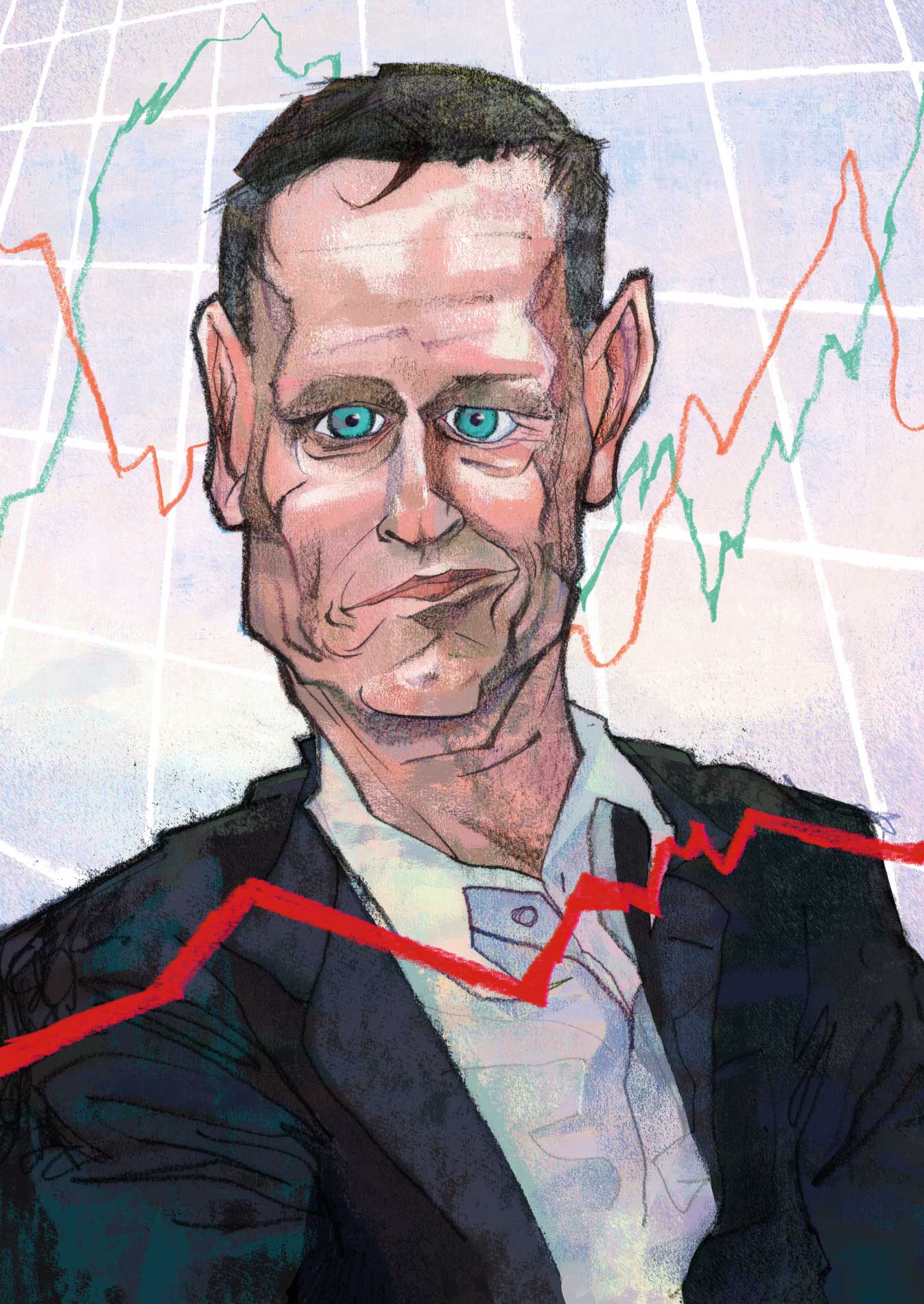
Many people enjoy ascribing meaning to the behavior and actions of elite politicians, celebrities – and especially billionaires. They read volumes into their every move, like studying tea leaves or predicting whole futures from the position and movement of the stars. So Peter Thiel’s decision to relocate to Argentina has elicited exactly the reaction one would expect. Thiel is the billionaire co-founder of PayPal and Palantir. Whenever he does anything unusual, the speculation begins within hours, growing more and more outlandish with every attempt to explain his actions. Is he finally fleeing the US? Is he seeking refuge from a wealth tax? Is he insuring himself against doomsday in anticipation of civilizational collapse?
For much of the 21st century, journalists have read Thiel’s actions as a sort of front-running signal about the future of politics. When he bought land and homes abroad, it became the centerpiece of a discussion around the Silicon Valley elite’s preparation for the apocalypse. When he backed Donald Trump in 2016, it was taken as evidence that the tech industry was abandoning the progressive slant it had adopted up to that point. When his enthusiasm for Trump seemed to cool off ahead of the 2024 election, observers took it to mean a broader rift was coming between populist politics and tech.
The common thread running through Thiel’s life is a fascination with unusual experiments
In the face of his relocation to Argentina, the cycle is repeating. One popular belief is that Thiel is positioning himself beyond the grasp of a future wealth tax (political groups in California have openly discussed a 5 percent tax on the assets of the state’s billionaires). But this fails to explain why the destination should be Buenos Aires. He could easily lower his tax bill by moving to Miami, where he already owns property.
The New York Times explains the move by suggesting that Argentina is just one of Thiel’s “back-up countries” as he hedges his bets against the United States. It mentions that he received citizenship in New Zealand in 2011 and applied for a Maltese passport in 2022.
Other explanations are more dramatic. His decision to buy a $6 million home in New Zealand in 2015 kicked off a rumor that he and other billionaires were insulating themselves against societal collapse – and his recent purchase of a plot of land in neighboring Uruguay has revived it. To the apocalyptically minded, Argentina is simply the next redoubt in a flight from a disintegrating world. “Argentina,” says the Times, “a nation relatively insulated from potential conflicts in the Northern Hemisphere, also fits as a potential escape hatch from other risks that Mr. Thiel has publicly warned about – nuclear war and runaway artificial intelligence.”
Thiel does little to discourage the rumor mill. He has spent his career underwriting eccentric causes – floating libertarian cities, life-extension research, grand technological fixes for stubborn political problems – and the air of doomsday rather suits his brand.
Yet all of these readings overcomplicate the truth. The common thread running through Thiel’s life is neither preparation for the apocalypse nor tax avoidance. It is a fascination with unusual experiments. He is, in every sense, a contrarian, and the world watches him precisely because he has consistently preferred the intellectual frontier to the settled consensus. If you’re paying attention to the macro, Thiel’s general ideas about the future of technology and politics make perfect sense. But focusing on the micro – his more eccentric ideas or personal choices – is a pointless endeavor.
Instead of subscribing to the idea that his movements are some sort of major indicator of things to come, the media should take Occam’s razor to his Argentina decision: it is possible that the more conspiratorial rumors about his move are true. But it is more likely that Thiel has simply found a political leader who he feels shares his ambitions. Some billionaires collect cars, others art, some homes. Thiel is, first and foremost, a connoisseur of unusual intellectual experiments. Argentina’s President Javier Milei has said of Thiel that their meeting was one of two like-minded individuals. “It was an anarcho-capitalist who met another anarcho-capitalist who is bringing things to life.”
For a man of Thiel’s means, buying some property, hanging out with Milei – even relocating – isn’t necessarily a big deal.
Journalists will continue searching for hidden meaning in this move. They are likely to be disappointed. Thiel’s actions ultimately say less about America – or the West – then they do about the man who makes them.



Comments