Technology

I’m being bullied by Duolingo

For the past 264 days, I have been hounded by a merciless small green owl. If I were to share this with friends, troubled whispers about my mental wellbeing would soon strike up. Disquieted, they might even cart me off to the hellscape of a wellness intervention. And yet this malevolent bird is entirely real. It is there when I unload the dishwasher, lamenting its disappointment in my efforts; and it is there when I put my daughter to bed, warning that it is about to become "very angry." Yes, Duolingo is an insidious Jiminy Cricket on modern shoulders – except that it lives in our pockets and, rather than dispensing wisdom, is an emotionally blackmailing shame merchant with rage issues. It wasn’t always this way.

duolingo

Why is Peter Thiel in Argentina?

Many people enjoy ascribing meaning to the behavior and actions of elite politicians, celebrities – and especially billionaires. They read volumes into their every move, like studying tea leaves or predicting whole futures from the position and movement of the stars. So Peter Thiel’s decision to relocate to Argentina has elicited exactly the reaction one would expect. Thiel is the billionaire co-founder of PayPal and Palantir. Whenever he does anything unusual, the speculation begins within hours, growing more and more outlandish with every attempt to explain his actions. Is he finally fleeing the US? Is he seeking refuge from a wealth tax? Is he insuring himself against doomsday in anticipation of civilizational collapse?

The rise of Palantir Derangement Syndrome

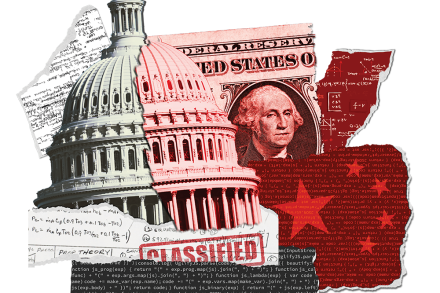
A late spring outbreak of righteous indignation is affecting the United Kingdom. It’s yet another variant of Palantir Derangement Syndrome. Virologists tracked this smug neurosis as it jumped across the Atlantic from the American left to British Labour. Symptoms include selective blindness, performative anguish, a hilarious inability to grasp the facts and Tourette’s-level outbursts of repetitive left-wing clichés. Earlier this month, a committee dominated by British Labour MPs who are infected by PDS called for Palantir to be stripped of its £330 million deal to help British hospitals save the lives of patients. The House of Commons science, innovation and technology committee accused the American tech giant of having a “clear mismatch” with British values.

Let AI eat the universities

College is extraordinarily expensive and becoming less useful, and those who insist otherwise are working from a model of the labor market that stopped describing reality sometime in the 1990s. Four-year courses at private institutions often cost more than $70,000 a year, and it should come as no surprise that student debt has tipped over $1 trillion . This situation is ridiculous for a film student, but it is also ridiculous for a computer science graduate whose program could not keep pace with the industry it was preparing him for – and who learned more in four months on GitHub and dicking around on X and Repl.it than in four years of lectures. It’s sad, but how many people were attending school for “the life of the mind” to begin with?

Why drones will carry out the next 9/11

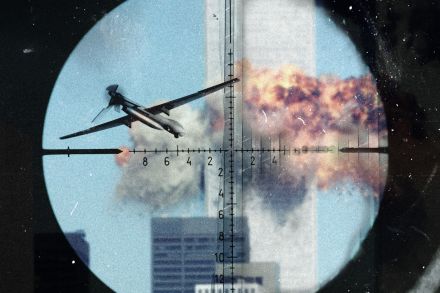
Few know more about drone warfare than Brett Velicovich. During the Iraq war, the former Delta Force intelligence analyst lived in a “black box” in the Iraqi desert using Reaper and Predator drones to pinpoint and track high-value terrorists – before sending in Tier 1 special forces teams, or a Hellfire missile, to end their lives. Most notable among the scalps he claimed were ISIS founder Abu Omar al-Baghdadi and the leader of Al Qaeda in Iraq Abu Ayyub al-Masri. “I feel like there's going to be another 9/11, but this time without the martyrs because you don't need humans anymore to cause sensational damage” Velicovich’s days in the "black box” were some of the last that America could control the skies with drones.

TV doesn’t ruin childhood, but phones might

When I was a nipper, a staple of children’s television was a show called Why Don’t You? The full title, as the theme song made clear, was: “Why don’t you just switch off your television set and go and do something less boring instead?" Very “meta”, as we didn’t then say. And, of course, generations of children sat on the sofa gormlessly drinking Um Bongo while we watched the show’s cast demonstrate all the wholesome arts-and-crafts activities we could have been doing instead of watching TV. This was a few years before our parents discovered the joys of eating microwave TV dinners while watching Master Chef. A previous generation feared that the rise of television would put an end to children reading. It didn’t I start with this to give a bit of context.

Fighting technology is futile

A 20-year-old from Spring, Texas, named Daniel Alejandro Moreno-Gama has been charged with attempted murder after he was accused of throwing a Molotov cocktail at the gate of Sam Altman’s San Francisco home on April 10. He then allegedly walked toward OpenAI’s Mission Bay headquarters and told employees he intended to burn the building down as well. He was reportedly carrying a manifesto – a “three-part series,” according to Fox News – that included a list of other AI executives and investors and their home addresses and documents discussing potential risks that AI poses to humanity, with a section titled: “Some more words on the matter of our impending extinction.

technology

The arrogance of the tech-skeptics

If you’ve been paying attention to social media lately, then you already know the score: smartphones are corrupting our children, we need legal intervention immediately. Roughly half of US states have enacted some form of age-gating for social media or pornographic content. Australia banned under-16s from social media platforms outright, France and Indonesia followed suit and the United Kingdom is now asking people for their papers to read moderately offensive blog posts. You don’t need me to rehash this. The phones have nuked the interior lives of Gen Z, Gen A and the hitherto unborn Generations B and C. Every opinion lands somewhere between “protect the children” and “this is Reefer Madness for iPads.

The age of the aircraft carrier is over

Ever since World War Two, America’s aircraft carrier fleets have served as imposing instruments of imperial power, roaming the oceans to cow recalcitrant nations into obedience. Favored by the Trump administration for this purpose, current experience indicates their day is done thanks to the proliferation of anti-ship missiles and the increasing ubiquity of drones. In America’s last Middle Eastern war but two, against the Yemeni Houthis in 2025, the carrier USS Harry S.Truman, complete with its attendant escorts, was driven into retreat, leaving antagonists in control of the Red Sea. On one occasion, the carrier’s desperate maneuver to avoid a Houthi drone caused an $80 million Hornet jet fighter to slide off the deck and topple into the sea.

Why Emmanuel Macron has declared war on X

Investigators from the Paris prosecutor's cyber-crime unit raided the offices of X in the French capital on Tuesday in what Elon Musk described as a "political attack." The raid was part of an inquiry into whether X, which Musk has owned since 2022, has violated French law. In particular, the prosecutor’s office said it was investigating complicity "in possession or organized distribution of images of children of a pornographic nature... sexual deepfakes and fraudulent data extraction by an organized group." X has denied any wrongdoing. Musk and the former chief executive of X, Linda Yaccarino, have been asked to attend hearings in April. Yaccarino, who left the company last year, echoed Musk’s declaration, accusing France of waging "a political vendetta against Americans.

macron x

US special forces’ secret weapons

By using a sonic weapon in the mission to capture Nicolás Maduro, as Donald Trump appears to have confirmed, Delta Force commandos not only triggered a paradigm shift in warfare, but served poetic justice. When asked whether such a weapon had been used, the President replied: “It’s probably good not to talk about it.” But then added: “Nobody else has it, we have some amazing weapons that nobody knows about.” The following morning, at Davos, Trump said: “They weren’t able to fire a single shot at us. They said, ‘What happened?’ Everything was discombobulated.

sonic

Greenland and the new space race

Donald Trump’s desire for Greenland is not just about access to oil, minerals and control of the new strategic and commercial corridors opening in the region. It’s also about data. Specifically, the most important data in the world. For decades, Pituffik Space Base – formerly Thule – in Greenland has been central to US space defense and Arctic strategy. It’s the US military’s only base above the Arctic Circle and their most northerly deep-water port and airstrip. It’s home to the 12th Space Warning Squadron. Its massive AN/FPS-132 radar has 240 degrees of coverage surveying the Arctic Ocean and Russia’s northern coast, especially the Kola peninsula where it has concentrated its strategic nuclear weapons.

greenland

Hegseth’s vision is more Starship Troopers than Starfleet Academy

​“Welcome to Starbase, Texas,” Elon Musk said from the stage Monday night, as the crowd whooped. “This is a city. It’s actually legally a city that thanks to the hard work of the SpaceX team, we built out of nothing. And it’s now a gigantic rocket manufacturing system. For people out there who are curious to see it, we’re actually on a public highway, so you can come and visit. Drive down the road and see the epic hardware. I think this is the first time that a rocket development program has actually been on a public highway.

How ticks became bioweapons

On December 18 last year, Donald Trump signed into law an order to “review and report on biological weapons experiments on and in relation to ticks [and] tick-borne diseases.” The investigation is long overdue but even so, the facts it uncovers will come as a shock to many. A growing body of evidence shows that during the Cold War ticks were tinkered with and used as delivery mechanisms for biological warfare agents. And these weaponized ticks may have been released both intentionally and unintentionally on an unsuspecting public by the US military. Ticks and the diseases they transmit (such as Lyme) pose a growing threat to Americans, the military and to agriculture. Record numbers of tick bites have been reported in New York (in 2024), Maine (in 2024), and Wisconsin (in 2023).

Is this the end of the cold case?

On March 6, 1959, nine-year-old Candice "Candy" Rogers of Spokane, Washington, went out after school to sell campfire mints door-to-door. Sweet-natured with strawberry blonde curls and a button nose, she was small for her age. Her mother, Elaine, had one clear rule that Candy must be home before dark. But Candy never came home. Her disappearance triggered a 16-day manhunt involving thousands of people, the Marines and the US Air Force. In fact, three airmen lost their lives on the second day when their helicopter hit high tension cables and plummeted into the Spokane River.  After two weeks of searching for Candy, all detectives could find were her scattered mint boxes.

Our brave new world

In 1961, just two years before he died in Los Angeles, the polymath, philosopher and novelist Aldous Huxley gave humanity a warning. Much of his prophecy about society in Brave New World had come to pass, he said, which made him even more certain that the standout problem of the future would be our inability to resist becoming enslaved to our own technology. Now, more than 60 years after his death – and with an entire generation of children frying their brains with smartphones and nobody able or willing to do anything to stop them – it is hard to deny that he was onto something. The man was destined to be a prophet for our gadget-addled age.

Technology
Punctuation

Down with exclamation points!

Punctuation is a gendered thing. I’ve been trying to stop myself overusing exclamation points and it’s been difficult. Exclamation points are girly because they’re a way of taking the sting out of what you say; they make any pronouncement seem more tentative, less serious. They’re the equivalent of a disarming smile, a marker that says: “No offense!” You add them to the end of a sentence to prevent anyone thinking you’re being bossy or critical. They’re an economical form of non-confrontation. Women use them far more than men. Almost 20 years ago, a study in the Journal of Computer-Mediated Communication found that women used nearly three-quarters of the exclamation marks in electronic messages, but it identified the tic as “markers of friendly interaction.

Among the lords of tech

“What’s missing?” the tech titan Peter Thiel asks me, over lunch on the hummingbird-infested patio of his house in the Hollywood Hills. He gestures at Los Angeles, laid out in the haze below us. “Cranes!” he explains. Thiel has argued for years that America has done most of its innovation in digital “bits” instead of physical “atoms” because bureaucracy, regulation and environmentalism have got in the way of the latter. While software has exploded, transport and infrastructure have stagnated. But over the next few days in Austin, Texas, and around San Francisco Bay, I see evidence this is changing.

tech
post-literate

Are we becoming post-literate?

Everybody is suddenly recognizing, almost in unison, that many major of the cultural shifts in recent years were accelerated, if not explicitly caused, by Covid lockdowns. In confinement we went online and when we spent more time in cyberspace than in meatspace, our brains began to change. The most significant shift is that we have turned away from books and reading, and as a result our attention spans are collapsing. The screen is eclipsing the page. In the US, reading for pleasure has crumbled; in Britain, a third of adults no longer read books at all. The “reading revolution” that expanded consciousness in the 18th century is in retreat. But what’s emerging is not illiteracy: it’s post-literacy. We are becoming post-literate.

amish

What the Amish can teach us about tech

As new technology, AI and the internet take over 21st-century life, I suggest looking to the Amish for guidance. Far from being the Luddites most folk assume, the Amish undertake a guided policy of technological discernment. When a new practice or device emerges into the world, the elders often gather to test it out over a set period of time. The entire process rests upon this deceptively simple inquiry – “What is this tool for and what does it make us become?” All potential effects on family unity, social cohesion and self-reliance are soon revealed by this one question. Diesel and solar generators pass the test and are often adopted, while social media is largely shunned.