Peter thiel

Peter Thiel predicts the future

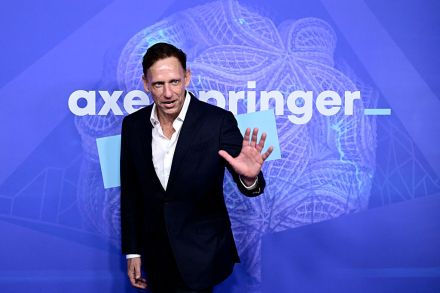
Peter Thiel has been described variously as “America’s leading public intellectual,” the “architect of Silicon Valley’s contemporary ethos” or as an “incoherent and alarmingly super-nationalistic” malevolent force. The PayPal and Palantir founder, a prominent early supporter of Donald Trump, is one of the world’s richest and most influential men. Throughout his career, his principal concern has always been the future, so when The Spectator asked to interview him, he wanted to talk to young people. To that effect, three young members of the editorial team were sent to Los Angeles to meet him. What follows is an edited transcript of their conversation. WILLIAM ATKINSON: Following Zohran Mamdani’s victory in New

An interview with the physicist David Deutsch

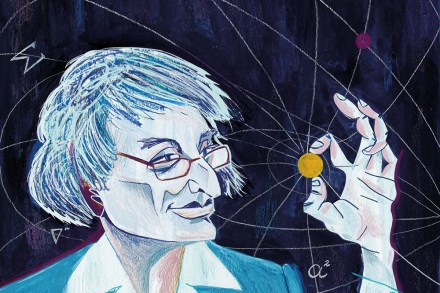
The Amazon reviews for David Deutsch’s The Beginning of Infinity don’t alert you to the fact that this is a book on theoretical physics. They sound more like a weepy divorcé’s YouTube comments below a Mark Knopfler guitar solo. “I didn’t so much read it,’ says one. “It read me.’ ‘I was honestly sad when it was over,’ writes another. “This book changed my way of seeing the world, politics, science and, most importantly, of seeing what I will understand as containing some truth.” When I talk to Deutsch – one of the most sensationally interesting theoretical physicists of our age – on Zoom, I see two beady eyes peering

Among the lords of tech

“What’s missing?” the tech titan Peter Thiel asks me, over lunch on the hummingbird-infested patio of his house in the Hollywood Hills. He gestures at Los Angeles, laid out in the haze below us. “Cranes!” he explains. Thiel has argued for years that America has done most of its innovation in digital “bits” instead of physical “atoms” because bureaucracy, regulation and environmentalism have got in the way of the latter. While software has exploded, transport and infrastructure have stagnated. But over the next few days in Austin, Texas, and around San Francisco Bay, I see evidence this is changing. Traveling with the upbeat co-founders of the Rational Optimist Society, Stephen

tech

How the occult captured the modern mind

The British science-fiction writer Arthur C. Clarke, author of 2001: A Space Odyssey, proposed a “law of science” in 1968: “Any sufficiently advanced technology is indistinguishable from magic.” Clarke’s proposition had a quality of rightness, of stating the obvious with sparkling clarity, that propelled it into dictionaries of quotations. The timing was perfect: Concorde would soon be flying over rock festivals packed with hippies obsessed with “magick.” Naturally Clarke’s readers understood the difference between aerodynamics and sky gods. But African tribesmen gawping at an early airplane, or Pacific Islanders watching an atomic explosion, could only conclude that they were witnessing a supernatural event: for them, a scientific explanation was literally