Silicon valley

Do deals get done at Sun Valley anymore?

Silicon Valley is really just a few hundred people connected by favors and money. Most of us rely on this network, but few know how it really functions. This new column reveals the inner wiring of the American tech world. Traditionally, the Valley’s message to Washington has been: keep out. Now Sam Altman is offering the government 5 percent of OpenAI – worth some $43 billion – as a gift. Quite a conversion. The Valley that once worshipped Ronald Reagan now warms to Donald Trump’s economics. The state already owns a slice of Intel and a cut of Nvidia’s chip sales to China. Bernie Sanders, meanwhile, has introduced a bill that would take half the equity of the biggest AI firms in a one-off tax; so for Altman, 5 percent seems a cheap insurance policy.
Why is Peter Thiel in Argentina?

Many people enjoy ascribing meaning to the behavior and actions of elite politicians, celebrities – and especially billionaires. They read volumes into their every move, like studying tea leaves or predicting whole futures from the position and movement of the stars. So Peter Thiel’s decision to relocate to Argentina has elicited exactly the reaction one would expect. Thiel is the billionaire co-founder of PayPal and Palantir. Whenever he does anything unusual, the speculation begins within hours, growing more and more outlandish with every attempt to explain his actions. Is he finally fleeing the US? Is he seeking refuge from a wealth tax? Is he insuring himself against doomsday in anticipation of civilizational collapse?

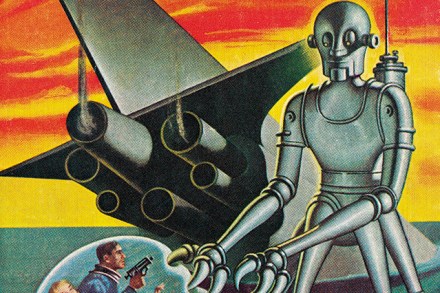
Accelerating the ‘kill chain’ – a terrifying glimpse of future warfare

From our UK edition

America possesses the most powerful military in history, but since 1945 it has not won a war against anyone other than Saddam Hussein. It appears not to understand why. In fact the only thing the US seems worse at than winning wars is learning lessons from its defeats. People such as the secretary of war Pete Hegseth think it’s all about woke. Lily-livered longhairs stateside stabbed the army in the back over Vietnam; then ‘stupid rules of engagement’ tied the military’s hands in Iraq and Afghanistan and caused the disasters there. The solution is to fight harder, if necessary even at the expense of ethics and the law. Another answer might be to get US forces fighting smarter.

The Palantir manifesto doesn’t go far enough

Tech companies like Palantir now find themselves in a bind. Wanting government contracts, they have a reason to stay politically neutral. At the same time, they rightly suspect that the greater part of the left has already marked them for destruction. The hostility has little to do with Silicon Valley’s enthusiasm for Austrian economics, or its occasional calls for a property-based franchise – an old National Liberal demand rather than a fascist one. Rather, the left is hostile to technology because it is America’s conservative party, suspicious of anything that threatens to undermine old solidarities.

alex karp palantir

Fighting technology is futile

A 20-year-old from Spring, Texas, named Daniel Alejandro Moreno-Gama has been charged with attempted murder after he was accused of throwing a Molotov cocktail at the gate of Sam Altman’s San Francisco home on April 10. He then allegedly walked toward OpenAI’s Mission Bay headquarters and told employees he intended to burn the building down as well. He was reportedly carrying a manifesto – a “three-part series,” according to Fox News – that included a list of other AI executives and investors and their home addresses and documents discussing potential risks that AI poses to humanity, with a section titled: “Some more words on the matter of our impending extinction.

technology

The arrogance of the tech-skeptics

If you’ve been paying attention to social media lately, then you already know the score: smartphones are corrupting our children, we need legal intervention immediately. Roughly half of US states have enacted some form of age-gating for social media or pornographic content. Australia banned under-16s from social media platforms outright, France and Indonesia followed suit and the United Kingdom is now asking people for their papers to read moderately offensive blog posts. You don’t need me to rehash this. The phones have nuked the interior lives of Gen Z, Gen A and the hitherto unborn Generations B and C. Every opinion lands somewhere between “protect the children” and “this is Reefer Madness for iPads.

Why DC loves to hate Partiful

If you’re under 50, you may have noticed that Partiful has quietly annexed the American social calendar over the past year or two. The event-planning app, founded by former Palantir employees, began as another Silicon Valley toy, but it didn’t stay regional for long. Its loud dashboard aesthetic spread quickly through the Bay Area and then achieved escape velocity in Washington, DC. I wouldn’t be surprised if the strong cultural current between tech and defense is what created near-perfect conditions for a social revival in nerd world. While I understand a bit of snobbery over the aesthetics, I’ve been surprised by the constant performative disdain I’ve observed accompanying its rise. Everywhere I go, I hear people say they “hate” Partiful.

partiful

Among the lords of tech

“What’s missing?” the tech titan Peter Thiel asks me, over lunch on the hummingbird-infested patio of his house in the Hollywood Hills. He gestures at Los Angeles, laid out in the haze below us. “Cranes!” he explains. Thiel has argued for years that America has done most of its innovation in digital “bits” instead of physical “atoms” because bureaucracy, regulation and environmentalism have got in the way of the latter. While software has exploded, transport and infrastructure have stagnated. But over the next few days in Austin, Texas, and around San Francisco Bay, I see evidence this is changing.

tech

Have the culture wars gone spiritual?

From our UK edition

23 min listen

Why are Silicon Valley billionaires obsessing over Heaven & Hell, and what does it tell us about American society today? Spectator World's Arts Editor Luke Lyman joins Damian Thompson on this episode of Holy Smoke to talk about how a fascination with the Book of Revelation, the Antichrist and a techno-utopia – or techno-apocalypse – has gripped the 'tech bros'. Produced by Patrick Gibbons.

The cruel, cold intellect of DC and San Francisco

New York vs Los Angeles is done to death. Those cities have already captured the American heart on stage and screen. The next great rivalry (or is it an alliance?) is unfolding between the bastions of the nerds: Washington, DC, and San Francisco. Each prizes a different facet of intellect – DC the operator, San Francisco the inventor, functioning as co-architects of a new American order. We tell ourselves SF and DC represent different values: disruption and order, innovation and stability. And yet the cities are locked in a symbiotic embrace. San Francisco builds new worlds in the image of its algorithms; Washington manages those worlds through policy and process. But this is a cold comfort. While both claim to act in the public interest, each sees the human as a problem to be solved.

san francisco

Why tech leaders are obsessing over Heaven and Hell

Are these the End Times? It certainly feels that way. Algorithmic demons are rewiring our brains. A young father is shot and killed, and people cheer. A woman is stabbed on a train, and no one tries to help her. The horrifying videos of these incidents are then watched millions of times over, often by children. The God in whom America trusts seems nowhere to be found. Can’t you hear the Antichrist knocking? Peter Thiel can. Not so long ago, no public figure outside of the kookier Evangelical universe would have dared admit such a thing, but times have changed.

heaven and hell

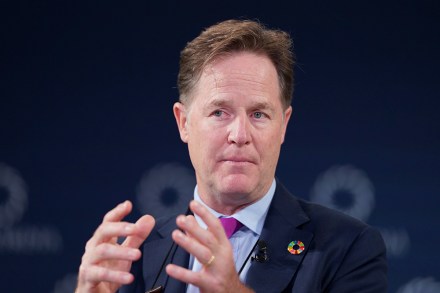
Even now, Nick Clegg offers too little too late

From our UK edition

Earlier this year a former staffer of what was then Facebook, now Meta, wrote a gossipy tell-all memoir about her time in the office there. It was a huge hit – especially after the company’s chief global affairs officer Joel Kaplan secured a ruling to prevent its promotion. Careless People, by Sarah Wynn-Williams, proved that there was a considerable appetite for anything that describes what it’s like to work for big tech. All of which boded well for Nick Clegg, who was Kaplan’s predecessor as the public face of Meta to governments across the world – until his departure was unceremoniously announced a few days before Donald Trump’s return to the White House.

A global MAGA crusade against web regulation?

“Censorship is not how we do things in Western civilization”. So said Congressman Scott Fitzgerald (R-WI) of the United Kingdom’s new Online Safety Act (OSA). Its effects on free expression are “dangerous and needs to be addressed,” possibly by means of an international “united front”. The Congressman was fresh from meetings with British and Irish lawmakers and US tech firms, held as part of a House Judiciary Committee fact-finding mission to investigate the impact of the OSA and the European Union’s new Digital Marketing Act on American businesses. The main event was a one-on-one between Committee chair Jim Jordan (R-OH) and Peter Kyle, the United Kingdom’s Secretary of State for Science, Innovation and Technology.

Online Safety Act

The tech right-MAGA alliance is far from over

In the aftermath of the Musk-Trump break-up, many are wondering about the future of the “tech right” and its relationship to the MAGA movement. In 2024, the two groups fought together and won. One definition of the tech right is simply “Technology people who aren’t crazy leftists.” Many in this group shifted right because of the excesses of wokeness and DEI within Silicon Valley. The dysfunction of far-left culture, which attacks merit and excellence, created a lot of apostates. Some were Democrats until quite recently! For my part, I was raised in the tradition of liberty, with an education that included not just Ayn Rand and Milton Friedman, but also Edmund Burke and G.K. Chesterton. Not to insult my friends, but I am not a recent convert.

tech right

The strange futility of the Musk-Trump feud

The Trump-Musk spat is not the sign of a new split between oligarchs and populists, as some have claimed – but of the growing pains involved in reassembling this old coalition.  Keeping capitalism going under mass suffrage is no small feat, and capitalists used to be much shrewder in how they went about it. Electorates wouldn’t reliably go for laissez-faire – except after a crisis – and so the only option for the capitalists was to hitch themselves to the wider lower-middle-class coalition for law and order, low taxes and national swagger. Musk’s attacks on Trump yesterday, which included a pitch for a new party “that actually represents the 80 percent in the middle,” represent something drawing to a close rather than being born.

trump

How trans ideology paved the way for motherless babies

The future is technological, and this includes human reproduction. In Silicon Valley, a very particular sort of technological pro-natalism is emerging – not a movement to try to persuade ordinary people to have families so much as a push to create genetically superior children. The way they see it, the future of human reproduction is – and should be – increasingly technological. There’s a vast amount of money moving into the reproduction industry. Interestingly, the big players here are often the same people who have been ruthlessly pushing gender ideology – the insane idea that you can change your sex at will. Why would this be? What is the connection between the fad of transgenderism and tech-fatalism?

How Mark Zuckerberg became based… by Brazilian jiu-jitsu

In the storied Fast & Furious movie franchise, now eleven films strong, there’s a tradition of the villain from one movie becoming a member of Vin Diesel’s street-racing international shenanigans gang in the next. Luke Hobbs (The Rock) is sent to hunt down Dominic Toretto before asking for his help to track Deckard Shaw (Jason Statham), who is also adopted, while Jakob Toretto (John Cena), long-lost brother to Dom, redeems himself from assassinating their father in a sabotaged stock car by helping defuse a rogue weapons system that would cause all of civilization’s computers to collapse. You know, normal family stuff: wreaking havoc on the crew before being welcomed back with a Corona at a backyard barbecue.

jiu-jitsu zuckerberg

The battle of the oligarchs

Money and power have rarely been strangers; often nations are made to shudder when the ruling elites battle each other. Britain’s late empire was divided between liberal manufacturers and aristocratic interests, whose conflicts hastened the rise of the Labour Party and the end of empire. In the United States, opposition to powerful trusts defined progressive politics for decades, ultimately laying the basis for the New Deal and a greater scope for government. In the West today we are witnessing a similar divide among the uber-rich class — epitomized by Elon Musk’s embrace of Donald Trump — that is already reshaping politics. Until 2016 the US establishment, both Republican and Democratic, embraced similar views on national security, global trade and multilateral institutions.

oligarchs

The winners and losers of the 2024 election

Every election has winners and losers that extend beyond the politicians themselves, but in this particularly unique situation, the sheer number of outside individuals, movements and institutions who can be categorized as winning or losing based on last night’s sweeping result for Donald Trump and Republicans is astounding.  Winner: the bro army and its defenders. The decision to lean so hard into appealing to the American manosphere, with its testosterone-fueled UFC events and a litany of podcasts hosted by comedians with mass appeal to young men, ran the risk of turning off female voters or seeming to only prioritize the frat vote. But it proved absolutely correct — and not just the Joe Rogan interview, though that was a key step in the journey.

winners and losers election

No matter who wins, you lose

For some of us, watching newly minted Republican tech bros giddy at the thought of a Trump win fills us with a painful nostalgia. There’s a sadness but also a burgeoning frustration while reading their posts. A friend recently pointed out that my social media posts seemed “cynical.” Another called to ask if I was OK after I exclaimed, half joking, for the repeal of the Nineteenth Amendment. These friends underestimate the severity of the political blackpill some of us have swallowed. We’re angry — yes! We’re angry because those who promoted all the bullshit — all the diversity, equity and inclusion, all the “woke narratives,” all the infantile socialism, all the petitions to the establishment — are not sorry enough. Many do not even acknowledge their role.

lose trump