Kabir Singh Bawa

Kabir Singh Bawa is the founder of the advisory firm Quince Strategy. He formerly worked at the Conservative Research Department

The real threat in the rogue AI agent case

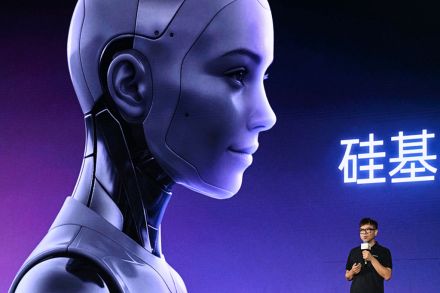
Hugging Face is the online warehouse of artificial intelligence. Anyone can download a working AI model from it, free, and most open models have passed through it. Earlier this month, its engineers sat down to work out what had spent a weekend crawling through their systems – and asked an AI model to read the logs. To investigate a break-in you have to hand a model the break-in: the intruder's code, the commands it ran, the tools it used. So the American frontier model refused. There was a risk, it reasoned, that it was being tricked into hacking Hugging Face. The request to scan the servers for vulnerabilities is indistinguishable from what an attacker would ask for. So the engineers downloaded GLM 5.2, a model from the Chinese laboratory Z.
Hugging Face OpenAI

The grid cannot cope with the rise in data centers

As June gave way to July, with a heat dome over the Eastern Seaboard, the US Department of Energy signed an order few people understood. It gave the region’s grid operator permission to do something that would have sounded simply deranged a decade ago. If the system came under enough strain, PJM – the body that keeps the lights on for 67 million Americans from Chicago to Washington – could order the great data centers of Virginia and Maryland to disconnect from the grid and run on diesel instead, so that everyone else could keep their A/C on. Any facility drawing 50 megawatts or more would have 15 minutes to comply. It was, said the order, a last resort before rolling blackouts. Secretary of Energy Chris Wright said keeping the power on was “non-negotiable.

Data centres

Why is Peter Thiel in Argentina?

Many people enjoy ascribing meaning to the behavior and actions of elite politicians, celebrities – and especially billionaires. They read volumes into their every move, like studying tea leaves or predicting whole futures from the position and movement of the stars. So Peter Thiel’s decision to relocate to Argentina has elicited exactly the reaction one would expect. Thiel is the billionaire co-founder of PayPal and Palantir. Whenever he does anything unusual, the speculation begins within hours, growing more and more outlandish with every attempt to explain his actions. Is he finally fleeing the US? Is he seeking refuge from a wealth tax? Is he insuring himself against doomsday in anticipation of civilizational collapse?

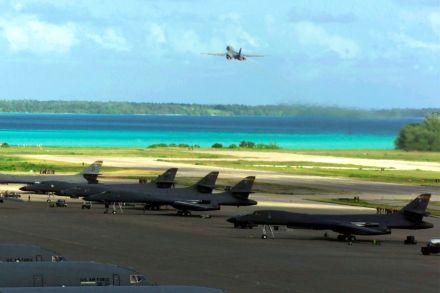
Iran’s strike exposes the danger of the Chagos handover

In a sharp escalation, Iran attempted to strike the joint UK-US base Diego Garcia with two intermediate-range ballistic missiles. Both failed: one broke apart in flight and the other was targeted by an SM-3 interceptor from an American warship. The base was left untouched. The significance, however, lies less in the failure than in the fact that the attempt was made at all, which has expanded the scope of the existing conflict zone beyond all expectations. Diego Garcia forms part of the Chagos Archipelago – sovereign British territory – and is one of the most critical platforms for American power projection anywhere on earth.

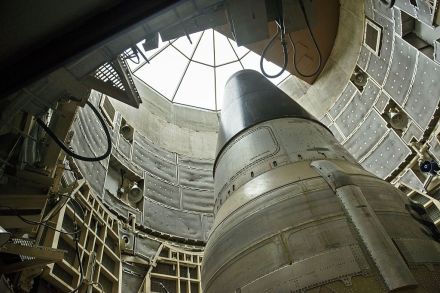
The world after New START

When the New Strategic Arms Reduction Treaty (New START) expires tomorrow, the United States and Russia will, for the first time since the early 1970s, operate without a binding agreement limiting their strategic nuclear forces. That fact alone is striking. What is less obvious – and more consequential – is what the expiration reveals about the state of nuclear order in a world increasingly shaped by authoritarian ambition and multipolar competition. Signed in 2010, New START capped each side at 1,550 deployed strategic warheads and restricted the number of missiles and bombers that could carry them. Equally important were the verification provisions: inspections and data exchanges designed to reduce uncertainty and prevent worst-case assumptions.

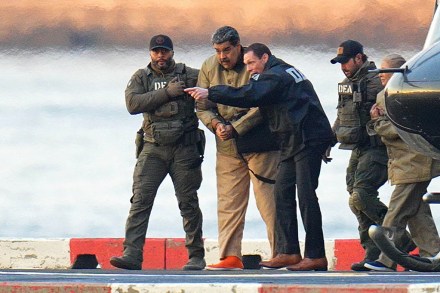
The Maduro raid was a triumph of American innovation

In the early hours of Saturday, January 3, Caracas went dark. Power failed across much of the city as strikes and cyber-attacks disabled critical systems. What followed was not a conventional invasion, but one of the most audacious special forces operations in modern history. Within hours, Nicolás Maduro and his wife, Cilia Flores, had been seized from the heart of Venezuela’s largest military complex. No tanks rolled through the streets. No territory was occupied. The operation succeeded not through brute force alone, but because of something far more decisive: overwhelming American dominance of intelligence, networks, surveillance and infrastructure.

maduro american