Terrorism

The rise of anti-tech terrorism

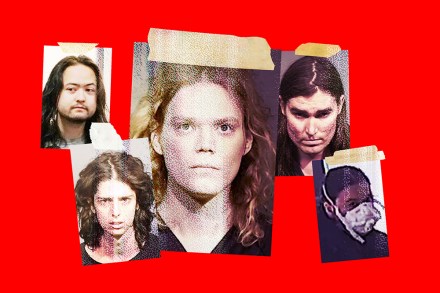
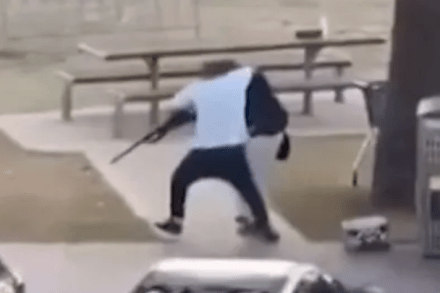
Sometime after midnight on a Monday in April, a man in Indianapolis emptied 13 rounds into the front door of city-county councilman Ron Gibson. His eight-year-old son was asleep in the house. Tucked under the doormat was a handwritten note. It read: “No Data Centers.” One hesitates to draw grand conclusions from a single individual with a grievance and a firearm. But the note is the thing. The shooter did not want money, or revenge for some private wrong. He wanted, apparently, to register a policy preference about server infrastructure. And he is not, it turns out, alone. US law-enforcement officials have lately begun reaching for a new phrase to describe what is bubbling up: “anti-tech extremism.

My plan for Prevent

From our UK edition

In the autumn of 1940, British cities were being bombed every night by large aeroplanes whose provenance was apparently of some considerable doubt. While the public almost unanimously believed the conflagrations to have been caused by the Luftwaffe, the authorities – right up to the government – refused to speculate. Indeed, when certain members of the public raised their voices and said ‘This is all down to Hitler and Goering and the bloody Germans!’, they received visits from the police who either prosecuted them for disturbing the peace or put their names on a list of possible extremists. The nights grew darker. The number of towns and cities subjected to these nightly bombardments widened.

Is Sebastian Gorka brave enough to face Tucker Carlson?

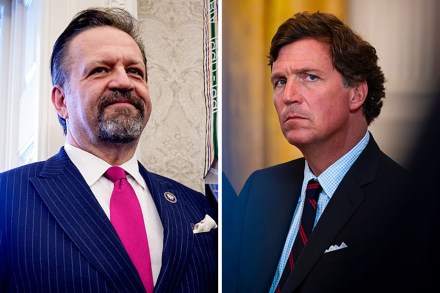
Strange things are happening with Dr. Sebastian Gorka. In a clip that circulated widely yesterday, the deputy assistant to the President was asked by Breitbart's Alex Marlow whether he thought right-wing terror is currently a threat in the US. Gorka brought up Tucker Carlson and Nick Fuentes – unprompted – claiming they had lauded Sharia law and said Muslim states were better than America. “I’m not sure that Nick Fuentes or Tucker Carlson are conservatives... If you remove those individuals and you understand that they're not conservatives, what's left?” Judging by those comments, it seems that Gorka, as Trump’s senior director of counterterrorism, regards the two podcasters as domestic security threats.

gorka tucker

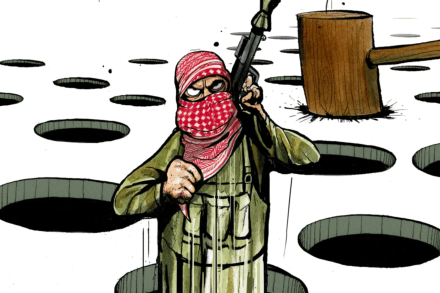
Britain is facing an Islamist insurgency

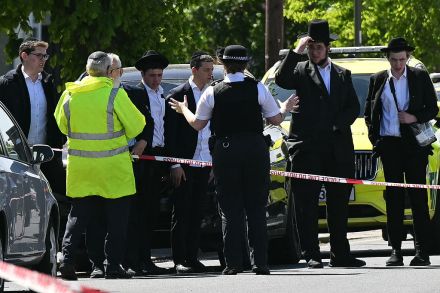
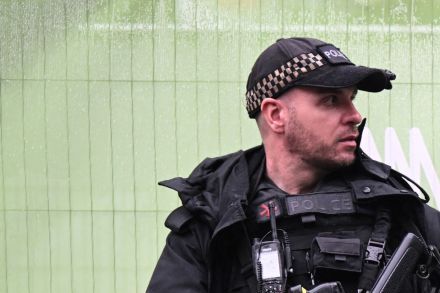
The recent horrific attack in Golders Green has generated much anger and despair at this latest in a series of concerted, violent assaults currently aimed primarily at the Jewish community, but with a clear lineage to earlier Islamist outrages such as the murder of Fusilier Lee Rigby and the London Bridge attacks of 2017 and 2019. The UK terrorism threat level was raised to "severe" following the attack on Thursday. But terrorism, "an action or threat designed to influence the government or intimidate the public," is an inadequate descriptor of what we face in Britain. Instead, I believe we face a different problem: a full-blown insurgency.

islamist

The radical networks that hijacked the 1970s

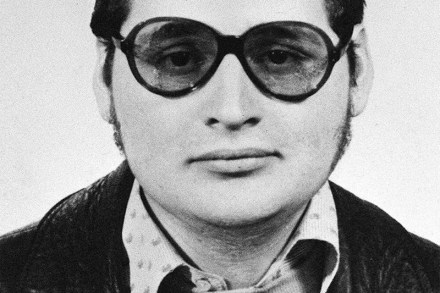
Airplane hijacking, like the mode of transport itself, became common in the 1960s. A practice largely confined to the United States, it was invariably a means for ordinary criminals to extort ransom money or flee to Cuba. In 1968, the hijacking of an El Al flight by the left-wing Popular Front for the Liberation of Palestine revealed the political utility of the act: in exchange for the safe return of its plane and passengers, Israel released 16 Arabs from its prisons. Encouraged by this outcome, the PFLP launched a spate of similar operations. One such mission, the hijacking of a TWA flight in 1969, revealed that prisoner exchanges and ransoms weren’t the only upside of this new tactic.

Bondi Beach and the heroism of Ahmed al-Ahmed

As the appalling story of Sunday’s anti-Jewish mass shooting at Sydney’s Bondi Beach continue to unfold, and 16 people are now dead, there have been few glimmers of light in the darkness. The men identified as the shooters are a father and son, Sajid Akram, 50, and Naveed Akram, 24. The father was shot and killed by police last night, and the son was overpowered and taken into custody. The New South Wales police commissioner says little is yet known about the pair, but Sajid Akram was a licensed gun owner, with six guns in his possession. Old social media posts have also emerged of Naveed Akram being praised for his Islamic studies in 2022.

ahmed

Prevent’s purpose is drifting from terrorism

From our UK edition

When I was a Prevent counter terror officer a decade ago our case load was largely focused on Islamist terrorism – clear, defined ideological extremism. Today the picture looks very different. The majority of cases involve ‘mixed, unclear or unstable ideologies’ or a simple 'fixation with violence'. In other words, many people being referred no longer seem to have any specific ideology. The programme is looking at behaviours that are 'violence-oriented', which risks blurring our understanding of the real terror threat in the UK. According to the Home Office, there were 8,778 referrals to Prevent in the latest reporting period, up roughly 27 per cent on the previous year. At first glance these numbers appear to show a surge in radicalisation and extremism.

How the terrorists of the 1970s held the world to ransom

From our UK edition

At the end of the 1970s, the Illustrated London News printed a special edition to commemorate the decade. What did it focus on? Music, from David Bowie to Bob Marley? Some of the best films Hollywood has ever produced, from The Godfather on? Political crises, such as Watergate and the end of the war in Vietnam? No, there was only one headline: ‘The 1970s: The Years of Terrorism.’ We forget – and perhaps we want to – quite how brutal and random that time could be, with plane hijackings, the Munich Olympics atrocity and bombs going off from the Tower of London to Washington to Singapore, where the Japanese Red Army caused mayhem. In a superb and monumental book, Jason Burke details the principal movements that flourished and to a surprising extent nurtured each other.

Do Jews have a future in Britain? 

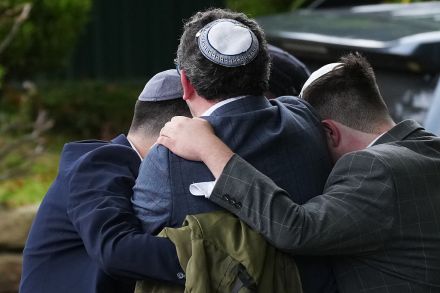
I was on my way to synagogue yesterday when I got news that was surprising and unsurprising at the same time. That there had been an attack at a Manchester synagogue on Yom Kippur was a shock, but only the location and the timing. The fact that terror had struck our community felt like the confirmation of our worst fears – and something that was grimly predictable.  For as long as I can remember, Jewish life in the UK has been closely guarded and protected. My childhood synagogue in the leafy London suburb of Surbiton was behind locked gates with security guards posted outside when anyone was in the building. My Jewish newspaper office today has similar protections and an address we’re told must never be made public.

Why Chicago Teachers Union lionized a terrorist

When I first saw the Chicago Teachers Union's post honoring Assata Shakur, I thought it was a headline from the Babylon Bee. But no, this one was real, and beyond parody. The union, entrusted with educating Chicago's children, used its official social media account to mourn the death of a convicted cop killer, calling her a "revolutionary fighter" and "leader of freedom." Shakur was found guilty of murdering New Jersey State Trooper Werner Foerster in 1973 and later escaped prison, landing on the FBI's Most Wanted Terrorists List with a $2 million bounty. To make matters worse, CTU Vice President Jackson Potter doubled down, declaring on X that "Assata was a freedom fighter!"The tone-deaf post is a glaring sign that the CTU can't be trusted to educate children.

Assata Shakur

Don’t project your lifestyle agendas onto Tyler Robinson

Charlie Kirk, conservative commentator and essential piece of the Trumpworld media ecosystem, is dead, allegedly at the hands of an individual whose inner life has, needlessly, been the subject of conservative speculation for the past few days. Seemingly, every faction of the American right has their own explanation as to how this young man might have been inspired to commit such an atrocity. Many of these are myopic but perhaps have a kernel of truth to them. Others are plainly wrong. The worst of them play right into the hands of the left, and deserve serious reconsideration. Details about Tyler Robinson, the suspected gunman, continue to pour in.

Charlie Kirk Tyler Robinson

Is Antifa a terrorist organization?

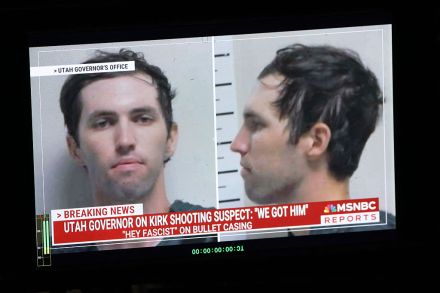
One side of the political aisle can only accuse the other of “fascism” so many times before a young, impressionable person subsumed within a social-media echo chamber takes matters into his own hands. This seems to be exactly what transpired in the case of Tyler Robinson: bullet shell casings found at the scene of Charlie Kirk’s assassination were reportedly etched with the words “Hey fascist! Catch!” Robinson seems to have been influenced by Antifa or Antifa-adjacent ideology. In response to the killing, Congress and commentators have renewed calls to designate Antifa a domestic terrorist organization. But this would have little effect. Antifa is a collaboration of autonomous cells with the ostensible goal of opposing fascism and racism.

antifa

When will we learn the truth about Saudi involvement in 9/11?

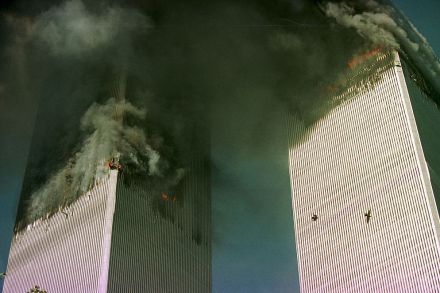
Will Saudi Arabia ever be held to account for the 9/11 terror attacks? For decades, the Kingdom has successfully parried lawsuits in the United States accusing it of providing logistical and financial support to a network of Islamic extremists who launched a global terror campaign, culminating in the September 11 attacks on the Pentagon and the World Trade Center. Those attacks occurred 24 years ago and since then survivors and victims of the 9/11 hijackings have had to counter not only vigorous Saudi denials mounted by their well-funded American legal team but also repeated attempts by the US government to thwart the lawsuits. But there are signs the pendulum has begun to swing the other way. On August 28, US District Judge George B.

9/11 saudi

Netflix’s Hostage is an act of cultural aggression

From our UK edition

Apart from hunting, one of the very few consolations of the end of summer is that telly stops being quite so dire. But that moment hasn’t quite arrived yet – as you can tell from the fact that I’m reviewing Hostage. There’s so much that is annoying about Hostage that I don’t know quite where to begin. But let’s start with its cloth-eared use of the word ‘abducted’. Suppose you were the prime minister (Suranne Jones) and your implausible Médicins Sans Frontières husband Alex (Ashley Thomas) had been kidnapped by a masked terror group in French Guiana and you had to brief your teenage daughter on what had happened, which verb would you use: the formal, uptight, Latinate, police-procedural one or the normal spoken-English one?

Mossad’s secret allies in Operation Wrath of God

From our UK edition

More than half a century ago Palestinian terrorists stormed the 1972 Munich Olympics, murdering two of the Israeli team and taking another nine hostage. The West German authorities, ill-equipped to deal with such incidents, agreed to fly the terrorists and their hostages to Egypt. Mossad, the Israeli intelligence service, offered to mount a rescue operation. The Germans launched their own, resulting in the deaths of a police officer, four of the seven terrorists and all the hostages.    One consequence was the Israeli government’s Operation Wrath of God, a programme to assassinate any leaders or planners associated with the massacre.

Will Trump take a stand against the Muslim Brotherhood?

Senator Ted Cruz isn’t giving up. Cruz, who believes that the Muslim Brotherhood serves as the “key foundation stone for radical Sunni terrorism,” has just reintroduced – together with five Republican senators and bipartisan support in the House of Representatives – the Muslim Brotherhood Terrorist Designation Act, which he first proposed in 2015. Cruz is no stranger to controversy when it comes to Islam: in March 2016, following a terrorist attack in Brussels, he said that it was imperative to “patrol and secure Muslim neighborhoods” in America before they became radicalized. Now he is reupping his call to focus on the Muslim Brotherhood. Founded in Egypt in 1928, it is a dangerously militant Islamic organization with affiliates around the globe.

Assassinations have an awkward tendency to backfire

From our UK edition

Plutarch says that Julius Caesar dined with friends the day before he was assassinated. When conversation turned to considering the best way to die, Caesar looked up from the papers he was signing (being in company never stopped him working) and said, without hesitation: ‘Unexpectedly.’ Thanks partly to Shakespeare, Caesar’s has a claim to be one of the two or three best known historical assassinations. Another, plausibly argued here by Simon Ball as one of the most consequential, was that of Archduke Franz Ferdinand in Sarajevo on 28 June 1914, precipitating the first world war. Without it, the past century might have been unrecognisably different.

The unspoken truth about 7/7

From our UK edition

Did you take part in any of the mysterious commemorations last weekend? The newspapers were full of it – something called 7/7, apparently. I read a long report on the BBC’s website about this tragedy but remained entirely unclear as to who killed the people on those trains and bus. The report said ‘bombs were detonated’ on the Tube, as if the bombs – anxious to fulfil their purpose in life – had blown themselves up, without the aid of any external agency. Nowhere in the report did it mention who brought the bombs down from Yorkshire and then set them off. Nowhere in the entire article were the words ‘Islam’ or ‘Islamist’ or even ‘Muslim’ mentioned, nor even the names of the murderers.

How to bring down Britain’s power grid

From our UK edition

At the end of last month, a fire at an electrical substation in Maida Vale caused chaos in west London. Homes lost power. Transport services ground to a halt. It came in the same week as outages across Spain and Portugal and just a few weeks after a fire at another substation caused Heathrow airport to shut down. We also know that the British government is drawing up contingency plans for Russian attacks on energy infrastructure. All of this raises an important question: how resilient would the British state be in the face of a determined effort to cripple its power grid? The blunt answer is: not very. David Betz, at King’s College London, has long warned that Britain’s national infrastructure is dangerously vulnerable to simple tools such as hammers and hacksaws.

The law that is choking civil society

From our UK edition

If one were to ask for a quintessential display of the British character it would be hard to better the Shrewsbury Flower Show. Officially the world’s ‘longest-running flower show’, according to the Guinness World Records, it is held over two days in August, attracting 60,000 visitors. This summer should be the show’s 150th birthday. Last week, however, the Shropshire Horticultural Society abruptly cancelled it. Rising costs were cited as a factor. But the main reason was the Terrorism (Protection of Premises) Act – known as Martyn’s Law. The legislation, which was given royal assent this month, requires organisers of events with more than 200 people to engage in lengthy bureaucratic and state-monitored protocols to protect visitors from terror attacks.