Russia has demanded that Britain either reverse its ‘hostile line’ on Ukraine or face a direct attack on military targets. This escalatory rhetoric comes after Andy Burnham reportedly received intelligence that the UK faces an impending ‘direct attack’ from Russia over the UK’s continued support for Ukraine, in particular, the use of British-made drones to strike deep into Russia.
It is far too easy to pass this off as yet more bluff and sabre-rattling. Yes, Putin has form. The Russian dictator has had ‘red lines’ at almost every stage of his full-scale invasion. He warned Britain that supplying Kyiv with Challenger 2 tanks would mean ‘direct involvement’; nothing beyond rhetoric followed. The same thing happened when we supplied Storm Shadow missiles, and they were given authorisation to strike military targets deep inside Russia. But just because he’s bluffed before doesn’t mean we can sleep easy.
The chances of a ‘direct response’ from the Kremlin consisting of a missile or drone attack are slim. Still, this week we’ve seen three UK airports suffer a cyber attack that stole customer data. The Kremlin’s Yantar intelligence ship has repeatedly monitored our undersea data cables over the past year. We, therefore, have to ask: at what point do we, as a nation, step up and take our homeland defence strategy seriously?
Poland’s civilian readiness scheme is doing more than just teaching grandmothers how to use tourniquets
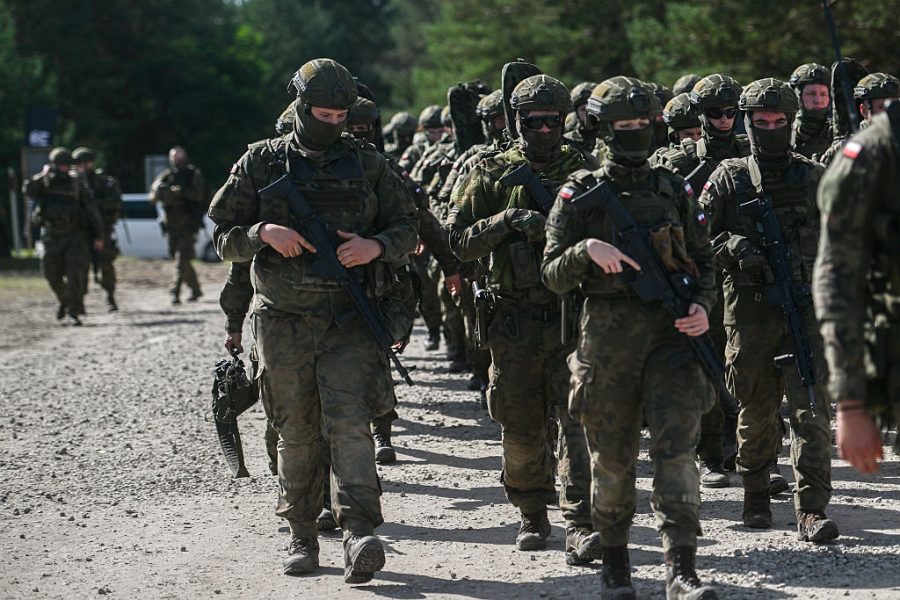
Whilst Britain debates percentages on defence spending, Poland is getting on and preparing its nation for war. Warsaw has built a robust homeland defence strategy, and now even its army is training citizens, from as young as thirteen, to cope should Russia decide they are next on the list.
W Gotowości (‘Be Ready’) is the Polish government’s civil defence training scheme. It gives ordinary Poles the chance to train with the country’s army in a wide range of survival skills. This includes building temporary shelters in the woods, sourcing clean drinking water, using a map and compass to avoid drone detection, and packing an emergency backpack with the essentials.

I was recently given exclusive access to one of their training schemes in the eastern town of Radom. It was a humbling experience that made me realise how out of my depth I was. But more importantly, it left me feeling despondent about our government’s lack of leadership in preparing Brits for a worst-case scenario.
After completing the one-day training scheme, I spoke with former chief of the general staff Lord Dannatt about why Britain is severely lacking a national resilience strategy. Although in admiration of what the Poles are doing, the former army chief says Britain’s military is ‘so small we really don’t have the capacity’. Regardless, he emphasised the need for a ‘concerted government campaign’ led from the top, with strong messaging on what to do if one of our adversaries directly attacks. Lord Dannatt cited keeping stacks of cash at home and stockpiling non-perishable supplies like bottled water and food as ways to build national resilience and self-reliance.
This isn’t about scaremongering, but about being honest with our own population. We face not only increasingly common cyberattacks, but also the prospect of attacks on critical national infrastructure that could cause electricity blackouts. If no public information program or training is available, how exactly are we expected to cope?
Over the last few years, our political class has got caught up in endless debates about how much we should spend on defence as a percentage of GDP, or whether we should bring back national service to boost the size of our military. It’s embarrassing. Poland has one of the largest armed forces in Europe, the third-largest in Nato, behind only Turkey and the US, with ten times the artillery we have in Britain and three times as many tanks. Whilst its defence capabilities continue to grow, Warsaw still manages to send supplies to Ukraine.
Britain is supposedly a leading member of the ‘Coalition of the Willing’, but beyond incremental additions to our defence budget and trips to Kyiv to offer the same rhetoric, what do we have to show for it?
Warsaw injects 5 per cent of its GDP into its military, and it now runs a scheme to prepare civilians. Meanwhile, No. 10, whilst dithering over publishing its own defence strategy and investment plan, has yet to implement any of it. One of the cornerstones of that plan was that, to have ‘credible deterrence’, the government must ‘build national resilience’ by leading a ‘national conversation to raise public awareness of the threats to the UK’.
Poland’s civilian readiness scheme is doing far more than just teaching grandmothers how to use a tourniquet; it’s constructing a societal psyche and preparing it for war. Their readiness, resilience and resolve are putting Britain to shame. If only The Smiths started talking about defence readiness, then maybe ‘Our Andy’ would do something about it.




Comments