Why are we drawn ceaselessly back into the ever-more-recent past? The 1990s trend has been building for years now, with bucket hats, Carolyn Bessette-Kennedy chic, Oasis reunions and documentaries about Oasis reunions… There are clearly deep reasons to revisit that decade. Some have scores to settle (Earl Spencer), while Gen Z’s interest seems tinged with yearning – as well as prurient curiosity about how barbaric it all was.
It was the twilight of the Yellow Pages, the last days of video. You were nobody without a landline, nowhere without an A-Z. It was a time of libertinism, it was a time of HIV. Of ecstasy (the drug) and agony (Gazza cried, Diana died). The 90s: Art and Fashion at Tate Britain guides us carefully into this distant land. ‘Culture was consumed in physical, analogue form, often socially,’ writes the director of Tate Britain, Alex Farquharson, as if he were an anthropologist and the 1990s an uncontacted tribe.
The art endures, but the fashion content feels like old magazine junk
I have also been immersed in the period, writing a novel about a fictional group of 1990s artists living in Headless Yard, east London. They don’t mind the grottiness of their shared warehouse – to them it is an idyll of creativity. The 1990s recession brought cheap rents, and room to think big. The swaggering artists I made up are hedonistic, but sincere. They want their work to last.
The Tate Britain show provides a chance to see how the art of that decade is holding up. Curated by Edward Enninful, it’s his highly personal, politicised take; as a former editor of Vogue, he controls the fashion narrative tightly. But the YBA work stands apart, holds its own. As you walk in, there are Sarah Lucas’s Doc Marten Chelsea boots from 1991, sitting innocently on some breeze blocks. Peer closer and you see there are razor blades tucked in the toecaps. The fight is on. ‘London was a much scarier place at the time,’ she recalls. The title: ‘1-123-123-12-12’, after the roadie’s sound check.
Hamad Butt has lately been spotlit as the lost YBA talent who died of Aids heartbreakingly young in 1994. If you missed his retrospective at the Whitechapel last year, here is a chance to see three of his ethereal, ominous sculptures, including ‘Cradle’ (1991), vacuum-sealed glass balls hung in a row like an outsize executive desk toy. Peer closer and you can see that they contain something yellow. This is – or should be – toxic chlorine gas that would, according to writer-curator Gregor Muir, ‘kill the whole room’ if broken or ‘activated’ as the vials swung crashing into one another, like a Newton’s cradle. Here, they are safely set apart, rather than among the throng: no danger of a replay of the situation Muir describes in his memoir Lucky Kunst when, as Butt’s opening-night party at Milch at 5 Hanway Place became more crowded, Muir noticed ‘people’s anxiety growing as they found themselves pressed ever nearer the threatening glass balls’.

‘The Ship’ (1994) is the black galleon hat that Philip Treacy designed for Isabella Blow. Its lightness and audacity takes your breath away. Illuminating its black form against a black background somehow works brilliantly, and it feels like a relic, redolent of Blow herself. Don’t leave without seeing it.
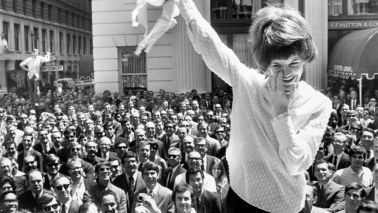
Yinka Shonibare’s 3D remaking of Fragonard’s swing (2001) is an engaging set piece. The Chapman Brothers’ mutilated mannequins after Goya, ‘Great Deeds Against the Dead’ (1994), is, well, peak Chapman. Damien Hirst’s ‘Two Similar Swimming Forms in Infinite Flight’ (1993) reaches for a poetry it doesn’t attain. It just makes me feel sad for the baby sharks here in formaldehyde. Abigail Lane’s wallpaper from 1992 is fun. Chris Ofili’s ‘No Woman, No Cry’ (1998) is a hushed and twinkling altarpiece while his staircase mural ‘Requiem’ (2023) is the sound of the sea.
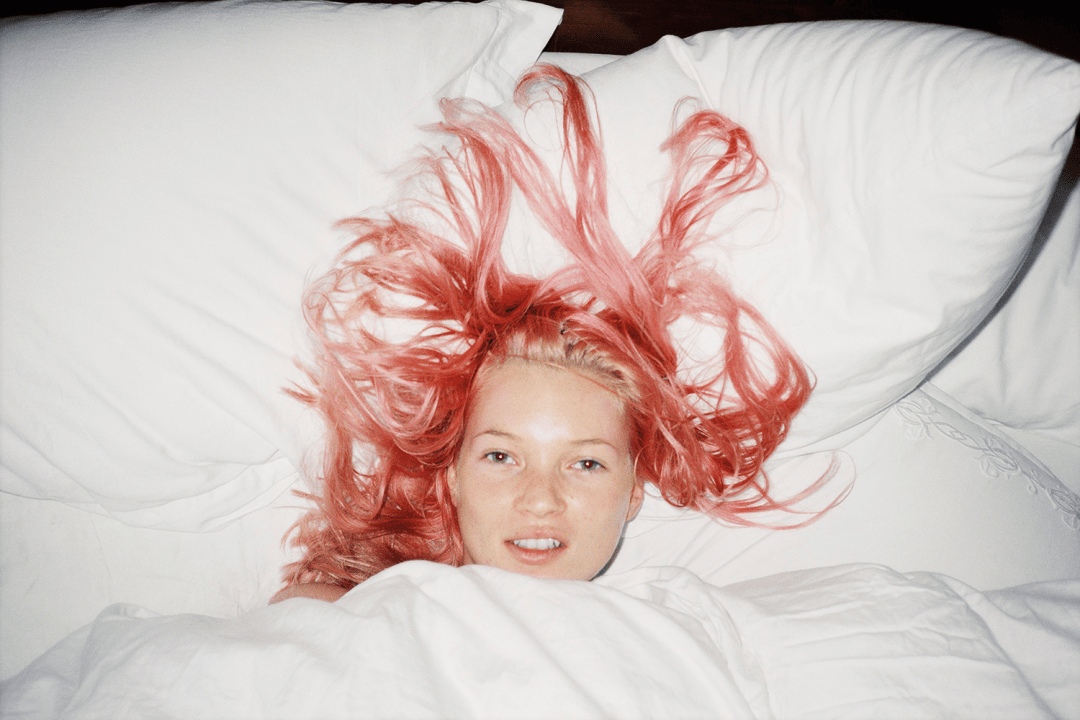
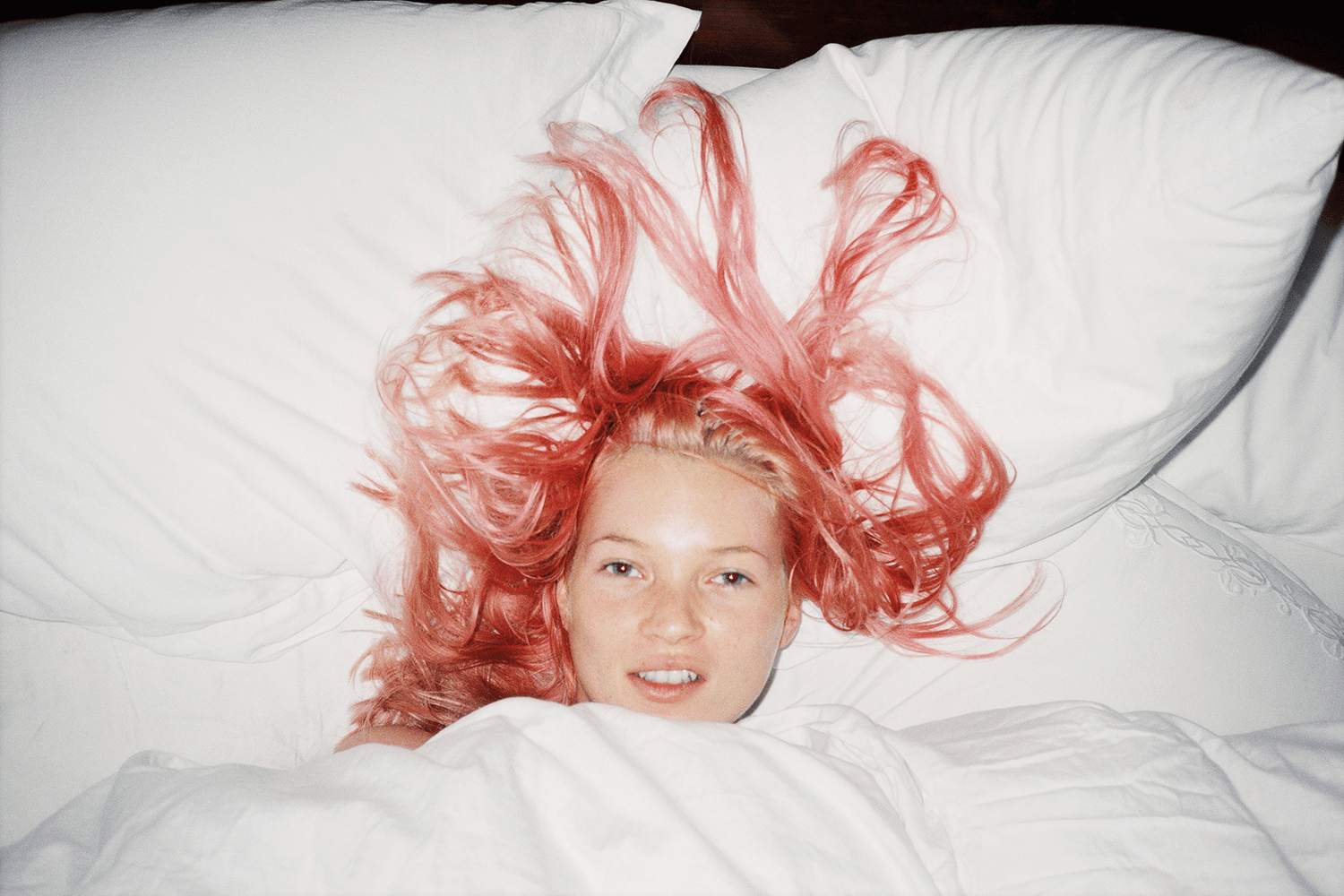
It’s great to see these pieces in person. The energy is still thrumming. Actually, the whole show feels like a worked example of Ars longa, vita brevis. The art endures, but the fashion content feels like old magazine junk. Kate Moss in a Calvin Klein ad – why is that in Tate Britain?
There’s no Britpop here. ‘Britpop is bullshit,’ remarks the Turner-winning artist Steve McQueen to Afua Hirsch in the catalogue. He believes it was promoted over black innovations like drum’n’bass. The famous ‘London Swings Again!’ March 1997 issue of Vanity Fair is included, but face-down, so we can see the article featuring Ozwald Boateng on Savile Row, but nothing of Liam, Patsy or the Union Jack duvet. No great loss, perhaps, but to see it again I searched it up – it now sells for £85 on eBay in case you were about to chuck.
‘In the 1990s it felt like something was happening. Something good. The weirdos were taking over’
Human nature doesn’t change, but culture does. When, in the summer of 1999, we started sending emails, paper communications became obsolete, and self-expression changed, a bit like when Virginia Woolf noticed her cook talking freely to her in December 1910 and declared that ‘human character’ had changed. The letter, the flyer, the fax; tickets, invitations, magazines, photographs – all replaced by infinitely duplicable pixels on the super-computer in our pockets.
There is pathos, then, in Recollections May Vary, an exhibition of gallerist William Ling’s rare books and ephemera from the art scene of the 1990s – business cards, catalogues, even, kudos, an invite to Freeze, the show Hirst put on in 1988, annotated ‘Do the decent thing, love Damien’. That one’s not for sale. The catalogue – free to download – provides much more rich, meticulous art-world detail than Tate Britain does.
‘In the 1990s it felt like something was happening. Something good. The weirdos were taking over,’ writes Jarvis Cocker in the Tate catalogue. Despite his influence on fashion with his charity-shop aesthetic, Jarvis isn’t anywhere in the exhibition – too Britpop, I guess. Still, his bum-wafting attack on Michael Jackson’s pious ‘Earth Song’ performance will always be in our hearts – and Pulp will be playing on a monitor in the ticketing vestibule. The Tate doesn’t need to cover Oasis – the music is doing fine on its own. Almost too well. Because when I chaperoned a Year 6 disco this summer, the last tune of the night was ‘Wonderwall’ and all the children knew the words.
The 90s: Art and Fashion is at Tate Britain until 14 February 2027; Southeran’s Recollections May Vary is at Cassius&Co., SW1.



Comments