Fashion

The man who – inadvertently – invented the 1970s

Style, self-evidently among those who pursue an interest in such affairs, is, according to the Comte de Buffon, the man himself – the essence, the heart, the bowel, the bovril. While, among the much greater majority who pursue an ignorance in such affairs, it is an assumed gamut of off-the-peg tics, props, accent – style is something bolted on to a being’s chassis and core in the hope that it will hold. We can be certain which of these two nugatory classifications better suits the late Christopher Gibbs who in the course of his long, more or less antiquarian life encountered Everyone, absolutely Everyone. ‘Everyone’ in this instance unhelpfully signifies little beside the people, per se, whom Gibbs met, smiled at, sold to, bought from, bought for, advised and charmed.

David Hockney was a style icon

From our UK edition

How appropriate that the late David Hockney favoured that ash blonde hair colour, given that the chain-smoker was said to get through 100 cigarettes a day? And not just any old fags: the long, slender and upmarket Davidoff Magnum Classic, of which he was said to keep a store of 2,000 at home for emergencies. Hockney said they helped him concentrate. But this everyday accessory was also a yellowed two-fingers to anyone who wanted to close down what he saw as his right to live as he chose. More than that – and let’s hope no school kids are reading – they imbued him with an old Hollywood, rebel cool, especially in more anti-tab times. ‘You can’t have a smoke-free Bohemia,’ as he once noted.

How the office has come to haunt us

Should we hop on a call? Let’s touch base. Let’s take this offline. Let’s circle back to your last slide deck. Let’s get those action items actioned by close of play. We need stakeholder buy-in. We need deliverables. We need to make sure you’re aligned with company culture. We’re concerned you’re not leveraging your core competencies. After careful consideration, management has made the difficult decision to terminate your contract. We’re committed to helping you with this transition. Corporate jargon is zombified language. These euphemisms and elisions are the soulless husks of words, meant to blunt the sharp edges of human emotion (sorry – ‘maintain professionalism’). And they often leave you feeling a sneaking sense of dread.

No one recognised me on the Cannes red carpet!

From our UK edition

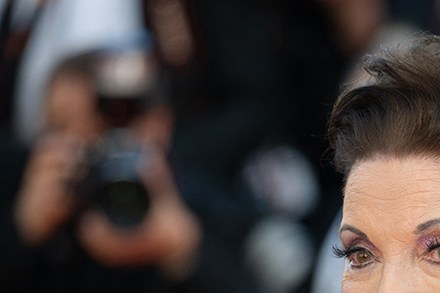
‘We are taking the picture to Cannes,’ said John Gore, the producer and financier of My Duchess, my new film about the Duchess of Windsor. ‘How exciting!’ I said. Then, a minute later, I thought, ‘Oh God! What am I going to wear on the red carpet?’ The following day I told my artist friend David Downton about my dilemma while lunching at Claridge’s. ‘Let’s call Stéphane Rolland,’ he said. ‘Wonderful idea!’ I said. ‘He’s great! He made the red dress I wore for the Heart Truth Red Dress gala in New York a few years ago, and it was spectacular.’ David called Stéphane as we had coffee, and the talented couturier sketched a terrific drawing of a beautiful white dress with ruffles while they chatted, and texted it to David. ‘Amazing!’ I exclaimed.

Who says Lauren Sánchez Bezos doesn’t belong at the Met Gala?

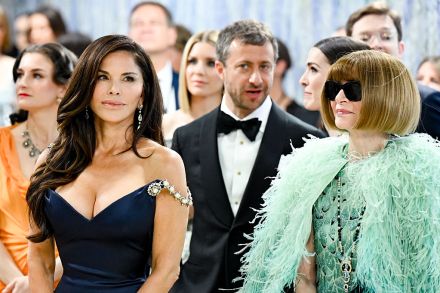
Lauren Sánchez Bezos, with her blown-out lip filler, understands fashion. She understands that, unlike the gatekeepers of painting and literature, fashion figureheads aren’t ashamed to dirty their hands by digging around in the money pot. It was only fitting, then, that Lauren and her husband Jeff Bezos sponsored this year's Met Gala. Its theme was "Fashion Is Art." All Kardashian-Jenners present came in bodices protruding in the shape of their nipples Sánchez Bezos showed up to the Met red carpet in a navy-blue gown that nodded to John Singer Sargent's painting of Madame X, a socialite and the wife of a French banker. The painting's portrayal of a pale, corpse-like, high-society woman was considered indecent because of the single strap falling off her shoulder.

What have they done to The Devil Wears Prada?

From our UK edition

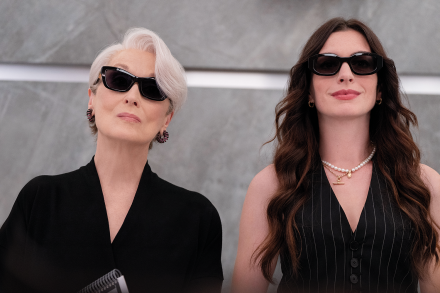
The Devil Wears Prada (2006) is one of those films which, if chanced upon when flicking television channels, I will always stick with for a bit. It has zing. It has bite. It has memorable lines that I can remember without having to look them up. (‘Are we going to a hideous skirt convention?’) But mostly it has Meryl Streep as Miranda Priestly, the wonderfully toxic editor-in-chief of Runway fashion magazine. She is still terrific. But while the landscape has moved on, the characters have remained the same and halfway through I started to drift. Another blow is that it’s become more sentimental and less satirical. In other words – and I hate to be the one to say it – it’s not as good as the original. Where are we, 20 years on?

No one in the DC political class is cool

No one in the DC political class is cool. For all our American spirit of independence, democracy still defers to the majority, and power compels even the most singular, Machiavellian mind to mold itself in the image of the people. Politics drains the blood out of the individual, replacing him or her with a bland and legible product, flattened into the image of at least 50 percent of the population. Prediction markets are a perfect example of this effect, shining the brightest lights into the caverns of cool, calcifying opinions into trends, trends into probabilities, and probabilities into certainties. There is nothing that poses more of a threat to cool than this, and no market hungrier for it than the politicos of Washington, DC.

The art of Schiaparelli

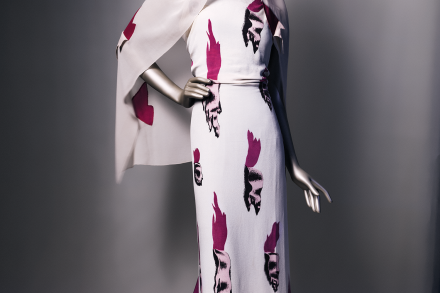
It’s a great shame that Elsa Schiaparelli is less widely known than her rival Chanel. Perhaps that’s down to how difficult her name is to pronounce. Is it ‘shap’, ‘skap’ or ‘skyap’? Tristram Hunt, director of the V&A, answers with a quip from Schiaparelli herself: ‘No one knows how to say it, but everyone knows what it means.’ The V&A’s new exhibition Schiaparelli: Fashion Becomes Art traces the web of influences around one of the great couture houses of the 20th century. Like Coco Chanel (I hate to compare them), Elsa Schiaparelli created clothes for the modern, independent woman – it is now conventional to say so but they ‘pushed boundaries’.

In praise of the gilet

From our UK edition

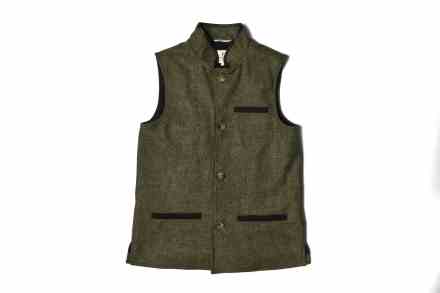
Every self-respecting gent these days is sporting a gilet. Don’t laugh. The gilet has come along leaps and bounds; you can’t tar it with the same brush as the Schöffel ‘Chelsea Life Jacket’ which is worn by the Hooray Henrys who guffaw at dinner parties twinned with their strawberry corduroy trousers.  The gilet is the height of sophistication. It is worn by the finance bros, the best-looking dad on the school run, the recently retired silver fox barrister you met at the ‘locals’ drinks party last Christmas and the gruff farmer who is so rich he really shouldn’t be that dour for goodness' sake.

Why don’t we wear proper shoes any more?

From our UK edition

People can seem completely normal, until you look at their shoes. Particularly men. There they are, appearing sane: natty haircut, ironed shirt, non-psychotic trousers. But then: oh, horror! Terrible shoes. Slimy-looking Docksides, or Toms espadrilles, or something shiny and pointy. Or tremendous show-off brogues like Mr Noisy, with those execrable metal tap things, worn only by bounders and con men.  I was once, aged 23, struck silent with horror by the shoes of a boy who accompanied me to a beach: a pair of dusty brown lace-ups it seemed he’d had since Upper Sixth. I now understand this to be tremendously posh but at the time it turned my stomach. I am too suburban for that kind of thing.

We don’t need Islamo-fashion

From our UK edition

When the ghastly Lynda Snell of The Archers ‘did’ fasting last year at Ramadan to suck up to the new Muslim family in town, I thought this kind of thing had got about as silly as it was possible to be. But reading about what happened last week at London Fashion Week took the gluten-free cake.  Non-Muslims either choosing or being compelled to celebrate Muslim holidays has been going on for some time. Understandably if disagreeably, with its Muslim mayor, London splurges on the celebration of Ramadan, decorating Piccadilly – the heart of the city – with 30,000 (sustainable) lights.

Bring back hats!

From our UK edition

I saw a chap walking down the road the other day looking, unusually for my part of town, the very quintessence of sartorial elegance: polished brogues, tailored pin-striped suit, rolled umbrella. He was a modern-day Beau Brummell. But what really topped off his ensemble – literally and figuratively – was a bowler hat. I haven't seen anyone wearing one of those for decades. In fact, the last time was about 35 years ago when a girl arrived at a party in one. Cruelly, I pointed and said: 'Ha! Charlie Chaplin!' The awkward silence that followed shamed me rather than embarrassed her.  Since the bottom dropped out of the officewear market during Covid, making an effort with daytime dress is unusual enough.

Strong suit: men are rediscovering how to dress

From our UK edition

The demoralising decline in the office dress code is long established. Nowadays, stockbrokers and estate agents are the only workers reliably in a suit and tie. For everyone else it’s chinos and knitwear – on a good day. But welcome news is afoot: among a growing legion of men, especially young men, there’s a revival of interest in dressing smartly. Inevitably, the driving force is social media. Instagram accounts such as @askokeyig, @ignoreatyourperil, @tfchamberlin and many others are extolling the virtues of a sharp silhouette and the perils of collar gap. Most famously, ‘the menswear guy’ (@dieworkwear) has become something of an international name on X by blasting the (usually dire) sartorial standards of politicians and others. He has plenty of targets.

Michelle Obama’s new book about style lacks substance

First lady is a strange role. Even when your husband is the first black president, and you’re a Princeton and Harvard-educated former corporate lawyer, America still projects its most regressive ideas about gender onto you. So I understand that Michelle Obama, like Hillary Clinton before her (skipping Laura Bush, a more classical first lady, along with, more recently, Jill Biden and Melania Trump), might have felt constrained, faced with expectations she could never satisfy. I don’t doubt that being black added enormously to that burden. Yet there is nothing more irritating than the person of Michelle Obama complaining. And she is always complaining.

michelle obama

The battle for Anna Wintour’s Vogue empire

When Anna Wintour announced she was stepping down as editor-in-chief of Vogue in June, it appeared to be the end of the ice queen’s reign. Yet Wintour retained her large, chintzy corner office as well as her two other roles – as Condé Nast’s global chief content officer and Vogue’s global editorial director. If you looked closely, you might have seen a steely determination lurking behind her trademark sunglasses, the look of a generational editor intent on more power – and perhaps even revenge. The Condé Nast Union naively regarded Wintour’s move as that of a then 75-year-old drifting into quiet retirement, the old guard surrendering to youth.

This exhibition made my companion gasp

From our UK edition

Numerous research academics have contributed to this highly cogent show celebrating the craftspeople of Ancient Egypt. My pre-teen companion, though a big fan of Egypt, was still slightly hesitant about whether this would be the most interesting angle. It began with a 4,000-year-old stele, or tombstone, on loan from the Louvre, praising the sculptural and painterly skills of an artisan called Irtysen, about whom, of course, nothing more is known. The perennial problem. General information, however, came thick and fast. We learned that a cooperative of skilled workers was a hemut, and a singular skilled worker a hemu.

Paul Poiret and the fickleness of fashion

From our UK edition

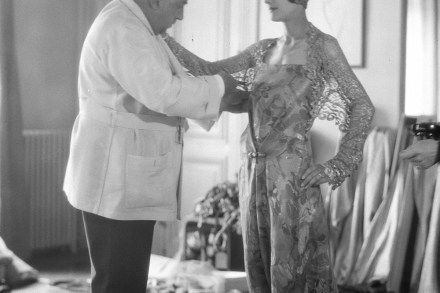
Such was Paul Poiret’s influence that he is the only couturier whose clothes are known to have caused several fatal accidents. At a time (1910-11) when fashion was loosening up he persuaded chic women into the hobble skirt, a garment so narrow round the ankles that only tiny, mincing steps were possible, with the result that several tripped over when stepping down from a pavement and one toppled from a bridge into a river where, unable to swim from the constriction around her ankles, she drowned.  In Mary E. Davis’s book, however, this dangerous garment gets only a brief mention.

The sheer joy of nighties

From our UK edition

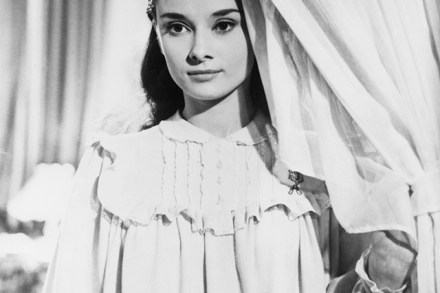
One of the many problems with the internet is that it’s increasingly difficult to know if something has become ubiquitous overnight, or if your algorithm is just serving you the sort of slop it thinks you’re stupid enough to buy. Case in point: nightdresses. Previously the preserve of pioneer women, convalescents and Victorian ghost children, nightdresses suddenly seem to be everywhere. I can’t open my phone without seeing a glamorous woman going about her morning wearing a beautiful and expensive nightgown. ‘Retailers have informed me that sales of nightdresses are higher than ever at present,’ Hannah Banks-Walker, a commissioning editor at Harper’s Bazaar, tells me. Delicious news. I am not alone.

Am I the last man in Europe still wearing a beret?

From our UK edition

I first wore a beret for a fancy dress competition at my infant school summer fete in June 1975. My mother had entered me in the ‘topical’ category and tapped into the media furore around the nationwide referendum a week earlier over whether or not the UK should join what would become the EU – an issue that has managed to remain topical. My costume consisted of said beret (borrowed) paired with a stripy top, an extravagant moustache drawn on with charcoal from a burned cork and a string of onions hung around my neck. And I was pushing a bicycle.

The dying art of costume design

From our UK edition

At the receptionist’s desk in Cosprop’s studio and costume warehouse, a former Kwik Fit garage, the sloping bleakness of Holloway Road is held at bay by a small chandelier, brassy lighting and a bound guest book. It’s a bit stagey, like a filmset for a cheap foreign hotel or an expensive shrink’s office, quite out of place in the real north London high street. But as the entrance to a costume house that builds worlds and people out of bits of fabric, feathers and jewels, it’s appropriate. Suspend all disbelief, ye who enter here. Cosprop was founded by the costume designer John Bright in 1965.