No. 10 Downing Street is, of course, ‘iconic’. But surely the status of an icon needs protection. If you let the place become the backdrop for whatever comes into your mind, you tarnish its power. Andy Burnham is achieving this effect. I first noticed it last month when he and President Volodymyr Zelensky were suddenly given a guard of honour outside the famous door. As the head of state of a beleaguered ally, Zelensky deserves honour, but the British prime minister is not the head of state and the Brigade of Guards protects our monarch, not the leader of the ruling political party. Rustled up at the last moment, and after inadequate consultation, the handful of Irish Guardsmen who showed up outside No. 10 to flank the two leaders looked ill prepared, ill at ease and borderline unconstitutional. This week, things got worse.
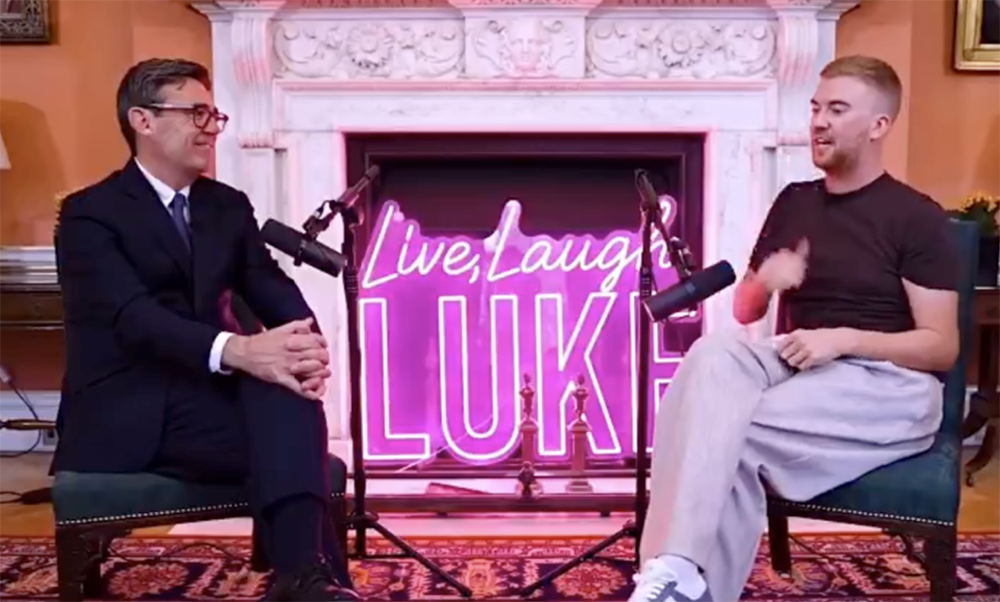
In one 24-hour period, two things happened in No. 10. First, the Prime Minister invited a pile of influencers in. One TikToker, Luke Hamnett, made a 20-minute video there in which he announced to Mr Burnham that ‘I won’t just blow smoke up your arse’, even as, metaphorically, he did just that. Another, Max Balegde, stood outside the front door and, in an oral version of blackface, lip-synced a sexist Jamaican obscenity ‘bomboclaat pussywagon chicken nuggets’ from a viral meme song while giving something which looked like (but probably wasn’t) a Nazi gesture. Mr Burnham’s purpose in all this seems to have been to prove that he is ‘relatable’. Do we want our Prime Minister to relate to such people? Mr Burnham himself seems belatedly to think not, since No. 10 eventually made Balegde take down his grisly clip.

The second thing was that the Prince of Wales came, unprecedentedly, to call, photographed walking up Downing Street like one of those cabinet ministers at whom the media shout silly questions. This stunt was briefed out as part of the Prince’s ‘apprenticeship’, but he himself is, ex officio, an icon, and that icon, especially its role of being above politics, can be degraded by association. Prince William walked up the same staircase down which, a few hours earlier, Luke Hamnett had been prancing in front of millions. I wonder if, as Prince and PM grinned outside the door, His Royal Highness feared he might have to lip-sync ‘Honi soit qui mal y pense’, to show he is just as good as Andy at picking up the vibe. Was this the most shy-making 24 hours in British politics this century?
In getting rid of the Daily Service, the BBC is shedding its longest-running and most Reithian programme. In founding the BBC, Reith said he saw ‘the Christian religion, not just as sectional activity but as a fundamental.’ The modern BBC naturally shuns such a thought. But I am surprised it does not see the service in a more modern light, as an example of ‘diversity’. In almost all cultures, at almost all times, prayer and worship have been valid – special modes of expression for praise, thanks, yearning, repentance and grief. Prayer has been, and often remains, as culturally central as poetry, storytelling, song and dance, and overlaps with all those things. Those who have never learnt to pray have been denied a particular voice in the conversation of mankind. Strange for a national broadcasting corporation to be complicit in that.
On Saturday, the International Tribunal for the Law of the Sea (ITLOS), which sits in Hamburg, will rule on the attempt by Javier Milei’s Argentine government to stop the Sea Lion oil project which is currently well advanced in the waters of the Falkland Islands. Navitas (which is Israeli, though its CEO is British) and Rockhopper (which is British) are the joint undertakers. They have the backing of British government lawyers. The usable amount of oil in Sea Lion is thought to be about twice the size of that in the disputed Rosebank field back home. The companies’ case is that ITLOS lacks legal competence because the Argentine claim is not about the Law of the Sea at all but the validity of British sovereignty over the Falklands. Whatever the tribunal may find, one must hope Ed Miliband, the relevant minister, will stand firm. Although he hates oil and hates Israel and presumably does not like the idea of a British colony, he has insisted he will do so. The Falklands are British in international law and that is not a matter for ITLOS, not even for it to propose what are known as ‘interim measures’ to impede production. It seems, by the way, that if Milei gains any success on this front, his next effort will be against the Falklanders’ right to fish. He is on the Galtieri warpath. Can relatable Andy Burnham pick up on the Margaret Thatcher vibe?
Spectator readers intensely dislike broadcasters saying, ‘I am stood on the grass/tarmac/bombsite’ etc, rather than ‘I am standing’. In a previous column, I have nervously poked this hornets’ nest, suggesting that it is possible to say ‘I am stood’ if there is an implication that someone has stood you there. Readers have tended to reject this. But I now cite something I noticed when rereading Put Out More Flags by Evelyn Waugh at the weekend. The appalling Connolly family, the worst evacuees in the country, arrive from London by train and are found ‘lurking under the seats of a carriage’: ‘They had been dragged out and stood on the platform where everyone denied knowledge of them.’ My reading of that sentence is that the Connollys had been a) dragged out and b) stood. Waugh does not repeat the phrase ‘had been’ before ‘stood’, but only because it would have been otiose and inelegant to do so. I cannot prove this, but I think it fits the way he writes. If he had intended ‘stood’ as an intransitive verb, he would have inserted a comma immediately before ‘and’. If Waugh feels that people can be ‘stood’, I feel we should accept it.



Comments