
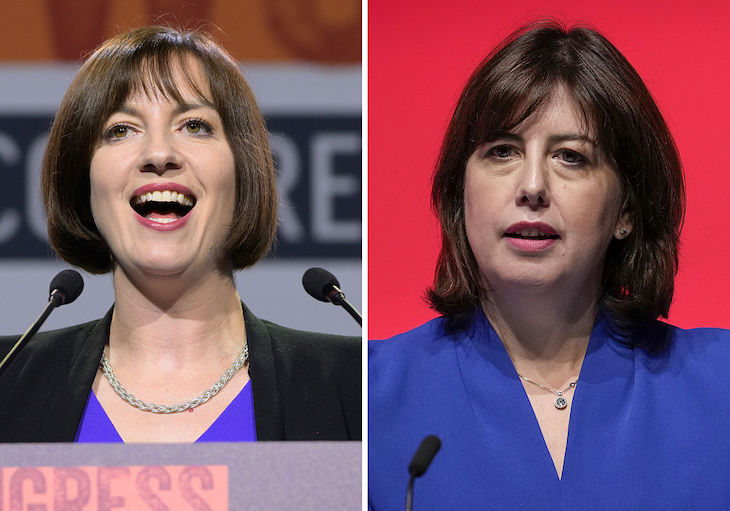
Andy Burnham may have booted the Starmerites out of the cabinet, but at the Department for Education, it’s a case of meet the new boss, same as the old boss. Deputy Labour leader Lucy Powell has replaced Bridget Phillipson as Education Secretary. The pair share the same haircut, same generic northern accent, and same ideological commitments. So the question is, will anyone notice the swap?
Under Bridget Phillipson, the line between education and indoctrination grew thinner than ever before
As Education Secretary, Bridget Phillipson seemed far more interested in waging class warfare than in what was actually going on inside England’s classrooms. How else to explain her decision to impose VAT on school fees midway through an academic year, disrupting the education of thousands of children and, ultimately, leading to the closure of many highly-regarded schools? Little revenue was generated to pay for more teachers in the state sector, but at least Phillipson got to sock it to the rich!
This same phoney anti-elitism was there in the decision to cut funding to the Latin Excellence Programme that gave state-school pupils the opportunity to learn a subject they may not have had a chance to study otherwise. Again, cuts were made halfway through the school year, leaving children and teachers in the lurch. But they were probably posh, if they had aspirations to learn Latin, so why should Phillipson care?
Rather than Latin-for-all, Phillipson was more concerned with sex education for all. Having dropped the previous Conservative government’s recommendation for strict age limits on what children could be taught when, Labour continued to stuff the Relationships, Sex and Health Education curriculum with every progressive preoccupation going, from online safety and consent to misogyny and ‘toxic gender norms’. Under Phillipson, the line between education and indoctrination grew thinner than ever before.
Labour ministers trumpet breakfast clubs, cheaper school uniform, and toothbrushing schemes as evidence of success. But none of these policies has anything to do with education. They transform schools into social welfare centres, robbing parents of responsibility and consuming teachers’ energy. Then there was Phillipson’s toe-curling interview with reality television star Gemma Collins. The less said about that, the better.
Phillipson has been a terrible Education Secretary, and it is great that she has been fired. But even before celebrations had begun, came the announcement that Lucy Powell will become England’s tenth Education Secretary in ten years.
Those hoping for change, even for a return to academic standards as the primary focus for the Department for Education, look set to be disappointed. Burnham has argued that there needs to be greater parity between academic and vocational qualifications – a point made by successive governments over many decades now – and it will fall to Powell to bring this about. But beyond this, and despite her brief stint as shadow education secretary in 2015/16, we know little of her views on the future direction of schools.
What we do know is that Powell’s primary commitment is not to education for its own sake, or even to increasing opportunities and improving the lives of working-class children, but to the Labour party and the progressive causes its supporters espouse.
Just last year, Powell appeared on BBC Radio 4’s Any Questions alongside commentator and Reform UK member Tim Montgomerie. When Montgomerie raised the issue of grooming gangs, Powell retorted: ‘Oh, we want to blow that little trumpet now do we?’ before continuing, ‘Let’s get that dog whistle out, shall we?’ This unscripted exchange reveals her inability to see any issue, even the rape of young girls, as anything other than an opportunity for party political point-scoring.
Such is Powell’s need to defend the notion that ‘diversity is our strength’ that she is prepared to write off concerns about the safety of mainly white working-class girls as a ‘little trumpet’. This does not bode well for the nation’s children. Schools play a major role in child safeguarding. Teachers must act on concerns they have about a child’s welfare, and not fear accusations of engaging in ‘dog whistle’ politics.
Powell’s same ideological leanings – and willingness to sacrifice the safety of women and girls – are evident in her support for transgender rights. She argued that last year’s guidance from the Equality and Human Rights Committee on protecting single-sex spaces went ‘too far’ and called for a parliamentary review before it was given the green light by government. This would have allowed MPs to water down vital protections for women and girls.
Likewise, Powell has enthusiastically backed calls to ban ‘conversion therapy’ which could outlaw counselling for children confused about their gender identity. Again, this could have major implications for the way schools are asked to respond to children claiming they want to change gender. The danger is that rather than consulting with parents, teachers are expected to keep children’s confidences.
It is difficult to imagine an Education Secretary as bad for schools and children as Bridget Phillipson. But, in Lucy Powell, Burnham has found a good match.






Comments