The West’s track record
Sir: I read with much sadness Matthew Parris’s reservations about western attempts at regime change in Iran (‘Is this Starmer’s finest hour?’, 7 March). Sadness because he is quite correct, given the West’s track record in Iraq, Afghanistan, Libya and Syria. He rightly alludes to Benjamin Netanyahu’s ‘Greater Israel’ plans amid destabilised, chaotic neighbours.
In Syria in late 2010, I spoke with resident Sunni, Shia, Alawi, Christian and even Jewish residents from Homs and Hama to As-Suweida and Aleppo: well over 90 per cent pointed to their freedom of association and of worship, the women to the secondary and tertiary education they could enjoy, and all because the Assads could guarantee these things. Of course the Assads came down very hard on any group trying to upset such an applecart. What the people feared most, however, was another Iraq or an Islamic theocracy; and effectively we gave them these. We interfere not so much at our peril but very much at theirs.
R.C. Paget
Marcham, Oxon
Lying low
Sir: Tim Shipman quotes a former defence chief saying: ‘The UK is kept safe by three things: nuclear weapons, Nato, and having America as our ally’ (‘Whose side are you on?’, 7 March). As I understand it, we can only use nuclear weapons with the approval of the USA; membership of Nato involves a lot of multilateral treaty commitments to go to war (as in the first world war) in ambiguous circumstances, and having America as an ally is neither reliable or safe (it may draw us into conflicts). We might agree that an independent nuclear deterrent is a good thing, but Nato looks like a coalition of the willing to engage in war with a nuclear-powered Russia, and America seems gung-ho in going to war with anyone that crosses its path (including Greenland, Denmark/EU and Canada). It may be safer for the UK to keep a low profile and build up its capacity to deal with the biggest threats it faces: climate change, worldwide conflict generated by forces out of our control and future pandemics. Becoming embroiled in Trump wars, less so.
Roger Steer
Sheffield
Iranian vox pop
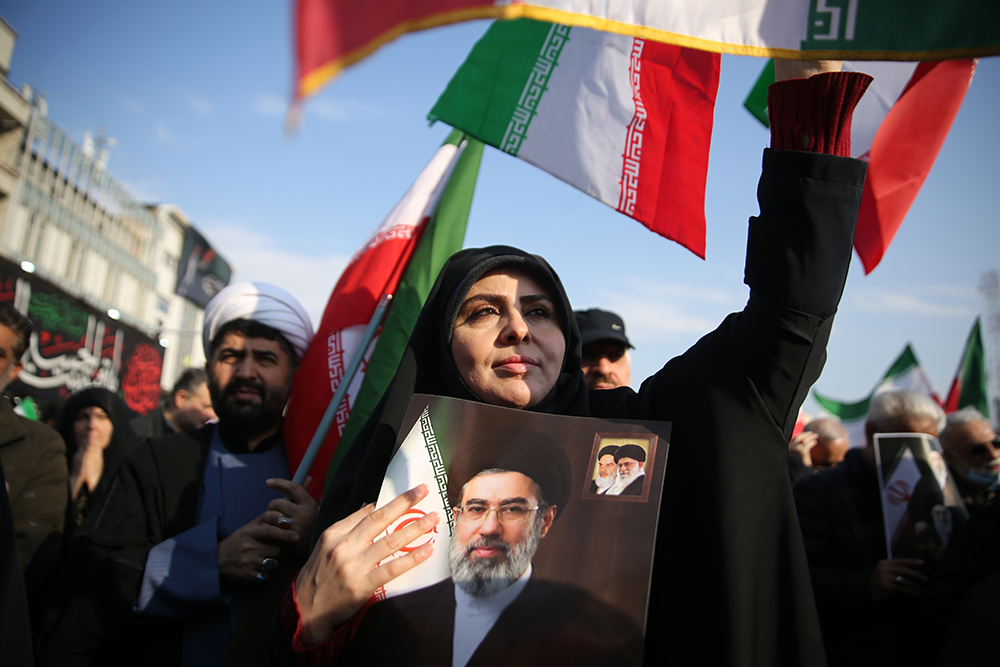
Sir: Your excellent coverage of the first stage of this war (7 March) would have benefited from an Iranian voice, but it is hard to find authentic vox populi. As someone who has supported dozens of diaspora Iranians in the UK to convert to Christianity, they are a valuable conduit for news from families and friends back home. As the bombs began to fall, many made contact to register their relief that something decisive was at last being done to oust the tyrannical regime they escaped. They are confident a majority want an end to the reign of terror that recently slaughtered tens of thousands of protestors. Asked what may follow, they are confident that the majority for change will rise to the challenges of rebuilding their nation.
The Revd Larry Wright
Stratford-upon-Avon
The Nakba was real
Sir: Toby Young refers to the Nakba as a ‘myth’ (No sacred cows, 7 March). During the 1970s, I spent a year teaching English in a small desert town in Saudi Arabia. There were a lot of Palestinians there. They were very friendly and helped make my stay a memorable one. When I asked why they were there, they said they had been turned out of their houses and land by the Israelis. Whatever the quoted numbers, they include much genuine grievance.
Jon Pettman
Eastbourne
Still ‘home’
Sir: I admire both Isabel Oakeshott and Rod Liddle, but as a surprised ‘Somewhere’, I found myself siding with Oakeshott while reading their articles on Dubai (‘Letter from Dubai’ and ‘Dubai’s Ritz spirit’, 7 March). Liddle (scandalously channelling his inner Ed Davey) wants to debar her return ‘because she is a tax exile’. She is happy to pay for her return, if needed, at no cost to the taxpayer. Whatever happened to civis Britannicus sum? For both Somewheres and Everywheres, Britain is still ‘home’.
Dominic Morris CBE
Woburn, Beds
Screened out
Sir: Mary Wakefield is right: screens in schools have been catastrophic (‘Education needs a great leap backwards’, 7 March). She doesn’t mention that Ofqual has recently consulted on proposals to increase the use of screens in GCSEs and A-levels, so that up to 50 per cent of exams in future will be conducted via screens. One argument for this is that it would be helpful for students with special needs, but they already have the right to complete their exams on a computer. Computer-based exams will, of course, necessitate yet more screen time in school, so that candidates can practise under exam conditions. Given what we know about the effect of screen time on learning and mood, this is another giant leap backwards.
Elizabeth Howard
London W5
The pride of Wales
Sir: How nice to see a positive article about Wales (The Wiki Man, 28 February). But for those of us who live here, the reality is different, and rugby is a good place to start the analysis. In so many ways Welsh rugby has become a mirror to Wales itself: a once proud nation whose spirit has been crushed by the insanity of the Senedd. The Welsh Labour government has had a pernicious influence on the WRU. Its restructuring has the stink of Senedd-led incompetence all over it. Add to that the Senedd’s progressive posturing, which means anything that might look like ‘toxic’ masculinity – like rugby – must be challenged, changed and wrecked. It is difficult to see a way back, but the WRU cutting all ties with the wretched Welsh government might be a start.
Martyn Thomas
Bryngwyn, Monmouthshire
Happy medium
Sir: I read Melanie McDonagh’s article (‘Cheer and loathing’, 7 March) on her distaste for modern informality with glee. A friend who knew I have been spending a lot of time in the US recently, asked whether I would like to move there. I replied that I wouldn’t, as Americans are just so nice. I struggled to formulate my thoughts, and my friend frowned. Melanie hit the nail on the head: as much as I love the US, with its friendliness, ready engagement in conversation, sometimes startlingly invasive personal enquiry, and the constant grating exhortation to ‘Have a nice day’, I always relish my return to the drizzle and encounters marked by nothing more than an occasional, polite but expressionless: ‘Good morning.’
David Norton
Norton sub Hamdon, Somerset
Kiss of death
Sir: On reading the letter in your most recent issue (7 March), I was reminded of the time when I, with my moustache, told a young girl that kissing a man without a moustache is like eating an egg without salt and pepper. Her immediate response was: ‘I don’t like eggs.’
Jonathan Jempson
Iden, East Sussex



Comments