Smartphones

How iPhones became birth control

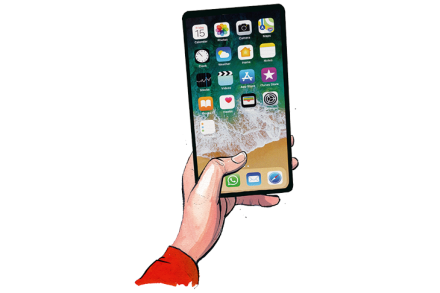
A new study has found that smartphones are a likely cause of falling American birth rates. Economists Caitlin K. Myers and Ezekiel Hooper tracked the rollout of the iPhone across the country and found that the more people used smartphones, the further birth rates fell. This was especially true for the youngest cohort of women. Between 2007 and 2011, use of the iPhone was correlated with between 33 to 52 percent of America’s fertility decline. There’s been a lot of discussion about smartphones and falling fertility rates lately. Most arguments go something like this: smartphones and social media are linked to rising rates of anxiety and depression, less sex and less in-person socializing.
iphones birth control

A meditation on reality: Transcription, by Ben Lerner, reviewed

From our UK edition

Near the beginning of Ben Lerner’s new novel the unnamed narrator recalls visiting an exhibition of botanical models made by the father-and-son glass artists Leopold and Rudolf Blashka in Dresden in the 19th century. Like Zeuxis’s grapes, so lifelike that birds would come and peck at them, the models, ‘impossibly delicate things’, challenge the narrator’s sense of the real: I kept seeing the flowers as organic one instant and as artificial the next, a kind of duck/rabbit effect, not between things the object might represent but between nature and culture, the given and the constructed. Transcription, like Lerner’s previous three novels, is an autofiction about the tension between the given and the constructed. It is arranged in three acts.

The arrogance of the tech-skeptics

If you’ve been paying attention to social media lately, then you already know the score: smartphones are corrupting our children, we need legal intervention immediately. Roughly half of US states have enacted some form of age-gating for social media or pornographic content. Australia banned under-16s from social media platforms outright, France and Indonesia followed suit and the United Kingdom is now asking people for their papers to read moderately offensive blog posts. You don’t need me to rehash this. The phones have nuked the interior lives of Gen Z, Gen A and the hitherto unborn Generations B and C. Every opinion lands somewhere between “protect the children” and “this is Reefer Madness for iPads.

Letters: Litter is a sign of Britain’s low self-esteem

From our UK edition

State of the nations Sir: My spirits were raised by your stirring defence of the forthcoming royal visit to America (‘Britain’s Trump card’, 14 March). Its contemporary importance can be viewed in the light of Charles Moore’s Note (same issue) that the remaining hereditary peers have just been removed from the House of Lords. The monarch has thereby become the only person with a part in our legislature by virtue of inheritance, a situation bound to encourage those with republican instincts. Their tired old question will be resurrected: why can we not elect our head of state? The answer will be evident in pictures from the White House.

Letters: We interfere in the Middle East at our peril

From our UK edition

The West’s track record Sir: I read with much sadness Matthew Parris’s reservations about western attempts at regime change in Iran (‘Is this Starmer’s finest hour?’, 7 March). Sadness because he is quite correct, given the West’s track record in Iraq, Afghanistan, Libya and Syria. He rightly alludes to Benjamin Netanyahu’s ‘Greater Israel’ plans amid destabilised, chaotic neighbours. In Syria in late 2010, I spoke with resident Sunni, Shia, Alawi, Christian and even Jewish residents from Homs and Hama to As-Suweida and Aleppo: well over 90 per cent pointed to their freedom of association and of worship, the women to the secondary and tertiary education they could enjoy, and all because the Assads could guarantee these things.

Screens in schools have been a catastrophic failure

About a decade ago, the people I dreaded meeting most at parties were the ed tech evangelists – men and women who lit up with zealous excitement about bringing screens into schools. If only every schoolchild had a laptop, they thought, then humanity could flourish, nurtured by the great river of the internet and by an exciting stream of educational apps. It was as if a school laptop was a Mary Poppins bag out of which whatever they most wanted was sure to appear. For the ed tech utopians of the right, what they dreamt of was a great stream of savvy little Einsteins, liberated from turgid teachers. For those on the left, it was about equal access, fairness, ‘pupil-centred learning’.

I broke my phone… and then the repairman

From our UK edition

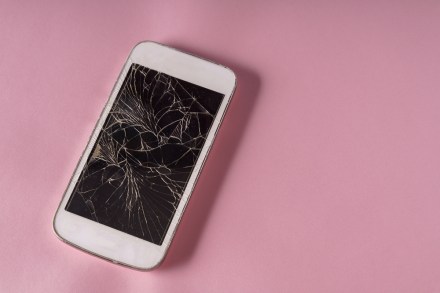
The man in the phone repair shop smiled all too confidently and told me that there was nothing I could present him with that he couldn’t fix. ‘That’s good,’ I said, holding out my smashed phone. But what I wanted to say was: ‘I am a hapless person who jinxes things. You may think this is just another straightforward job, but I want to give you fair warning before you take me on that nothing to do with dealing with me will be straightforward, and you will probably end up throwing me out of your shop. I am neurotic, added to which I have an otherworldly curse on me when it comes to technology, which makes everything malfunction.’ I did not say this, because I badly wanted my smashed phone screen replacing.

Snobbery is the best weapon against screen time

From our UK edition

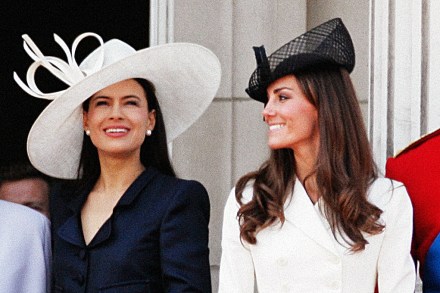
I can’t be the only neurotic mother to have rejoiced when the Princess of Wales revealed recently that she has a strict ‘no phones at the table’ rule. The Prince of Wales then later let slip that Prince George, who is 12, isn’t allowed a smartphone. When George eventually does get a phone, William added, it will be a brick without the internet – similar, one imagines, to the sort favoured by drug dealers. Hallelujah! Up until now, the best line for parents to trot out has been the old chestnut that ‘Silicon Valley guys send their children to schools where the tech use is unbelievably moderate because they know how addictive this stuff is’.

Clapping, going grey, getting naked: how to break your phone habit

From our UK edition

I’ve been having trouble with my phone recently. I noticed it particularly while in France a few weeks ago. I’d flop on the sunbed with a book and then spend half an hour scrolling through ridiculous videos online. But then I do it at home, too – go to bed early thinking ‘Ooh good, nice early night with my book’. And then I see a video of a dog jumping into a swimming pool, or a chef cooking a Japanese omelette, or someone removing blackheads from their nose, or a clip of something that might be a cake but also might be a shoe, or someone else offering an improbable DIY tip involving a clothes hanger and a jar of honey, or a video of nail art, or of an influencer promising ‘THE ONLY RECIPE FOR BANG BANG CHICKEN YOU’LL EVER NEED’, and so on and so on.

The rise of the competitive book list

From our UK edition

I’m a hopeless technophobe. I dislike the stylish laptop I’m using and its subdued pad pad pad. I still long for the clatter and ting of my old typewriter. It was a sturdy soul, utterly obedient, only needing a new ribbon occasionally. It lived for 40 years before being interred in a quiet corner of my attic. I’ve had several computers since and they have all been tricksy. I often fantasise about tracking down another ancient typewriter that could be coaxed back into service. There are still several writers determinedly tapping away. The American novelist Danielle Steel has achieved a billion sales by working on a 1946 typewriter. Jilly Cooper wrote her recent bestseller Tackle! on a red manual called Monica.

My campaign to bring back real life

From our UK edition

A new book by an American writer, Christine Rosen, details the way in which we are losing touch with the real world: the one we evolved in, as opposed to the virtual one. All the scrolling and texting means we’re forgetting the look and feel of life unmediated by screens. The book is called The Extinction of Experience, and if we get more anxious year by year, then it’s not just wars or the cost of living, Rosen suggests, but because we’re grieving for the real world, whether we know it or not. I definitely know it. I’m Gen X, so I grew up without the internet, yet like other members of my generation now find myself caught in the smartphone itrap, dependent and resentful.

An ode to my old Nokia

From our UK edition

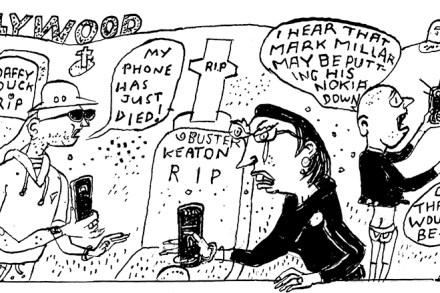
Without much fanfare, the Nokia phone has died. I got my first mobile phone, a Nokia, at an age that is by most lights too young. I was in what Americans call the fourth grade, which means I was ten or 11. The phone in question was a cutting-edge Nokia 6820, which a contemporary Nokia press release claims was ‘specifically designed for enterprise use, with a full keyboard to offer faster text-input and easy navigation for advanced messaging like mobile e-mail’. I certainly had never sent an email at that stage in my life, and I operated no enterprises.   At first I thought very little of that phone, by which I mean I thought very little about it. Our relationship was not a passionate one. I liked that it was silver and light blue.

Could Ozempic cure your phone addiction?

From our UK edition

It’s already known for whittling down waistlines – and now Ozempic looks set to have the same effect on wine consumption. Research recently published in the journal JAMA Psychiatry found semaglutide, the weight loss medication also sold under the brand name Wegovy, reduced cravings in people with alcohol use disorder.  The study by California’s USC Institute for Addiction Science divided 48 participants into two groups and found those injected with semaglutide drank less in each sitting than those offered a placebo. It is not the first research to link the jabs – originally designed as a diabetes treatment – to lower incidence of substance abuse.

The true villain of Netflix’s Adolescence

From our UK edition

Even if you haven’t seen Adolescence, currently the most-watched show on Netflix, you’ll doubtless be aware – or think you’re aware – of its central themes: knife crime, social media, the manosphere and its pernicious influence on teenage boys. In other words, ‘the Andrew Tate shite’, as the show’s (female) detective sergeant sighs at one point.  Critics have gushed that this is ‘TV perfection’ (Times, Guardian) and a landmark series ‘so powerful it could save lives’ (Guardian again). Each of the four one-hour episodes is apparently shot in one take, which is the sort of thing that thrills male critics but for ordinary viewers can, at times, feel self-indulgent and contrived.

The psychological toll of being constantly tracked and harassed

From our UK edition

In late 2018 a Saudi journalist living in exile in Canada, who liked to work out in between recording YouTube critiques of his government, ordered some protein powder online. When a text message landed on Omar Abdulaziz’s smartphone notifying him of a DHL delivery, he clicked on it without hesitating. The portrait Deibert paints is a million miles away from the Cold War binary world of John le Carré The DHL invitation was fake digital bait. By clicking on it, Abdulaziz had enabled Pegasus, a spyware program designed by a now infamous Israeli company, NSO Group.

How I learned to embrace my autism

From our UK edition

I’m autistic, I teach autistic children and I care for autistic adults, but I never kid myself that we are better than other people. When I asked a fellow autistic man if he could name any famous autistic people, he replied: ‘Hitler and Einstein.’ I love his answer because it punctures the romanticism around autism. There are evil autistic people, as well as geniuses. Was Hitler autistic? We’ll never know for sure, but he showed several symptoms. People who met him found that once he started talking, he would not stop. He was also nocturnal, had an addictive personality and developed lifelong obsessions (in his case, racial purity). Around half of all the people referred to the anti-radicalisation programme Prevent are autistic males.

Keir Starmer’s parenting lessons

From our UK edition

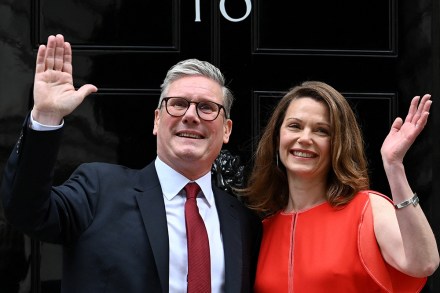
Before he became Prime Minister, Keir Starmer admitted he was concerned about what life in Downing Street might be like for his children. It was, he said, the ‘single thing’ that kept him awake at night. What’s notable is that we aren’t even aware of Starmer’s children’s names. They are teenagers but that’s about all we know about them. They were not photographed when Starmer and his wife Victoria entered No. 10, nor have they been seen since. ‘We do try to protect them… we don’t use photos of them in any way,’ Starmer said. There seem to be no pictures in the public domain of Starmer with his children. A smartphone ban shouldn’t come from the government; it should come from parents I’d say that is quite an achievement.

Why I’m fighting to ban smartphones for children

From our UK edition

I am not often lost for words, but the five middle-aged homeless men who spoke at the Big Issue celebration in the House of Lords last month left me truly awestruck. All five had endured lives of childhood abandonment, violence, pain, destitution. All five had emerged from the darkness philosophical, hopeful and loving of their fellow man. I have not stopped thinking about them, and when I start on my usual daily beefs – signs on the Tube telling me I mustn’t give money to beggars (why not if I want to?); signs on the Tube telling me I can’t stare at people (what if someone is listening to a deafening violent video on their phone, should I deck them instead?); signs on the Tube telling me I mustn’t press into someone (try the Victoria line at 6 p.m.

Why Britain stopped working

From our UK edition

50 min listen

Welcome to a slightly new format for the Edition podcast! Each week we will be talking about the magazine – as per usual – but trying to give a little more insight into the process behind putting The Spectator bed each week. On the podcast this week: the cost of Britain’s mass worklessness. According to The Spectator’s calculations, had workforce participation stayed at the same rate as in 2019, the economy would be 1.7 per cent larger now and an end-of-year recession could have been avoided. As things stand, joblessness is coexisting with job vacancies in a way that should be economically impossible, writes Kate Andrews in the cover story.

How to shock a Satanist

From our UK edition

I wish I could be like actors and pretend to be bored by press junkets, but the truth is I love the attention. My job as a Hollywood writer and producer mainly involves sitting in front of a computer and shouting at my kids, so free drinks, launch parties and people telling you how great you are is the perfect antidote to a room filled with empty Monster Munch packets and that urine sample you were meant to hand in to the doctor. Writers are such terrible narcissists. We not only expect complete strangers to be fascinated by our every thought; we want them to pay for the privilege. You can imagine how much we relish poor journalists being forced to listen to us talk about ourselves for days on end.