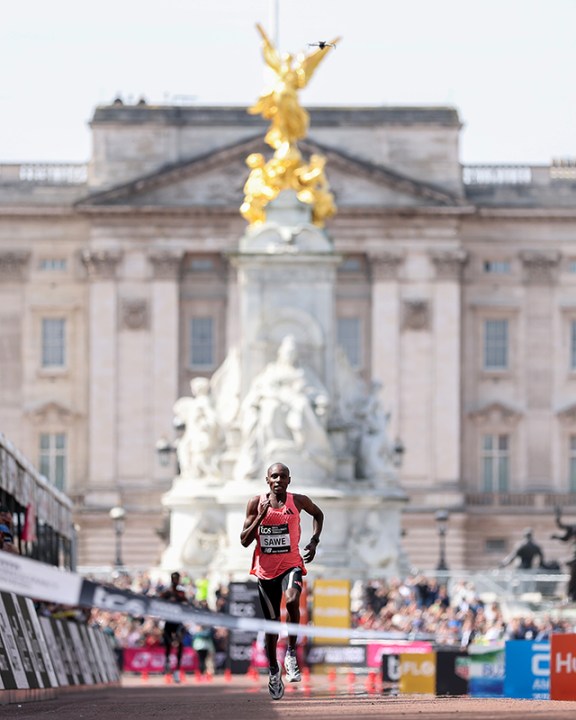


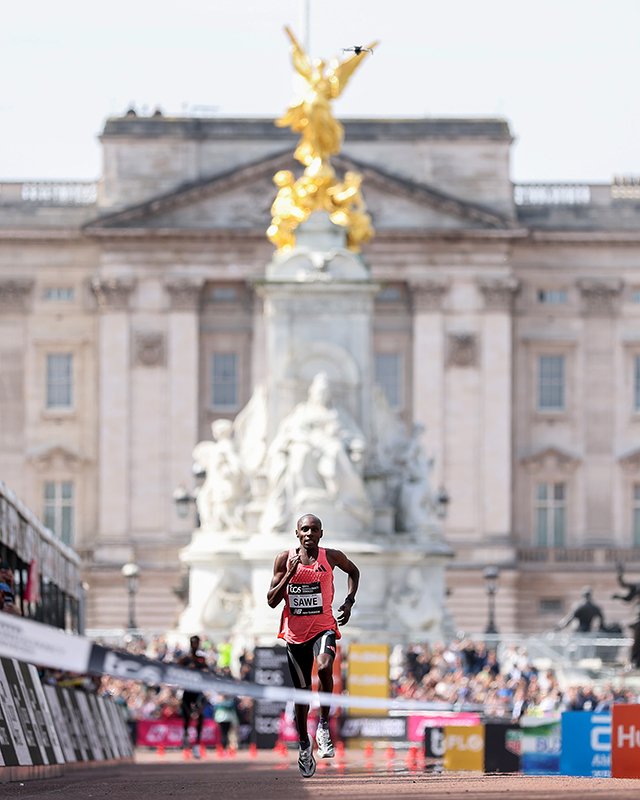
Suddenly last Sunday in London nearly 60,000 amateur runners were able to say they had competed in a race in which one of the world’s greatest athletic achievements of all time was finally accomplished. Sabastian Sawe’s demolition of the two-hour barrier for the marathon ranks with Roger Bannister’s cracking the four-minute mile in 1954, or Hillary and Tenzing conquering Everest, the world’s highest point, the previous year. These epics test human performance to its very limit and are moments that should be celebrated for as long as human greatness is acknowledged.
He revealed that before the race he had breakfasted on bread and honey, with a mug of tea. Winnie-the-Pooh would be pleased
Forget all the talk about super-shoe technology: sure, Sawe, a 31-year-old Kenyan from the Rift Valley (the home of so many of that country’s regiment of elite distance runners) was wearing a pair of natty Adidas Pro Evo 3s – at 97g light as a bar of soap and setting you back a tidy £450. But why on earth shouldn’t he be wearing them, and if a sports shoe company wasn’t making kit to help you go faster it wouldn’t be doing its job properly. It was Sawe the athlete who clocked one hour 59 minutes and 30 seconds, driven on by his determination, speed, skill, and exceptional oxygen uptake. It was his body, his soul, his mind that did it. Though the money might have helped: Sawe left London with at least £250,000 in bonuses, and an almost infinite amount more to come in promotion, appearance fees and so on.
Sawe wasn’t the only man to break two hours either. Just 11 seconds behind him was Yomif Kejelcha of Ethiopia, who was making his marathon debut. Pleasingly, at a time when you can’t move for endless advice about diet, lentils, super-proteins and so on, Sawe revealed that before the race he had breakfasted on bread and honey, with a mug of tea. Winnie-the-Pooh would be pleased. And Sawe is clean as a whistle (unlike, ahem, a fair few of his countrymen over the years): he has requested extra testing throughout the year and paid the anti-doping body for its trouble. But what an athlete: a fit young person who tried to race Sawe for the last 400 metres alone – after he’d run 26 miles – would have still been left for dust.
There is a pleasing circularity about this astounding achievement taking place in London. The director and CEO of the London marathon is Hugh Brasher. His father Chris, who founded the race in 1981, had been one of the two pacemakers for Bannister’s epic run around the cinders of the Iffley Road stadium in Oxford. For years it had been said the four-minute mile was impossible. After Bannister the record was breached time and again. For years the two-hour mark for the marathon was said to be out of reach.
But nearly 20 years ago Haile Gebrselassie, the record-breaking Ethiopian runner whose voracious oxygen uptake made him a super-efficient distance athlete, smashed the two-hour four-minute barrier in Berlin, and began to scatter the clouds that obscured the sub-two-hour peak. Yet some were certain it couldn’t be done: the director of US distance running at the time of Gebrselassie’s effort said then he would be staggered if a sub-two-hour marathon was ever recorded. ‘They’d have to invent some very good drugs for it to happen because we know what happens to the body after 30km. It really starts to suffer and break down.’ Other experts considered it somewhere between ‘very unlikely and impossible’.
Well they were all wrong, but who would have thought it would happen at the London Marathon, still the most joyous celebration of mass participation sport anywhere in the world. The marathon is a brutal, savage test of what makes us human but Sawe knows there is more to come: ‘I think I can go faster and more people can break two hours,’ he said. Bring it on.





Comments