Sport

The day we welcomed the Queen Mother to our Lambourn pub

From our UK edition

With the recent passing of Johnny ‘The Fish’ Ferrand and Graham ‘Brad’ Bradley, racing lost two of its most loved and colourful characters. I was in business with both of them – one more successfully than the other. I remember one time when Johnny the Fish and I thought the chef of our pub, the Pheasant Inn, was in the small, grotty kitchen. But when we walked in, there was no sign of him. Then we looked behind the serving counter and saw him sitting on the floor, injecting heroin into his arm. The Fish’s eyes got bigger and more watery than normal, he puffed his cheeks out and dryly observed: ‘Well that’s a bit strong… before lunch.’ At St Michael and All Angels church in Lambourn last week, trainer Nicky Henderson regaled us with tales of the Fish.

I find it hard to be outraged about the Man City saga

From our UK edition

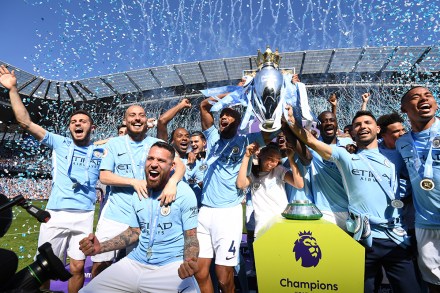
When the sonorous voice of Clive Myrie describes something as the ‘biggest sports story of the century’ in tones normally used for events in Kyiv or Gaza it’s probably time to sit up and listen. Or maybe not. The City saga – at root claiming that the club breached financial rules to pay its way from 2009 to 2018, when they won the Premier League three times – has been going on for eight years after all, and if Ferran Soriano, the chief executive, and the unfeasibly wealthy chairman, Khaldoon Al Mubarak, know what they are talking about, it’s got plenty more time to run. God help us! And they do seem pretty bullish. None of this, ‘OK guv, you got us bang to rights, we’ll come quietly’ stuff. Personally, I find it difficult to get worked up about this story.

Rain never stopped play – cricketing feats of Victorian Britain

From our UK edition

Drawing on contemporary newspaper reports, this splendid book recreates cricket’s watershed year, 1864. At the time, Kit Harris explains, football was still in its infancy and ‘there was almost no other sport to occupy a man’s time’. So cricket was played in winter, too. The smooth surfaces of frozen ponds and lakes made for prodigious scoring: ‘The ball, once struck, found no obstruction before reaching the banks.’ Boundaries didn’t exist, so batsmen ran until a fielder returned the ball. Later that year, playing for United England against All England, William Mortlock ‘hit one ball past square leg, through the gateway, out of the ground, across the road and into a garden wall opposite’. The stroke brought seven runs.

Why did a tech genius want to buy the most successful commercial stud in Britain?

From our UK edition

Alan Brazil was an icon on the pitch for Ipswich Town, Tottenham Hotspur, Manchester United and Scotland. Now he’s a legend behind the microphone on talkSPORT’s breakfast show, where he gets an audience of 1.4 million. Such is Alan’s penchant for arriving at the studio at 5.58 a.m. during the news bulletin before his show, his producers re-wrote the ‘Living Next Door to Alice’ lyrics: ‘Alan, Alan, where the fuck is Alan?’ But most importantly, he is a huge racing fan. So we agreed to meet at Newsells Park Stud, which is owned by a mate of his, Graham Smith-Bernal. I was, however, pretty certain that I wouldn’t need my drinking boots on, as Alan died for 40 seconds the other day when he was having a liver transplant at Addenbrooke’s hospital.

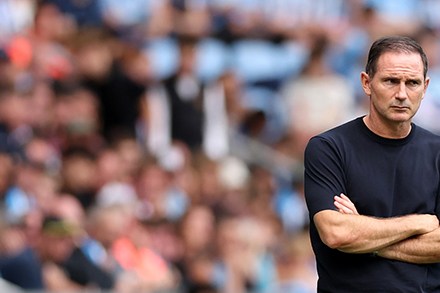
Face it: Frank Lampard just isn’t a good manager

From our UK edition

As Spectator readers will surely be aware, many of the stories we read in the papers nowadays are there not because they’re important, entertaining, moving or amusing, but because they’re the kind – about weight loss, true crime, celebrity and so on – that get the most ‘clicks’ from online readers. And clicks mean advertising. It’s the same in sport reporting: football is endlessly popular even when it’s quite dreary (and I mean you, ‘international break’); athletics much less so. Just doesn’t get the clicks, you see, even when it’s the most thrilling spectacle around – like the World Ultimate Championship in Budapest at the weekend.

Why I love the NFL

The NFL season kicks off again today with the Seattle Seahawks hosting the New England Patriots in a Super Bowl rematch. It got me thinking about the growing popularity of the sport in my country, the United Kingdom. I got into the NFL at a time when my “soccer” team, Queens Park Rangers, were especially terrible. It was around 2022. The 16-hour round trips to away games in the less salubrious parts of the UK had begun to wear on me. After yet another 1-0 defeat on a cold rainy night in Stoke I realised I needed an escape. The balls-to-the-wall action of the NFL was exactly the thing my life was missing.  I decided to support the Seahawks.

‘Maybe I’m better when everyone hates me’: An interview with Oisin Murphy

From our UK edition

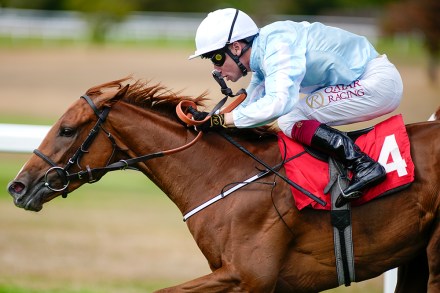
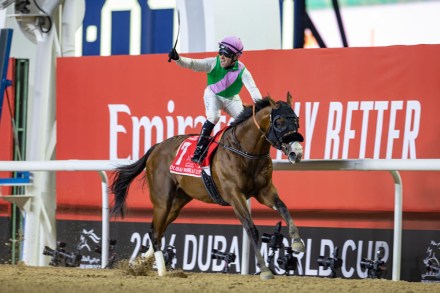
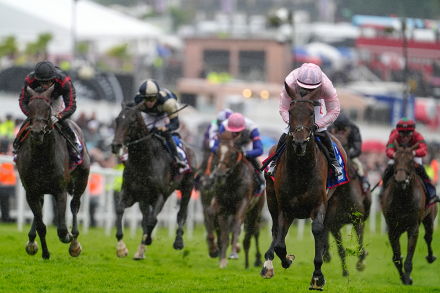
‘I used to live with three jockeys in a small village called Dualla, near Cashel. They would watch the wrestling on television and then practise the moves on me. One day they stripped me off and tied me naked to a street lamppost and left me there for the night and the neighbours called the Gardai.’ Oisin Murphy pauses. ‘It was fun and I thought it was normal.’ Murphy is one of the most gifted jockeys in the world. But his life has been a rollercoaster – a ride which would have crushed most people. He has five Jockeys’ Championships, 43 Group One victories and two Classic wins to his name.

Letters: the insanity of Labour’s attack on private schools

From our UK edition

Bad education Sir: Lara Brown (‘Class warfare’, 1 August) lays bare the baleful consequences – intended and unintended – of Labour’s vandalistic attack on private schools. It borders on the insane for a government to seek to destroy a sector which is a world leader. An administration genuinely committed to economic growth would champion industries where the country retains comparative advantage. Consumed by an outmoded class ideology, and seemingly unconcerned about the effects of its policies on the educational prospects for many young people, Labour seems determined to do the opposite.

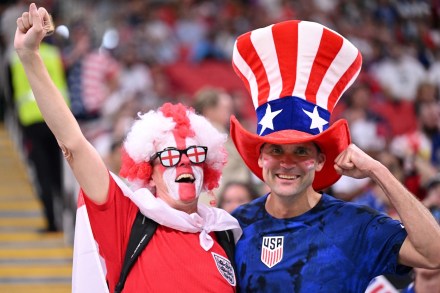
Americans, do your duty: support England

Soccer is not a quintessentially American sport. Just as Brazil is forever the country of tomorrow, soccer is always the American sport of the the future. It is always coming but never quite arrives, or at least not to the extent that its most-fervent advocates would wish. Wearied British or European readers may be bracing for American anti-soccer invective. This is not that: soccer is a glorious game that deserves to be a major American sport, and though it will never eclipse football or baseball, it is possible to envision it as a second tier American sports.

Why does the UAE value British racing more than we do?

From our UK edition

You might remember that I mentioned His Excellency Mansoor Abulhoul, the United Arab Emirates ambassador to the UK, a couple of weeks ago. I was so blown away by his assessment of horse racing in this country, and the potential it has to build lucrative and cultural relationships around the world, that I gallivanted up to London to drop in on him at the UAE embassy. I was in bad shape. Prior to my visit, I had a gazillion red blood cells injected into a torn tendon in my elbow. OMG. I’ve never been stabbed but I think I now have a pretty good idea what it must feel like. The slightest movement was sending excruciating pains up my arm, causing me to screw my face up and make noises like ‘yaieeeee’.

Buckle up for the smack-downs: the media behemoth that is modern wrestling

From our UK edition

For British readers of a certain age, wrestling occupies a very particular place in the collective memory. Long before the triumph of World Wrestling Entertainment (WWE), long before the pyrotechnics and the Trump-adjacent billionaire promoters, there were those long-lost innocent Saturday afternoons watching World of Sport with your nan, as men with cauliflower ears, wearing improbable hand-stitched trunks, wrestled in grim, determined, municipal fashion in local leisure centres and town halls up and down the land. If your last points of wrestling reference are those great monoliths Big Daddy and Giant Haystacks lumbering around like coal-fired power stations, today’s wrestling world is almost unrecognisable.

The World Cup has revived American soft power

Not only where the England fans outnumbered by 30 to one inside the Azteca stadium, but on their way to and from the game they had to run a gauntlet of Mexico fans, including the Anti-Globalist Assembly, a far left group that promised to target England supporters because of Britain’s history of colonial rule.  The local police advised the visiting fans not to hang around the area after the game – and with good reason. After Mexico beat Ecuador last week, over a million people gathered outside the Azteca to celebrate and four fans died in the crush. Contrast that with the experience of football supporters attending games in the United States.

World Cup

How to rescue English cricket

From our UK edition

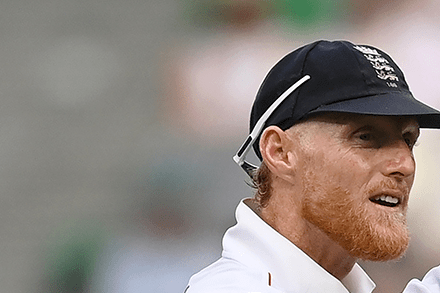
There was always something of John Cleese’s Sir Lancelot about Ben Stokes, ever eager for a flamboyant rescue mission in his own particular, as Lancelot puts it, idiom. Leave no chandelier unswung, no buckle unswashed. He would charge in, gung-holier than thou, and work out the damage later. ‘When I’m in this idiom, I sort of get carried away,’ Lancelot apologises after massacring all the guests at a wedding.  At times, it was glorious. But often, increasingly so in the second half of his England captaincy, ghastly. ‘Incredible highs and pretty low lows’ was Stokes’s own assessment – and we will always be grateful for the highs. But as England rebuild, they need to consider the manner of those lows and how many were self-inflicted.

The joy of chucking little wooden blocks around

From our UK edition

It cannot have escaped the notice of readers of even this most refined of journals that once again the country is enjoying and enduring a legendary summer of sport. As happens every year, there is a World Cup of this, a grand prix of that and a nail-biting tie breaker of something or other. It takes a brave man, or a foolhardy one, to toss his quoit into this bubbling cauldron of balls, especially when the quoit in question is a stick of sustainable, though not inflammable, Finnish wood. But cometh the hour, cometh the memoir. Neil Squires’s amusing account of his year on the Mölkky circuit offers a salutary reminder that he who dares usually loses. Organised sport is notorious for its financial misdeeds, doping scandals and political usefulness.

Why are the Belgians so bad at football?

From our UK edition

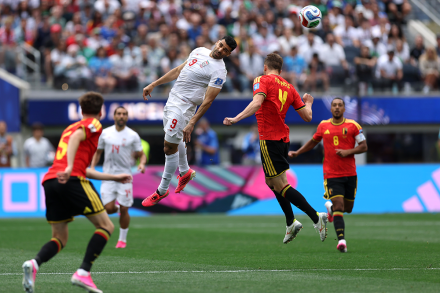
Whisper it if you must, but it looks as if Gianni (‘Today I feel gay…’) Infantino might have got it right with Fifa’s jumbo-busting World Cup, all 48 teams, 104 games and 39 days of it. Just look at some of the results: forget the Norwegians ‘Viking row’, Messi’s relentless brilliance, magnificent Mbappé, even wise Emma Hayes and her kitchen chalkboard. Look at tiny Cape Verde. With a population of 530,000, about the size of Bristol, it’s one-fifth the size of Jamaica, half that of Mauritius and one-third less than Gran Canaria. But they have been handling football’s aristocrats with the fervour of a French revolutionary execution party.

My first trip to Britain’s best racecourse

From our UK edition

The importance of Royal Ascot can never be overstated. It was beautifully summed up by His Excellency Mansoor Abulhoul, the UAE ambassador to the UK, last week: ‘There is no finer expression of what the British do best; a celebration of horse, history and craft that has run, almost without interruption, since 1711.’ But if it is longevity that appeals to the ambassador, he must venture out to the Salisbury plains to savour Salisbury racecourse, where there has been racing since 1584. I now love this racecourse, although I’m ashamed to say I’d never been to it before a couple of weeks ago. Ashamed, because you can’t call yourself a racing fan if Salisbury doesn’t feature in your diary.

The Derby is the most interesting race of the year – and I missed it

From our UK edition

In 1949, the 18th Earl of Derby revived the tradition of the Derby Club dinner in London, three days before the race. His guests of honour were the Prince of Wales and Winston Churchill. No one can remember which of them spoke, so they can’t have been very interesting. Encouraged by this, I foolishly accepted the invitation from the 19th Earl to address the dinner last week. I say foolishly because the Derby Club has a reputation for being a rough crowd. Its members even pelted the great Martin Bayfield with bread rolls when he cracked a few rugby jokes in 2008. One tie-less guest, who for some reason had come in his slippers, was drinking beer from a bottle I’m delighted to say that times have changed.

Who cares if cricketers drink?

From our UK edition

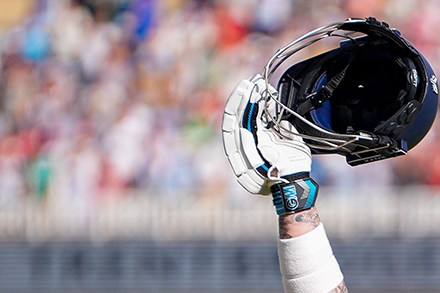
Cricketers Have Beer, Shock: well, who knew! This wretched incident in some joint in Chelsea involving Ben Stokes and Gus Atkinson in a dust-up with some extremely large young Saracens rugby players is hardly world war three, but its ramifications are sending shudders through the cricket establishment. At the time of writing the full details are not entirely clear, though it seems that an England Cricket Board (ECB) security guard might have been accidentally thumped before a full-blown ruckus ensued. Nothing good ever happens after midnight – a sentiment readers will doubtless be familiar with Whether a well-known and widely admired 35-year-old international sportsman should have been out in a nightclub in the early hours of Monday morning is for others to judge.

Might England just do it in the World Cup?

From our UK edition

The World Cup has never been just a football tournament. Even if we don’t realise it at the time, it tends to reveal something about us. In Germany 2006, it was all about Baden-Baden and the WAGs: the shallowest point of that celebrity-obsessed age. For more romance and happier memories, go back to Italia 90. Pavarotti bellowing ‘Nessun dorma’, Gazza blubbing, Maradona weaving his magic, Roger Milla hip-wiggling the corner flag. Italia 90 was the last gasp of the old order: modestly paid players with mullets and perms; heaving terraces; the USSR, Yugoslavia and Czechoslovakia playing their last tournaments.

World Cup soccer

Why America is still immune to the soccer virus

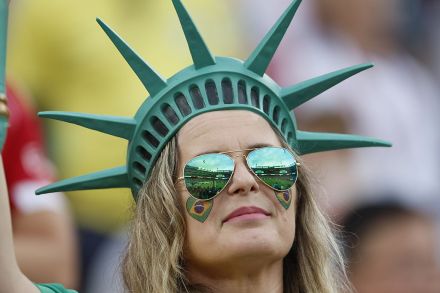
It’s World Cup time again, and Americans from Bangor to Batavia don’t even bother to stifle their quadrennial yawns, while more fervent patriots are praying to the God who adjudicates sporting events that the US team flames out early, as usual.  ​It’s been 32 years since the World Cup first tainted American soil. The 1994 invasion was a colossal flop, despite the corporate subsidies lavished by Coca-Cola, Mastercard and the usual suspects. The title game – oh, excuse me: match – a thrilling 0-0 tie in regulation between Brazil and Italy, did not win millions of new fans.