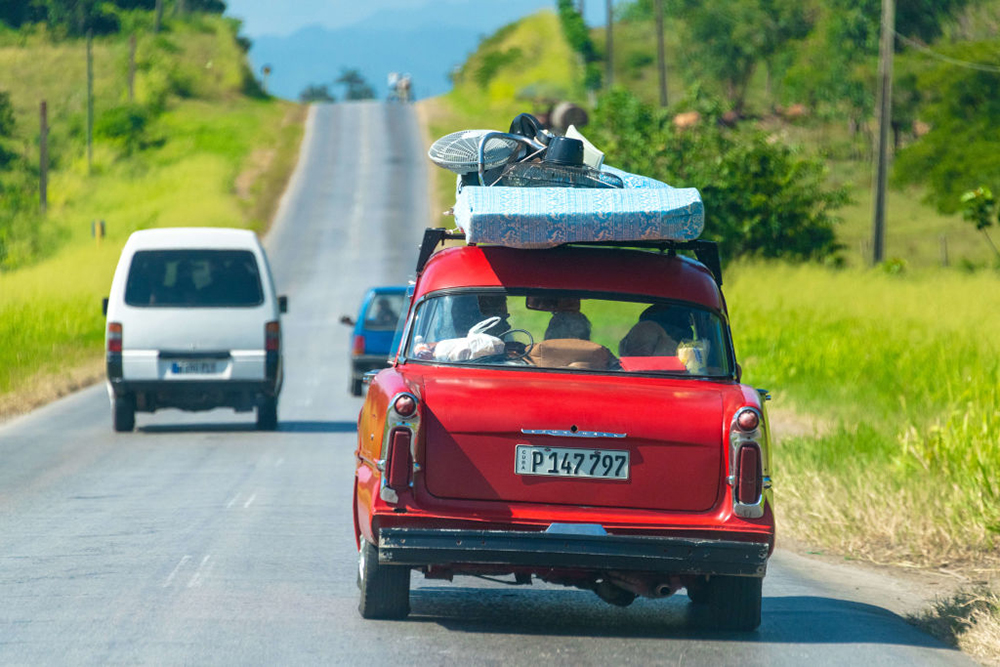
We may not be happy campers here in Havana. But increasingly we are campers.
Enter any home, from the most privileged (a relative term these days as the blackouts rise to 22 hours a day) to the poorest, and the trappings of off-grid living are everywhere.
Some of the kit wouldn’t shame the back of a hedge-fund weekend warrior’s tricked out Jeep as it wended its way into the wilds of Glacier National Park.
Do you know what an Ecoflow Delta Ultra 3 is? Well I didn’t, until recently. It’s the latest in “portable power stations.” Basically a big battery, it can keep a freezer running for 12 hours, or power several fans through the night. But at $1,500, it’s 150 times the average Cuban monthly pension.
The Caribbean sun is far quicker,more powerful and more reliable than the communist state
Since removing Nicolás Maduro from power in Venezuela in January, the Trump administration has set itself the task of felling Cuba’s communist regime by cutting off oil supplies to the island, which has brought the country to a standstill.
Now, it’s getting hotter as summer approaches. As a result, everyone has been adapting, each as much as they are able. For me, it started with some repurposing. The big cooler I had hoped would pass its days full of beer and daiquiri mix in the back of the car as I tootled round Cuba’s backroads now sits in the corner, full of water, to tide me over during the increasingly regular times the municipal water is turned off.
I also have a smaller cooler, soft-sided with a strap. This is my hand luggage when I leave the country, so I can fly back into Cuba with 20 kilos of steak, butter and cheese on my shoulder (in the hope the freezer continues functioning).
I now live in my Chacos. In case you are not outdoorsy enough, these are go-almost-anywhere sandals beloved by national park guides in the American west. They have such a cult following that the tan mark the straps leave on your feet get you respectful nods (it looks like a “Z” so I worry that my feet now appear to be supporters of the Russian army in Ukraine).
Never far from anyone’s hand at night are rechargeable flashlights. A visitor brought us one that is so powerful I get nervous using it outside. The thing can light up an individual window a mile away and there are quite a few “sensitive” state buildings nearby.
I’m not alone out there, though. On nights when the blackout over the city is oppressive, people play with these things. It’s like a World War Two movie about plucky bomber crews over Hamburg (which we’re worried might become all too real, all too soon).
Inadvertently, I’m now ecologically sound, no longer charging my phone from a plug even when we do have power. Instead I have something that looks like a folder, but flips out into a long solar panel. The Caribbean sun is far quicker, more powerful and more reliable than the communist state.
Somewhat worryingly, I have a jerry can full of gasoline in the cupboard. With gas stations closed for four months now, this 20-liter flask is for absolute emergencies: say, if one of us needs to get to the (barely functioning) hospital. A departing ambassador gave it to me, and I stared at it like a madeleine; it’s the first I’ve owned since working in sub-Saharan Africa in the 1990s.
Like many others, we have a charcoal burner for when the gas runs out. I suppose you could say it is a very small barbecue, but it comes without laughter. Many Cubans are already cooking with these grim little things, but so far, our gas supply flickers on, so it sits in the cupboard. Lastly, there is my quiver of fishing rods. Cuba is one of the world’s best places to fish. When there was still gasoline, it was my sport of choice. As we wait to see what happens next, my new backwoodsman self now eyes the rods, wondering if what was once a pastime will soon be an essential skill.



Comments