Cuba

Road-tripping across blockaded Cuba

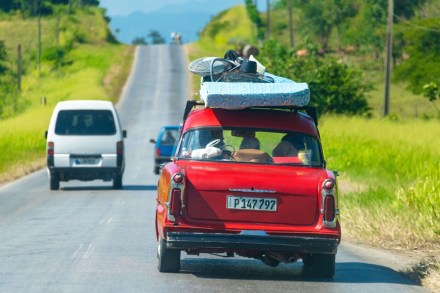
My wife Camila doesn’t drive, but she does direct. Studying the map, she’ll say, “This road!”, and before I know it, we’re off down some track, startling locals who haven’t seen a “yuma” – technically an American but really any foreigner – for years. Cuba is a country that lends itself to country road adventure. Besides drinking daiquiris, it’s perhaps my favorite thing to do. And it’s what I miss most now that it’s impossible: the US oil blockade that began in January means there is no gasoline. ‘Is this ceviche the red snapper or the snook?’ I asked. The waiter shrugged, ‘Once it’s ceviche it’s hard to tell’ Few others seem to do it.

Kneecap’s breathtaking Cuban hypocrisy

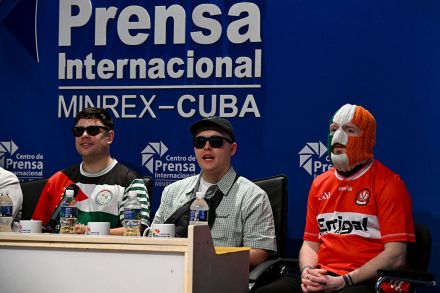
While most Cold War cultural battlegrounds have long been paved over or turned into a theme park, Cuba has retained a place in the hearts and minds of the West’s luxury leftists. Beautiful weather, sandy beaches, famous cigars and, of course, a long-standing enmity with the US have all ensured the country remains perhaps the last stubborn redoubt of revolutionary, western hipsterism. So it made perfect sense that leading the charge in last weekend’s much trumpeted "aid flotilla" to the island nation was the Irish language-speaking novelty rap act, Kneecap.

kneecap

Dinner in Tehran, anyone?

Who wants to join me for dinner in Tehran or Havana? I suspect that both will be open for business very soon. I suppose we could even go to Caracas. As I write, the American flag has been raised at the American Embassy there for the first time in seven years. Amazing, isn’t it? And in Cuba? In mid-March, protesters were setting fire to the office of the Communist party in the town of Morón in the Ciego de Ávila province. Elsewhere across the island, protesters were in the street shouting, “Down with communism!” The nervous Cuban government released dozens of political prisoners. Since Donald Trump cut off its supply of Venezuelan oil, much of the country has been without electricity. This saddened Greta Thunberg.

America’s immigration officers are among the most welcoming (except ICE)

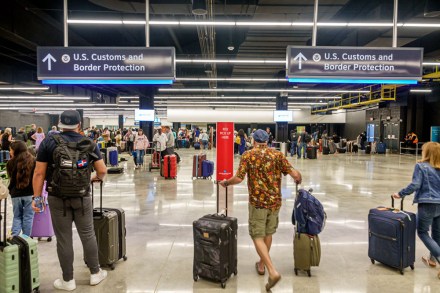
A frisson of fear tends to run through non-Americans when they face immigration in the United States. For years, young Brits have been warned prior to their first trip: “When you meet the immigration officer, don’t make jokes!” To boys cultivated to be insouciant in Britain’s posher schools, this usually means approaching the booth nervously repeating, “Don’t say bomb, don’t say bomb” – hopefully under their breath. However, I’d say the officers guarding America’s borders are among the most welcoming, and sometimes even funny, I’ve met – I’m excluding ICE, who sound awful. It’s often a surprise given I’m usually arriving from a country firmly on America’s State Sponsors of Terrorism list: Cuba.

Cubans want Donald Trump to save them

The US capture of Nicholas Maduro sent a shockwave of fear through the regime in Havana. Heeding the words of Marco Rubio – "If I lived in Havana and I was in the government, I'd be concerned at least a little bit" – the communist government put the military on high alert. "The regime carried out military mobilizations," Camila Acosta, a Cuban journalist detained multiple times for her reporting on the regime, told The Spectator. "They are conducting military exercises at their units, keeping the troops confined to their barracks.”But while the regime looks fearfully to the skies for US commandos, ordinary Cubans look to the skies for salvation – they pray that Donald Trump will send Black Hawks to save them.

Cuba

How to eat in Cuba

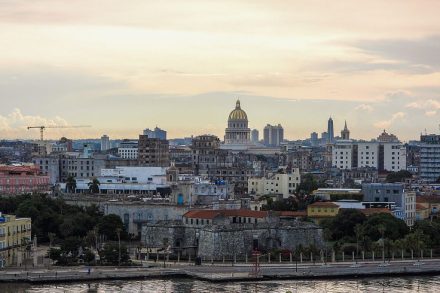
My apartment in Havana is on a rooftop overlooking the sea, which sounds grand and penthousey, but it’s not – it’s the former caretaker’s hut. It also sits above my parents-in-law’s place, which offers challenges, but does mean that most days I wander down for lunch. When I first moved in, I didn’t speak Spanish and so would enjoy these meals in ignorant bliss, smiling winningly as I guzzled down pork, rice and beans. I tried not to ask my now-wife to translate because I didn’t want to interrupt what I imagined were hugely erudite discussions; she’s a literary professor and her parents are both philosophers. Slowly, though, I began to understand, Spanish revealing itself like a song on the wind.

Immigration is foreign policy now

Invade the world, invite the world. That pithy phrase was invented in the 2000s by Steve Sailer, the right-wing writer, to mock the then bipartisan consensus which supported George W. Bush’s war on terror abroad while pushing open borders at home. Or, as Sailer also put it: "Bomb them over there and indulge them over here." Back then, such analysis was generally dismissed as the preserve of white supremacist cranks. Now, it’s fair to say that Sailerite thinking animates the spirit of the second Donald Trump administration. Disrupt the world, deport the world. That’s the order of the day. Since America’s stunning attack on Venezuela last weekend, almost everybody has had a stab at revealing Trump’s real intentions – including, naturally, Trump and his talking heads.

immigration

As Maduro appeared in court, Venezuela swore in his replacement

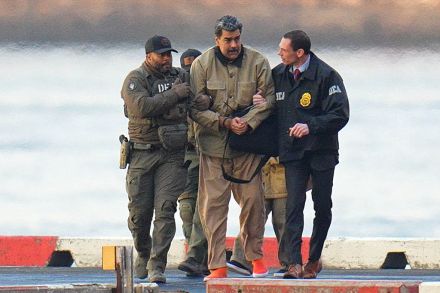
There was no dancing, let alone prancing, in the Manhattan courtroom as former Venezuelan dictator Nicolás Maduro was arraigned on four charges, including narco-terrorism and weapons trafficking, following his capture by American forces on a military base in Caracas on Saturday. Instead, Maduro, whose terpsichorean moves to a musical remix of his “No War, Yes Peace” speech had apparently incurred Trump’s ire, seemed like a shrunken figure as he appeared in prison attire and ankle shackles. “I’m still president,” he stated. But the no-nonsense 92-year-old federal Judge Alvin Hellerstein, quashed his attempt at delivering a personal liberation theology speech.

Maduro

Will Venezuela change?

The US military operation to track down, capture and fly Venezuelan dictator Nicolas Maduro back to the United States for prosecution on drug trafficking charges went flawlessly. It was well-coordinated, meticulously planned and executed to a tee. Nearly two days after Maduro and his wife, Cilia Flores, were taken into U.S. custody, details of the snatch-and-grab mission are beginning to percolate into the US media. It involved a cyberattack against Caracas’s electricity system, precision bombing against several Venezuelan airfields and ports, a low-flying helicopter assault on Maduro’s hideout and a CIA deployment that was operating in the country since August.

Trump

Hurricane season in Cuba

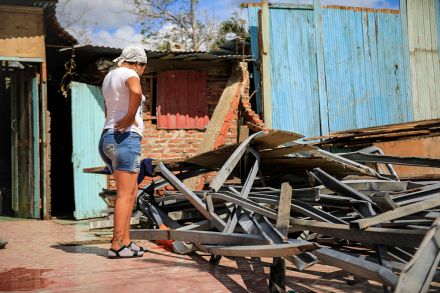
A cold front blew in off the Florida Straits, sending waves over Havana’s famous corniche, the Malecón, and announcing what has traditionally been the end of the hurricane season. After 13 named storms, it seems as if the 2025 season finale was Hurricane Melissa, a humdinger. She paused south of Jamaica, getting herself into a lather, before killing 32 on that lovely island and causing at least $7 billion of damage. Fortunately for Cuba to the north, Jamaica’s mountains plucked the murder from Melissa’s eye – but she still cut a devastating trail through this bigger island’s eastern reaches a day or so later.

Hurricane Melissa

In Cuba, a revolution is over

If you’ve ever thought of visiting the crocodile-shaped island of Cuba, or run into someone recently returned from sultry nights in the country’s salsa halls, there’s a good chance you’ll have heard the phrase “See it before it changes.” And I don’t mean because of Hurricane Melissa. The idea is that the centrally planned communist state, one of the last on Earth, will soon morph into America and a balmy Brigadoon full of people unencumbered by money, modern cars or Alexa will evaporate. I think most people, if they knew what Cubans have endured, wouldn’t use that phrase, which is up there in its lack of tact with “they’re poor but they’re happy.

cuba havana

Why have Democrats mainstreamed a terrorist?

On September 26, the Chicago Teachers Union, representing all of the teachers in America’s second largest city, posted on X upon the death of “Assata Shakur” AKA Joanne Chesimard, that “The life and legacy of a revolutionary fighter, a fierce writer, a revered elder of Black liberation, and a leader of freedom whose spirit continues to live in our struggle." That would be one way to describe Shakur. Another way to describe her would be as a woman convicted of the murder of New Jersey police officer Werner Foerster, a former FBI most wanted terrorist who was broken out of jail by armed comrades and eventually escaped to Communist Cuba, where she lived under the protection of the totalitarian Communist Castro regime for the remainder of her life.

Joanna Chesimard

The Cuban ER doctor’s long-shot Senate bid in Washington State

Dr. Raul Garcia seems to follow a long Republican tradition in Washington State. He’s a fifty-three-year-old, Cuban-born ER physician who’s emerged from the primaries to challenge the four-term Democratic incumbent Maria Cantwell for her US Senate seat this fall. On the face of it, Garcia’s candidacy is just the latest in a line of plucky but ultimately doomed bids by a GOP outsider to unseat a tenured politician in this part of the world. A couple of years ago, a self-described farm girl from the Seattle suburbs with the striking name of Tiffany Smiley gave Washington’s other senator Patty Murray a run for her money, but in the end the incumbent scraped through for her sixth turn at the public trough.

raul garcia

Why Tucker Carlson should have been less excited about his groceries

Tucker Carlson has been radicalized by a Russian supermarket. There’s a sentence you never expected to read. As part of his tour of Moscow, the week before Putin critic Alexei Navalny “died in prison,” the firebrand commentator visited a grocery store and was stunned by the low prices. “That’s when you start to realize,” Carlson marveled: …that ideology maybe doesn’t matter as much as you thought… Corruption… If you take people’s standard of living and you tank it through filth and crime and inflation, and they literally can’t buy the groceries they want, at that point maybe it matters less what you say or whether you’re a good person or a bad person, you’re wrecking people’s lives and their country.

tucker carlson groceries

Was JFK any ‘good’ as a president?

How should we assess the value of a US president? In the case of John F. Kennedy, who died sixty years ago, the box denoting youthful vigor clearly gets a checkmark. Kennedy was just forty-six at the time of his assassination, which makes him younger than Hunter Biden is now. The box denoting the “vision thing” gets checked as well, if only because Kennedy saw the potential for beating the Soviets in the race to put a man on the moon, famously declaring, “We choose to do this, not because [it is] easy, but because it is hard; because that goal will serve to organize and measure the best of our energies and skills.” Also to be considered is the collective trauma of the events of November 22, 1963.

jfk

Democracy in Peru is under attack

For over a month, Peru has been in a state of near-constant unrest. In December, as the legislature threatened to impeach President Pedro Castillo for, among other things, allegations of corruption, Castillo tried to dissolve the legislature and “govern through decrees.” By all measures, this was an attempted coup, and it resulted in his impeachment (by a vote of 101-6), arrest, and condemnation from left and right. In his place, Vice President Dina Boluarte was sworn in as president, having denounced her former boss’s attack on the country’s democracy. This was a success in a country that has seen six new presidents in the past seven calendar years. The Congress has repeatedly been at odds with the president, and scandals have rocked administration after administration.

The Pink Tide returns to Latin America

As the dust settled on Jair Bolsonaro’s seismic victory in Brazil back in 2018, one might have spared a thought for those dedicated to the cause of international socialism. Having bathed in the glory of the so-called "Pink Tide" and the commodities boom of the early 2000s that allowed socialist governments such as Hugo Chávez's Venezuela to seemingly prosper, any hopes that Latin America would forever unify in the cause of left-wing anti-imperialism seemed well and truly dashed. In many of the continent’s wealthiest countries, right-of-center politicians had swept to power with a view to restoring their nation’s former glory. These included Bolsonaro in Brazil, Sebastian Piñera in Chile, Ivan Duque in Colombia, and Mauricio Macri in Argentina, among others.

The Cuban Missile Crisis has become a cultural touchstone

At the beginning of 1962, President John F. Kennedy had high hopes for a peaceful year with the Soviet Union, the United States’ most dangerous adversary. On December 30, 1961, Kennedy issued a statement offering his good wishes for the new year to Soviet Premier Nikita Khrushchev and the Soviet people. Ten months later, in October of 1962, the US and the Soviet Union were on the brink of war. The Soviets had moved missiles into Cuba, which initially went undetected by US intelligence. On October 14, an American U-2 spy plane took pictures showing missile base construction taking place in Cuba. The next evening, American analysts realized the implications of what that construction meant.

Sanctions on Russia won’t work

Another battle in the West’s sanctions war against Russia is set to begin. The US and its NATO allies have put together what they’re calling a strong package of economic restrictions on Russia in response to its military buildup near Ukraine’s border. What’s in the package remains a secret but it appears to focus on Russia’s energy sector. A State Department spokesperson told NPR on Thursday that the Nord Stream 2 pipeline from Russia to Germany would remain inoperable if an invasion happened. The Financial Times suggested that other new Russian gas developments are also on the sanctions list. The UK wants Russia booted from SWIFT, the Belgian financial messenger services company, while the West also floated the idea of sanctioning Russian President Vladimir Putin.

Kamala Havana?

It was supposed to be a welcome break from serving as the Biden administration’s stooge. Instead of being the mascot for the Biden administration’s busted border policy, Kamala Harris would get a pleasant little trip to Singapore and Vietnam, to shore up her foreign policy experience just in case, God forbid, the Democratic party has to actually rally behind her as president. But instead of gaining experience, Harris has to worry about US diplomats being shot with a laser beam, or something. Yes, that’s right, the latest incident of Kamala’s ill-starred vice presidency is an outbreak of Havana syndrome. US State Department officials announced that it was investigating a 'possible anomalous health incident’ in Hanoi, the preferred euphemism for the mysterious disease.

kamala havana