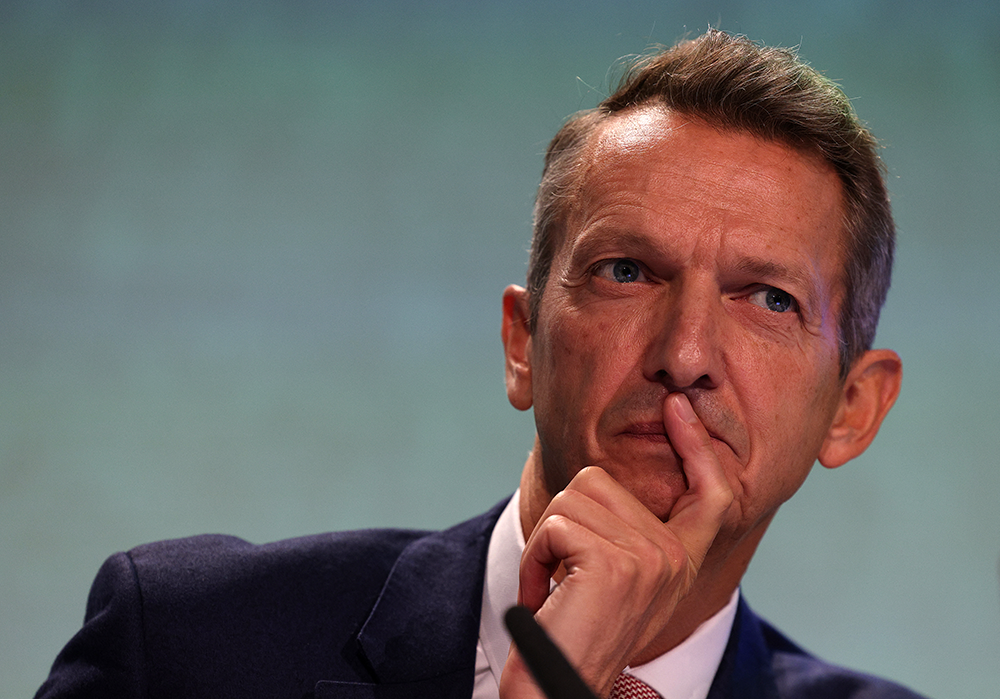


A sandwich with Andy Haldane, the former Bank of England economist, now president of British Chambers of Commerce, is the intellectual equivalent of a lunchtime workout with an ultra-fit personal trainer – or so I imagine, having never submitted to the latter experience. When his BCC role was announced in February, Haldane spoke of ‘a fighting chance’ that UK growth would beat expectations for the coming year. But that was before the closure of the Strait and the resurgence of global demons. The purpose of the sandwich was to find out if he had tempered his upbeat tone.
The Iran conflict is ‘the last thing anyone needed, least of all the UK’, he began. But ‘reasons for optimism remain’, in the form of ‘private-sector balance-sheets in rude health’ and pent-up personal savings, all capable of fuelling productive investment if and when normality resumes. And we shouldn’t forget that we have ‘one of the most innovative economies on the planet’. Even if weak UK capital markets drive too many good companies into the grasp of private equity and foreign buyers, and homegrown billion-dollar unicorns are scarce, Haldane quoted research that says we have more than 1,500 ‘colts and thoroughbreds’ with rising revenues in all the emergent tech that matters.

As a spokesman for British business at home and abroad, it’s Haldane’s job to accentuate the upside. But as I’ve written before, for a high-level economist he’s unusually grounded: the rest of our chat ranged over developments in Yorkshire and his native north-east that few London pundits know or care about. He was also frank about the UK’s ‘£2 trillion capital gap’ (long-term under-investment relative to G7 averages), which is the root of our chronic low productivity and to which an £80 billion promise from Rachel Reeves will make scant difference. But it’s a gap that can be narrowed over time, with the right nudges and incentives, by switches from £4 trillion of UK pension funds and £2 trillion of household savings. And that’s probably enough positive food for thought for one short lunch hour.
Steel spike
I learn from an even more grounded industrial source that the UK is about to become the most expensive place in Europe to buy steel. A steep reduction of quota levels for imported steel from July, with a 50 per cent tariff above the quota plus a new ‘Carbon Border Adjustment Mechanism’ tax (whatever that is, it surely has Ed Miliband’s fingerprints on it) from January next year will drive ‘hot-rolled structural steel sections’ from £675 to around £870 per ton. That will be well above prices in France and Germany.
According to the Business Secretary Peter Kyle, these measures safeguard national security and the jobs of ‘thousands of steel workers from Glasgow to Port Talbot’ in the UK’s surviving half-dozen steel-makers, three of which (British Steel, Specialty Steel and the defence-oriented Sheffield Forgemasters) happen to be state-owned. But the costs will fall on the construction and engineering sectors that – unlike our dying steel industry – actually have the potential to build the UK of the future. Andy Haldane wouldn’t say this, but I will: at every turn, Labour’s policy choices are the death of the growth its own ministers claim to seek.
Urge-to-sell
I was a latecomer to buy-to-let. But I liked the flat, I was seduced by cheap five-year, fixed-rate money and I’m happy to accommodate reliable tenants on agreeable terms. That said, the tax treatment of rental income and mortgage interest, and the likelihood that the place would now sell for less than I paid for it, make it an absolute dog of an investment. And the Renters’ Rights Act in force from this weekend, plus the impending end of the five-year-fix, make it a serious liability. So never say my sermons aren’t based on lived experience. I would certainly align myself with the 42 per cent of respondents in a survey by the property consultancy Allsop who say the new Act (which bars no-fault evictions and fixed-term tenancies) makes them want to stop being landlords. The net effect will be a generation of would-be renters scrambling to outbid each other for a drastically reduced choice of homes to let, with far too few new ones being built.
Meanwhile, a depressed market will reduce mobility without doing much to help first-time buyers. It’s the lose-lose outcome of Labour’s urge to cane the rentier class.
Critical assets
How intriguing that a bid for Grange-over-Sands golf course in Cumbria by the Russian oil tycoon Yury Shamara and his daughter Anastasia has (according to the Financial Times) ‘collapsed… following government intervention’. The links adjoin a railway line that serves the BAE Systems submarine yard at Barrow-in-Furness and the nuclear site at Sellafield – and its sale to a family that supplies fuel to Russian forces caught the eye of the Ministry of Defence and the Investment Security Unit (ISU) in the Cabinet Office, which scrutinises transactions that might pose risks to critical infrastructure.
The Russians reportedly withdrew while the club was awaiting ‘further formal guidance’ from the ISU. (A lawyer for Shamara says he was unaware of the proximity between the club and any defence-linked sites and that he just wanted to help a financially struggling local golf course.) But it’s good to see Whitehall flexing its muscles at a time when I’m hearing of ‘a state of suspended animation’ afflicting decision-making on all fronts, including major infrastructure deals awaiting ministerial sign-off.
Meanwhile, let’s make a list of other leisure facilities that should never be allowed to fall into hostile hands. How about the Royal Vauxhall Tavern, the celebrated LGBTQ+ cabaret venue that’s a convenient stone’s throw from MI6 HQ? Or the West End trattoria whose terrace hides the unmarked door of the Beefsteak Club, which may be the last bunker when the revolution comes? Suggestions welcome, to martin@spectator.co.uk.





Comments