Housing

Why does Trump love Zohran so much?

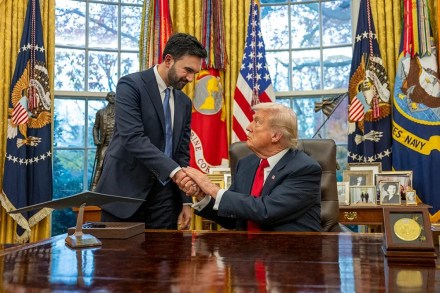
Mayor Zohran Mamdani met Trump in the Oval Office yesterday to pitch a huge New York City housing initiative – and secure the release of a Columbia University student from ICE custody. Mamdani’s communications director said that Trump was “very enthusiastic” about the plan to build 12,000 new affordable homes in Sunnyside, Queens, by using over $21 billion in federal grants. What’s more, the student, who happens to be a photogenic young woman, was freed. Results all around. Zohran and his team gave Trump a prop newspaper with the headline “TRUMP TO CITY: LET’S BUILD,” a play on the 1975 New York Daily News cover – “FORD TO CITY: DROP DEAD.” The headlines made a clear case for how much the people would love Trump if he went ahead with Mamdani’s plans.

zohran trump

Is the Florida boom over?

During the pandemic, Florida became a haven for those looking to escape lockdowns. Miami was a “Zoom town,” a place where rich mobile professionals moved to enjoy the beaches and freedom, while continuing their remote jobs. Some $36 billion in extra income tax registered with the IRS in 2022. That great influx of people has now come to an abrupt end.  ‘Florida is paradise, but you live in paradise to enjoy it, not to bust your ass’ New US Census Bureau figures show that net migration to the Sunshine State has fallen 92 percent since 2022, its lowest level for more than 15 years. The number of people moving to Florida has collapsed, while existing Floridians are picking up stakes and going elsewhere.

florida

The ‘affordability’ delusion

During last week’s excruciating Oval Office make-nice between an insultingly buddy-buddy American President and a fraudulently obsequious New York City mayor-elect, the contest was over which pol was the more patronizing. At one point Trump graciously granted his petitioner permission to call him a "fascist" while clearly implying the guy’s OTT campaign rhetoric had been embarrassing. Donald Trump sat regally on his throne, patting Zohran Mamdani’s arm while commending "Attaboy!" as if petting a golden retriever that had fetched a ball. For his part, Mamdani stood mutely by the Resolute desk with cartoonish humility, hands over crotch. This cowed performance of beta-male submission was meant to disguise who’d got a leg over whom.

Affordability

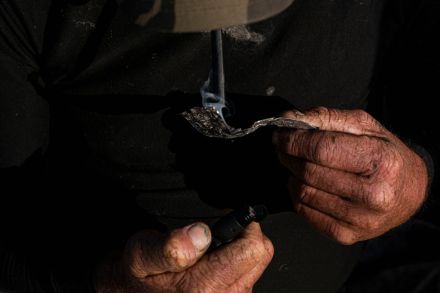
Where can I get some meth?

I was born in Santa Monica, California. So were four of my children. When I was little, Santa Monica was still a sleepy backwater with mom-and-pop stores, a quiet local beach that was never crowded and virtually zero crime. A place where murder or mayhem or even robbery were unthinkable. Then, sometime in the 1990s, Santa Monica was discovered by the rest of the city as a “really nice place to live” and was targeted for destruction. In Los Angeles you are not allowed to have nice things. Every Christmas, Ocean Avenue along the coast was lined with 13 historic, life-size scenes depicting the complete life of Jesus. These famous and beloved displays started in 1953, but in 2015 the city banned them after atheist groups complained.

meth

Newsom won’t create abundance

With great fanfare, California Governor Gavin Newsom recently signed “historic” legislative package designed to “advance an abundance agenda.” It’s a nod to the recent (and fashionable) book Abundance by the liberal bloggers Ezra Klein and Derek Thompson, and it’s supposed to reform a state best known for a punitive cost of living and chronic shortages of everything essential – including housing, water, and energy.  Key to Newsom’s new legislation are Assembly Bill 130 and Senate Bill 131, both of which make fundamental changes to how the California Environmental Quality Act (CEQA) is enforced.

Newsom abundance

The West faces a new type of housing crisis

Throughout the West, particularly the Anglosphere, housing costs are ravaging the middle class. Homeownership, long the key to social mobility, is on the decline, particularly among younger generations and minorities. According to the Organization for Economic Cooperation and Development, house prices in high-income countries have been rising “three times faster than household median income over the last two decades,” causing the standard of living “to stagnate or decline.” Unlike previous housing crises, this one is not primarily caused by mass displacements due to wars or natural disasters or population growth.

housing

At home with Jacob Rees-Mogg

Before I arrived at Gournay Court, Jacob Rees-Mogg’s seventeenth-century home in Somerset, I’d missed the main event. Beforehand, I’d asked the Conservative Member of Parliament to lean in to whatever our photographer asked — and somehow, before I turned up an hour late, she managed to get him in a nearby field feeding sheep from the palm of his hand. He didn’t seem to mind. In fact, there were only a few times he said no to our increasingly deranged demands. Once was after we asked him to get up on the humongous dining room table, spread his legs and act natural. “Well, I couldn’t possibly do that,” he replied. When you drive up to Gournay Court, you encounter what I can only describe as the quintessential British upper class. Think afternoon tea at the Savoy.

Rees-mogg

NIMBYs to the left of me, YIMBYs to the left

First disclosure: I do not appear in this book. I say that only because — second disclosure — I consider myself a YIMBY, and I am familiar, at least online, with many of the characters and figures quoted or interviewed. However, I learned a lot about this loose movement and found it fascinating to read a book on a phenomenon that I would have trouble viewing with a detached, scholarly distance. Yes to the City, by the cultural sociologist and urban policy scholar Max Holleran, must have been a difficult book to write, not least because YIMBY (“Yes in my backyard”) is as much a rallying cry or a slogan as it is a movement, let alone an organization. The YIMBY nemesis, NIMBY (“Not in my backyard”), is equally amorphous.

yimby

Michael Shellenberger interview: ‘We need to enforce laws’

Michael Shellenberger is an unusual political candidate. He’s also arguably the only person with a chance of stopping Gavin Newsom from spending four more years as governor of California. A fifty-year-old environmentalist, Shellenberger is a former Democrat running for governor as an independent. And he has form when it comes to aiming leftwards. A self-styled ecomodernist, he has been a vociferous critic of the environmentalist movement, its insularity, economic illiteracy and fetish for scarcity. More recently, he has set his sights on the progressive approach to homelessness and addiction.

Fleeing dysfunctional America

America is sorting itself out by class and kind, back to blood and political pedigree. The demographic trend favors the so-called red states and the metro nodes inside these dominions. Austin, Reno, and Nashville beckon. Meanwhile, academic towns like Eugene, Chapel Hill, and Burlington draw gentry blues trying to escape crazy and crime but who are not in tune with Tulsa or Fargo. For big-city emigrants, fatigue with misgovernment, ill-spent government largesse, and racial disorder are part of the picture. As much as they are seeking uncrowded real estate, runaways are searching for courts, authorities, teachers, and stable neighbors whom they can trust.

New York is up to you

There are two types of people in New York City: the ones who stayed and the ones who called it quits. Those who stayed wear it like a badge. With a sense of pride, they call themselves the ‘real New Yorkers’. They supported Our Lady of Liberty in her time of need. They consistently ordered delivery to help prevent restaurants from closing. They donated their time and money to the city’s hungry and homeless all while cheering on healthcare workers every night. Those that left bear a stain on their New York resumé. The old way to tell a real New Yorker was if they had lasted and hit the 10-year mark. The new way is faster: if you stayed during the pandemic. It’s like the vaccinated and unvaccinated: there is really no in-between. More than 320,000 NYC residents left in 2020.

new york