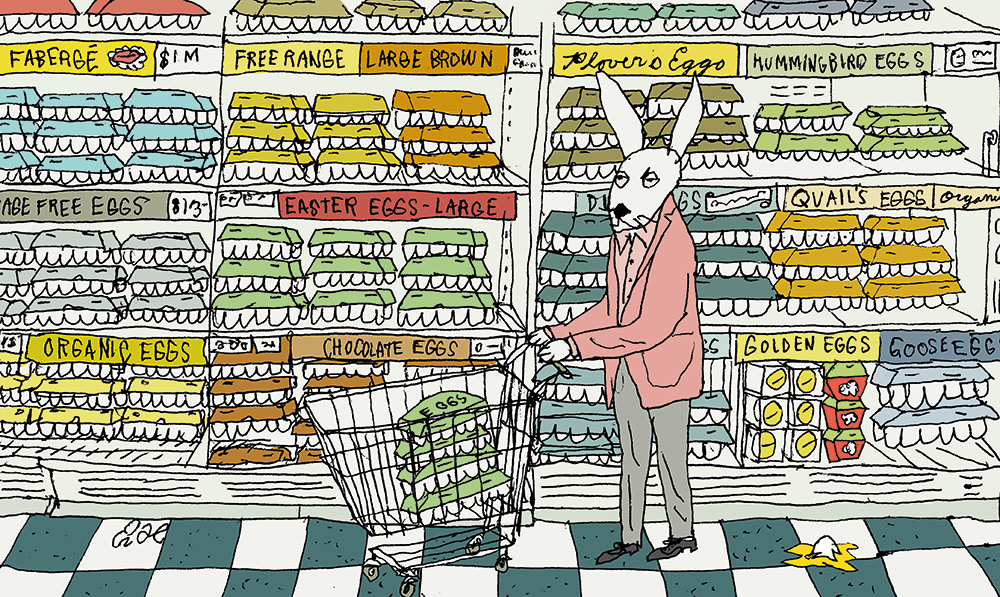

I’m a New York-raised Italian Catholic, and my family’s inherited religious-cultural neuroses inform our meals every bit as much as the WASPs next door. This is particularly true at Easter, where centuries of European immigration have shaped the culinary traditions in New York.
The Easter feast became a religiously sanctioned opportunity to indulge
For my family, the Easter feast typically includes a herb-crusted leg of lamb (American only; New Zealand lamb is far too gamey), deviled eggs, rich scalloped potatoes, honey-glazed carrots, some fresh spring vegetables and an absurdly decadent chocolate dessert – all washed down with a robust Etna Rosso, generously poured. While both Catholic and Protestant Easter traditions share a celebratory spirit, our feasts reflect subtle but meaningful differences in theological symbolism.
For Catholics observing Lent, the Easter meal is a deliberate breaking of the fast, and so dinner often features indulgent foods that were restricted: fatty meats, cream, butter, etc. Hence my family’s menu. Symbolism is also more pronounced in Catholicism’s sacramental worldview, where food can be blessed and imbued with spiritual meaning. Lamb represents Jesus as the Lamb of God, while eggs, dyed or deviled, symbolize new life and resurrection of Jesus from His tomb. In the modern world of abundance, Easter provides a moment to return from Lenten abstinence to the culinary status quo.
Historically, poor Irish, Italian and Polish Catholic immigrants in New York faced far greater limitations in the ingredients they could regularly afford. The Easter feast became a religiously sanctioned opportunity to indulge. At the same time, somewhat paradoxically for a sacred holiday, it reflected the immigrant drive to achieve the American Dream. Decadent Easter meals came to symbolize success, or at least the appearance of it.
Protestants had, of course, settled New England centuries before Catholics began pouring through Ellis Island in their millions. Their culinary choices at Easter reflect a more secure social position and a religiosity far more austere. There has traditionally been less emphasis on mandatory fasting and deprivation. Easter feasts, influenced by Puritan roots, avoided “Popish” excesses. The emphasis was instead on simplicity, family and moderation rather than indulgence. Which explains why ham rather than lamb more often takes center stage. Lamb aligns with spring lambing season, while hams coincide with the long curing process throughout the winter months.
With less ritual than Catholicism, Protestant Easter also blurs the lines between religious and secular values. Egg hunts, the Easter Bunny and New York’s famous Easter Parade down Fifth Avenue are all decidedly Protestant ventures. Administrations host the annual egg hunt on the White House lawn, which feels like a tenuous connection to the search for Christ’s empty tomb. These are hardly religious events, but wholesome and community-driven, nonetheless. Catholics often seem more than happy to adopt them.
With less ritual than Catholicism, Protestant Easter also blurs the lines between religious and secular values
The fact that Protestant Easter traditions often dominate speaks to how deeply entrenched English, Dutch and German immigrant culture is in America. Easter is not a time for excessive splurges, but a confident affirmation of values like thrift and self-reliance. The Protestant approach requires no performative signaling to assure a sense of belonging.
However, there’s nothing that Catholic or Protestants can’t pull from each other. I’d be lying if I said that my Italian family has never prepared an Easter ham before. And having done several Easters with the WASPy side of the family, I do appreciate the less gut-busting sides of simple roasted vegetables, casseroles and dinner rolls over the fat-drenched pairings I’m used to. That said, I’m not prepared to give up the chocolate dessert or the large quantities of red wine.




Comments