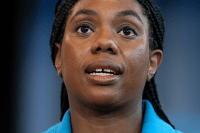
‘Get on board or get out.’ That, says Joy Morrissey, captures Kemi Badenoch’s attitude to the Conservative party: a categorical rejection of ‘wet Toryism’ and the accommodation of polite liberal opinion. Born and raised in the American Midwest, Morrissey is one of the rising stars of the right. Recently elevated to the Tory frontbench, her political style mirrors her leader: sassy, brash, straight-talking. Handed the equalities brief by Badenoch, the glamorous 45-year-old MP for Beaconsfield is relishing the chance to take the fight to Bridget Phillipson.
Morrissey is wary of the rise of ethno-nationalism both at home and abroad
For years, the Tories have attacked Labour for its confused position on transgender issues. But Morrissey now has a fresh charge: illegal migration is putting the safety of British girls and adults at risk. In her debut outing at the despatch box, she raised the threat posed by men entering the country unlawfully. Some, she argues, arrive from countries ‘where they treat women worse than animals’, and says their attitudes pose ‘a direct threat to women and girls’. She is particularly emphatic when she turns to Afghanistan: ‘Our dogs have more privileges and rights than women in Afghanistan do now.’ By failing to stop the boats, Labour is betraying women’s rights.
Morrissey accuses Andy Burnham’s government of ducking the issue because ‘it doesn’t fit their multicultural agenda’. ‘If I were talking about white men committing misogyny, Bridget would love that,’ she tells me. ‘But illegal migrant rapists don’t fit the multicultural narrative or the Labour Party’s idea of inclusion.’ She believes Burnham is putting ‘Muslim male votes’ ahead of women’s safety and is troubled by the growing number of niqabs she sees on British streets. ‘If we believe in the rights and equality of women and girls, why aren’t we applying that across the board?’ she asks. ‘Something is probably being imposed on those women.’ A Tory integration commission is currently debating whether to ban such face coverings.
First elected in 2019, Morrissey spent much of government in the Whips Office under three Tory Prime Ministers. Some 18 years after leaving her home country, she retains an American, tell-it-like-it-is manner and is honest about the failures of the previous Tory government. She knows ‘people don’t trust us’ and wants to win voters back. Her diagnosis is that previous leaders failed to live up to the Conservative values they professed to hold. Under Badenoch, she insists, that has changed. ‘She’s allowed true conservative values to come to the surface – believing in the small state, economic freedom, freedom of speech and knowing what a woman is,’ Morrissey says. ‘It’s been incredibly liberating for someone like me to follow in her footsteps and say what I believe as a Conservative.’ She laughs: ‘Who cares what the Lib Dems are saying?’
Morrissey’s next big battle with Labour is on the Conversion Therapy Bill. The Burnham-backed legislation could see parents criminalised for questioning whether their child is really trans. The think tank Policy Exchange has warned that parents could even face criminal liability for telling their children they cannot identify as a cat. ‘This is the most dangerous bill for parental rights, parental freedoms and simply protecting your child,’ Morrissey, a mother of one, says. ‘The ideological and authoritarian creep of the state – its overreach – is so severe in this bill.’ The Conservatives will oppose it at every stage. With Labour and other Opposition parties backing it, she knows it will be an uphill fight.
She is clear that her party has lost significant support to Reform – but argues that Nigel Farage’s team is economically incompetent and lacks a plan for defence. Asked about Badenoch’s relationship with Rupert Lowe’s hard right ‘Restore’ party, Morrissey insists there was and is no secret deal. She says his place on a select committee, gifted by the Tories, came before he formed Restore when he was focused on parliamentary work.
Morrissey is wary of the rise of ethno-nationalism both at home and abroad. She cites studying Ashkenazi Jewish history and how German Jews who had served their country in the First World War were steadily excluded, as nationalism hardened into an ethnic and religious test of belonging. ‘The rise of ethnonationalism in the interwar period in Europe is sort of what brought about World War II’. Her work with Kosovan rape victims after the 1990s war reinforced her awareness of such dangers.
Two years as a whip gave Morrissey a front-row seat on the damage a divided party can inflict on itself. She saw first-hand ‘self-indulgent infighting’ bring a backlash from voters. The next intake of prospective Tory MPs ought to be ‘real Conservatives – it’s not about you and your own show… We need to stand up for our voters and what they believe in, and have the courage to do so. Whether that means standing up for Israel or standing up for same-sex spaces for women, it doesn’t matter if no other party is standing with us. We need to do what’s right and what the silent majority believes in.’
Morrissey wants voters to see Badenoch as the embodiment of a Conservative party that has broken decisively with its past – on mass migration, Net Zero and other issues that drove right-wing voters away. She is one of a number of newish faces being pushed to the front to make this case, in a gender-balanced shadow cabinet that, without shortlists or patronising quotas, currently boasts a dozen other women. They believe Badenoch has changed her party. Now she wants to change the country too.




Comments