
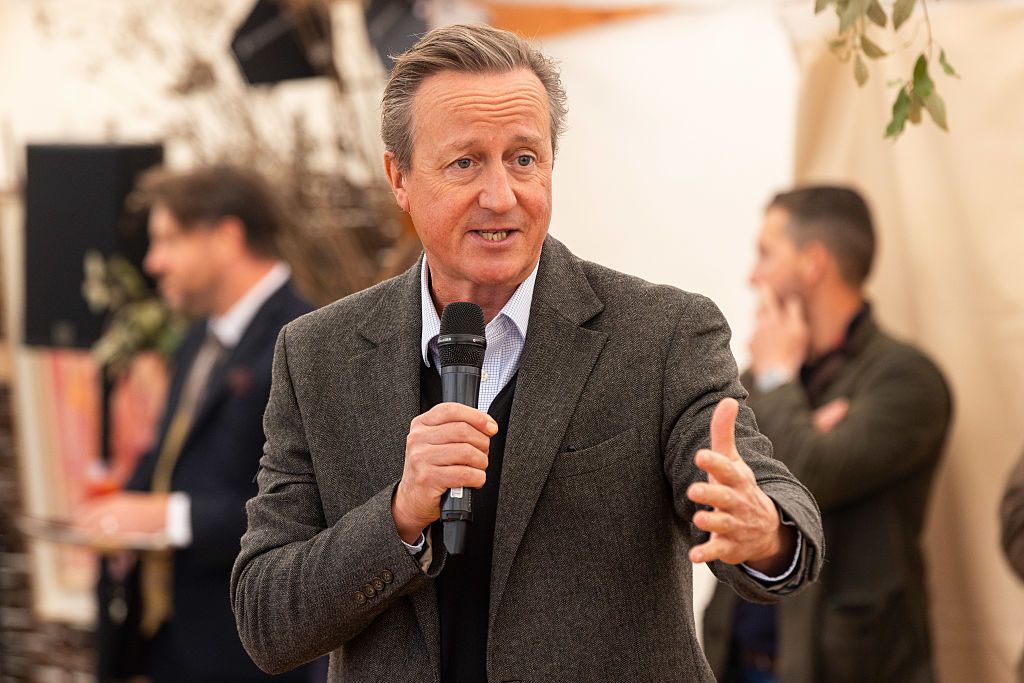
Rural Britons must revive the spirit of the Liberty and Livelihood march to fight back against Labour’s war on the countryside, Lord Cameron of Chipping Norton declared today. The former prime minister joined forces with Lord Blunkett to urge Andy Burnham to reset relations with rural communities, which have been hit by no fewer than 27 damaging policies since the 2024 general election.
The despair and anger over Labour’s assault on the countryside and British heritage were palpable
At a rally hosted by the Countryside Alliance, Lord Cameron issued a call to arms amid warnings that urban-centred Labour has forgotten ‘the importance and significance of rural Britain’. The former Tory leader cited the family farm tax, gambling regulations harmful to horse racing and an incoming ban on trail hunting as evidence of a wider, vindictive culture war targeting rural life and British heritage.
Lord Cameron said: ‘Remember that march 24 years ago, Liberty and Livelihood. What we’ve got to do is not necessarily march yet, but we’ve got to take that spirit, we’ve got to take that passion, we’ve got to take that unity, and we’ve got to make it show again.’
The former prime minister urged rural communities and those who cherish the countryside not merely to write to their MPs, allowing their correspondence to be passed to young staffers for formulaic replies. Instead, they should attend constituency surgeries and lobby their representatives in person over farming and the corrosive taxes punishing villages and rural employers. Lord Cameron also implored countryside communities to unite behind causes ranging from farming to greyhound racing, even when individuals are not personally affected by a particular policy.
His intervention was echoed in no uncertain terms by Lord Blunkett, whom Burnham has described as the ‘truest mentor to me’. The former Labour home secretary insisted that ‘urban and rural need each other’ and urged his colleagues to ‘learn about the countryside’ because ‘this is a heritage that all of us have to protect’. He condemned the proposed ban on trail hunting – a sport Tony Blair encouraged rural communities to adopt as a legal replacement for fox hunting – as a mistake and urged the government to change course.
The launch of the rural reset campaign was deliberately bipartisan. Yet inside One Great George Street, the despair and anger over Labour’s assault on the countryside and British heritage were palpable. Lord Blunkett received a warm reception, but there was considerable scepticism that the Prime Minister seriously intends to repair relations with the countryside – particularly after his off-the-cuff joke at PMQs that Defra was not an important department.
Persisting with a puritanical, performative and spiteful campaign against the countryside while the country battles cost-of-living and immigration crises will only damage Labour. More than 40 of its MPs now belong to the Rural Research Group, which has been working closely behind the scenes with the Countryside Alliance to resist hostile reforms. More than 100 rural constituencies are represented by Labour MPs. If Burnham continues to treat the countryside as a cultural enemy rather than an economic and electoral constituency, many of those seats may prove considerably less secure than Labour imagines.




Comments