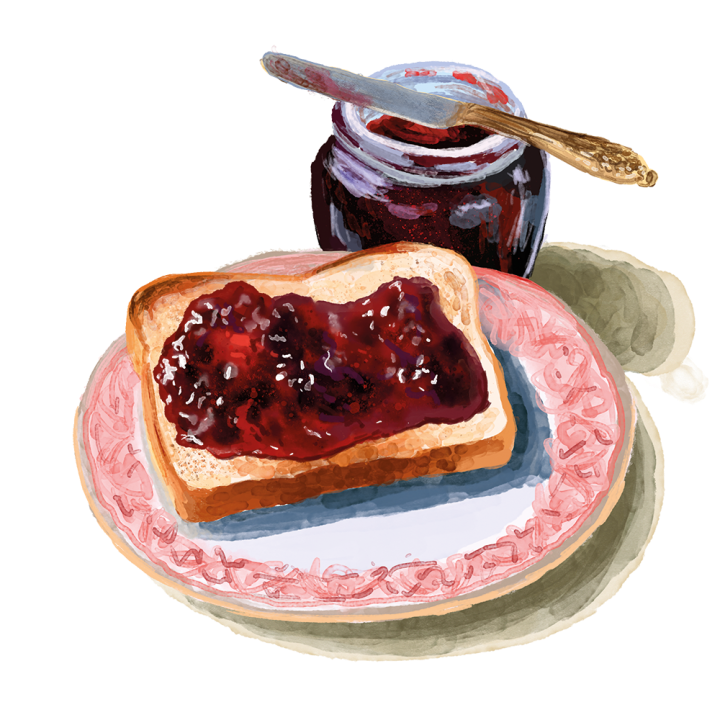

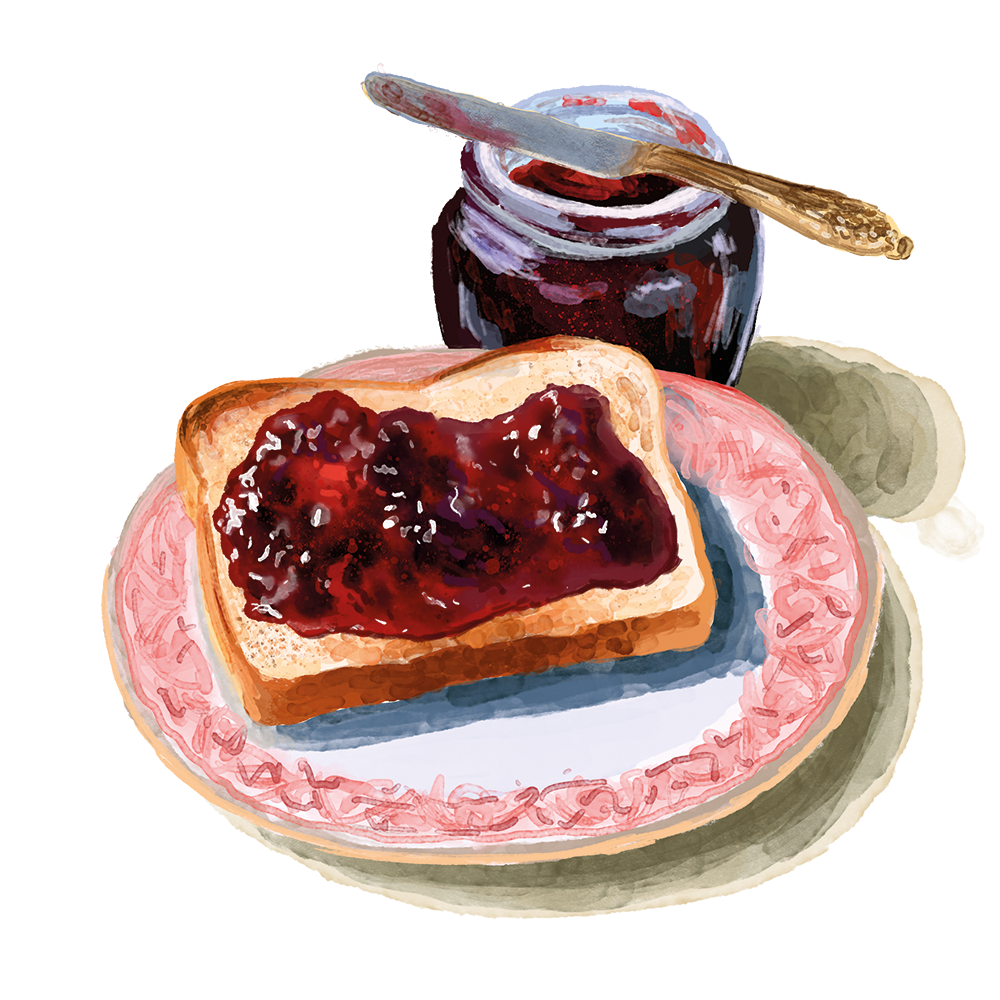
My kitchen is not ready for blackberry jam. I am not ready for blackberry jam. The heat of summer is still beating through my windows; the grass is still a brown dust; I haven’t corralled my jars or set aside preserving time. Nor have I turned my thoughts towards the fruit. I still think of blackberries as a back-to-school fruit: a signifier of autumn and all that goes with it. It just doesn’t feel like blackberry season. But it is, and the brambles wait for no woman.
For several years now, the blackberries have been coming earlier and earlier. Right now, the ones near me are at perfect ripeness. A few days ago, they were tight, reluctant to let go of their star-like calyx. They may have looked dark and inky, having changed from their earlier pallid pink, but they weren’t ready. Now it’s different.
There is a point where the berries on the brambles start to change; when it feels like they become three-dimensional. Their drupelets are plump, and when they burst, they stain fingers and mouths a blue-black – so different to the brighter purple of the less ripe fruit. The smell and taste is noticeably different: the berries are more interesting now. They’re sweeter than they once were, their tartness only a background note, but they’re more complicated too, perfumed and floral, with darker, boskier notes.
It just doesn’t feel like blackberry season. But it is, and the brambles wait for no woman
Each evening during this plumptious period, I head out to the lane that runs behind my house. I go equipped, sometimes with just a stack of plastic containers, other times with two eager sets of small helping hands. I squirrel those ripe blackberries away into my Tupperware, ready to be simmered with sugar, sequestering only a dozen or so to be eaten on the go – the berry-picking tax. That tax is higher, it turns out, if your hands are smaller. Little fingers are dyed midnight and an indigo clown smile is painted over mouths.
Jam-making is, in most ways, unbelievably simple: here, equal parts fruit and sugar, with the juice of a single lemon to aid setting. But it takes care. I macerate the fruit overnight, letting the fruit and sugar sit together in a bowl at room temperature, so that the fruit begins to break down and the sugar begins to dissolve. This means a shorter cooking time which, in turn, means that you’re able to better capture the lively, fresh flavours of the fruit, reducing the risk of a jam that tastes caramelised and flat (or worse, burnt).
It requires attention too – it is a universal law that the moment a pot of jam is unattended, it will bubble over. But, otherwise, it’s simply a matter of boiling the jam and keeping an eye on the temperature.
If you’ve ever doubted the power of a bay leaf, or questioned its purpose in a stew or casserole, throw a couple into your blackberry jam, where their medicinal greenness subsides into gentler floral notes as they simmer alongside the fruit. The pairing is beautiful, with the sweet-tart perfume of the blackberries lifted by the herbal muskiness of the bay.
Don’t be tempted to use less sugar unless you’re willing to compromise on both set and shelf life. Yes, it’s a lot of sugar. We’re making jam, it’s rather the point. And the normal rules apply: fill the jars right to the top, there’s no need to use wax seals, don’t worry about the texture. The jam in the pan may seem runny, even when it’s reached temperature. Don’t panic. I always think of the reassuring advice of marmalade expert and jam king, Dan Lepard: jam sets in the jar, not in the pan. You’re not looking for that jelly-ish thickness when you’re cooking the preserve; if it were the thickness you’d expect of cooled jam, you can guarantee you’ve overcooked it. Instead, as soon as the jam hits temperature, remove from the heat and trust the process – as the jam cools, the pectin matrix will set and you’ll end up with a perfect jar of beautifully set, jelly-ish blackberry jam.

Makes: Approx 1.5 litres of jam (about 3-4 standard jam jars)
Hands-on time: 15 minutes
Cooking time: 30 minutes
- 1kg blackberries
- 1kg granulated sugar
- 1 lemon, juiced
- 4 bay leaves (optional)
- Wash and dry the blackberries. Place them in a bowl with the sugar, cover and leave overnight to macerate. If you don’t have a sugar thermometer, put two saucers in the freezer.
- The blackberries will have softened and given up some of their juices. Decant the fruit and the sugar into a large pan, and heat gently over a low heat until the sugar is completely dissolved.
- To sterilise your jars, wash them and their lids with hot soapy water, then place them on a baking tray in a 140°C/120°C fan oven for ten minutes until dry. If you’re using rubber seals, boil these in water for ten minutes separately; don’t put them in the oven or they’ll degrade.
- Add the lemon juice and the bay leaves if using, and bring to a rolling boil. Cook the jam, stirring all the time, for around ten minutes. If you have a sugar thermometer, look for the jam to sit steadily at 105°C; ensure that your thermometer isn’t touching the bottom of the pan. If you don’t, place a teaspoon of the jam on one of the cold saucers. Leave for a moment, then nudge it with your fingernail; if the jam wrinkles, it has reached setting point. If it doesn’t, return the pan to the heat and cook for another few minutes before testing again. Once you’ve reached jam temperature or setting point, remove from the heat.
- Leave the jam to rest for 15 minutes before spooning into the sterilised jars and sealing.
Join Olivia Potts for Truffles and Trattoria in Rome on 2-6 December 2026. For more details about this Spectator Club trip, go to spectator.com/tastings.





Comments