Food

How to do a salade Lyonnaise justice

From our UK edition

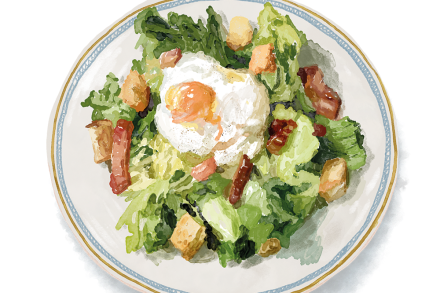
Salade Lyonnaise is often translated as ‘bacon and egg salad’ and I can’t stand it. Not because it’s inaccurate – beyond the salad leaves and the dressing, the only other non-negotiable elements of the dish are, indeed, bacon and eggs. But it feels like it misses the point. To the English ear, bacon and egg salad sounds like a lacklustre version of a full English – two items chucked into a bowl of leaves because we’re trying to cut carbs. It also – and I am aware this is just me – makes me picture the egg scrambled, and the thought of scrambled egg in a salad is horrible. ‘Bacon and egg salad’ doesn’t do the elegant, balanced and punchy salade Lyonnaise justice.

Who was the real Anthony Bourdain?

From our UK edition

When did Anthony Bourdain decide on his future career? If you take him at his word in his memoir, Kitchen Confidential, it’s when he watched a colleague ‘rear-ending’ a bride in her wedding dress next to the bins. He doesn’t say if he finds it glamorous, sexy or depraved, but this service-for-goods exchange – where the line chef got sex and the bride got hash – was the moment he knew. If instead you take the new A24 biopic Tony, released this week, as gospel truth, it’s when he hosts a charity clambake on the beach in Provincetown, rejecting his colleague’s stealing-for-drugs friendship in favour of cooking for others.

‘If you’re a lamb chop ultra, then start your car’: Koyal reviewed

From our UK edition

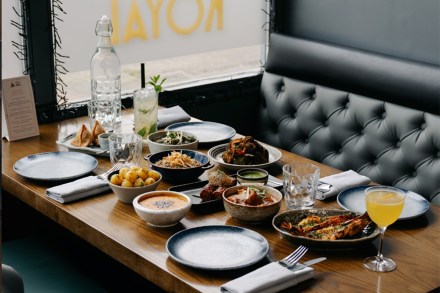
One of the things I find most confusing is the practice of going for a curry when you’re hammered. Having tried this with friends a couple of times, I have concluded that anyone who likes the pints-then-curry act is a liar or feels so awful regularly that the feeling afterwards is nothing abnormal. There is no type of food I dislike more than bad Indian: the places where a vindaloo means three scoops of curry powder and a rogan josh means two; where onion is undetectable in the sunflower oil bhaji.

The wisdom of Anthony Bourdain

From our UK edition

Tony is a biopic of Anthony Bourdain, the late, great chef who, in fact, considered himself a writer first – his memoir Kitchen Confidential has sold in its millions – and a ‘skilled cook’ second. It’s not a Wikipedia entry, filmed. And it’s not hagiographic. It focuses on 1975 and the formative summer he spent washing dishes in Provincetown. He was 19 and the film opens with his own description of himself at that age: ‘I was – to be frank – a spoiled, miserable, narcissistic, self-destructive, thoughtless young lout who needed a good ass-kicking.’ I would say Nigella is also a writer first, skilled cook second, but perhaps any similarity ends there. Though the film feels authentic, it isn’t true true. In fact, you may sometimes wonder: did that actually happen?

Grasshopper Pie is like a teenage fever dream

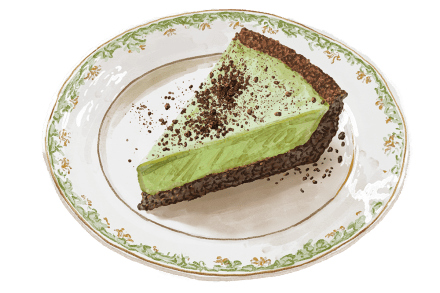
Grasshopper pie is an unlikely dish: bright green, mint-flavoured, combined with obscure liqueurs and set with marshmallows, all sitting in an Oreo crust. It feels like the fever dream of a sweet-toothed teenager who’s been let loose on their parents’ drinks cabinet, and will regret it tomorrow. The pie is based on the cocktail of the same name, which combines equal parts crème de menthe, crème de cacao blanc and cream. It’s a heady mix of mint, white chocolate, dairy and alcohol. The cocktail hails from New Orleans and its origin is claimed by Tujague’s in the French Quarter, where it was supposedly invented by the owner, Philip Guchet, in 1918. It tastes exactly as you’d imagine and is, forgive me, far better suited to a pie filling than it is to a drinks party.

‘Thank goodness it’s not going for a star’: Rosina reviewed

From our UK edition

The worst areas to eat in London are the best places to live. Hampstead, Chelsea, Chiswick, St John’s Wood: all would be lucky to have even one restaurant that would be an 8/10 in Hackney. This is disappointing because Hackney is annoying, but, hey, hipsters make good restaurants. I wonder why these areas are so lacking. Is it because St John’s Wood Man has an underpaid cook on speed dial? Is it because Belgravian Influencer orders a shawarma every night? Is it because Hampstead Family don’t eat where they sh– hmm, yes... A little bruschetta of chopped rabbit livers comes next, visible through a translucent sheet of lardo Whatever the explanation, the exception to this rule is Wandsworth Common.

My quest for the perfect muffuletta

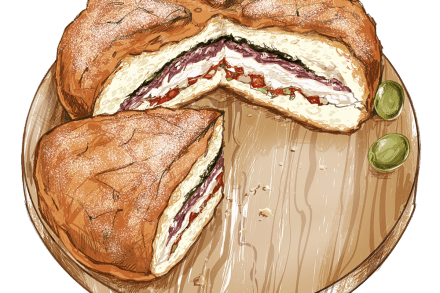
Everyone knows the story of the Earl of Sandwich: keen not to interrupt a late night card game at his club, he asked for roast beef to be sliced and put between two slices of bread, to allow him to eat it with his hands without stopping his game. And lo, the sandwich was born. But perhaps less familiar to us is that 140 years later, some 4,500 miles away from the Earl’s cribbage game, another problem was being observed, and was solved in a strikingly similar way. The turn of the 20th century saw an influx of Sicilian immigrants to New Orleans; almost 300,000 arrived in the city between the 1880s and 1920s, setting up shop (literally) in the French Quarter, in an area that became known as Little Palermo.

‘I hope Keir Starmer comes for the pints, not the food’: The Pineapple reviewed

From our UK edition

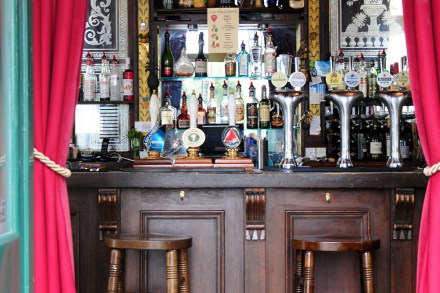
It’s a Saturday afternoon and I’ve just walked into The Pineapple in north London, thus becoming the 4,825th journalist to do so since Keir Starmer became Labour leader. He once described this pub as his ‘church’. What that means is unclear. Does he take his sins here for absolution? Does he feel a sense of obligation to it? Does he come here on Sunday mornings? As the prime-ministerial handover takes place, it’s worth considering the old guy and the new guy’s approach to food and drink (this column thinks so, anyway). Starmer didn’t have a favourite novel and he didn’t have a favourite poem. But what he did like was food. He said he enjoyed going to Rossella, an Italian restaurant in Kentish Town. The tandoori salmon he made on Sunday Brunch actually looked nice.

‘A contradiction in terms’: Zylia reviewed

From our UK edition

Can there be, in Britain, such a thing as a destination Greek taverna? There are some cases where proximity is the most important thing: gyms, cafés, defibrillators. A Greek taverna falls into this category. All you need is harmless food and ambient fake vines for a catch-up with your relatives. But I’m in need of a new one. Lemonia in north London was a good option until halfway through my final meal there. A bit of lamb kleftiko decided it wanted to remain in the entrance to my father’s trachea. Choking, mouth frothing, screaming for help, oh thank God there’s a nurse over there, Heimlich, hospital, then, seven hours later, home.

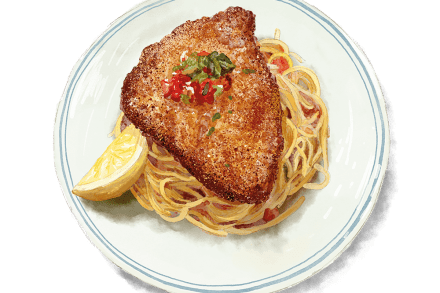
Chicken Milanese is the king of homemade fast food

When it comes to home cooking, we’re obsessed with optimisation. Today this manifests itself in reels on Instagram offering a ‘hack’ to make the time you spend in your kitchen shorter and your dinner to arrive more quickly. Harder, faster, better, stronger. None of this is new: there was a time when every Jamie Oliver cookbook shaved ten minutes of the promised cooking time off the last. Delia Smith’s How to Cheat at Cooking caused a public outcry (can you believe she advocated for frozen mashed potato?). The whole appeal of air fryers is that they’re fast, and while slow cookers don’t exactly get to their destination quickly, they do so with as little intervention as possible from the cook.

‘Through ecstasy I say: it’s perfect’: The Old Original Bakewell Pudding Shop reviewed

From our UK edition

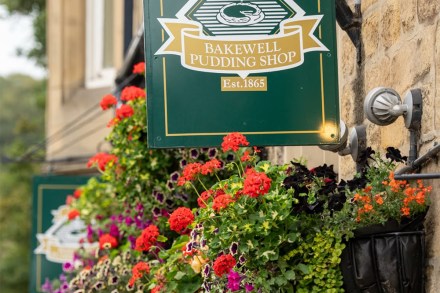
The obvious thing to say about themed restaurants is that they are usually bad. The Rainforest Café in London, for instance, was nothing like a rainforest, though it is slightly more like a rainforest now it has gone. But there are exceptions. The Old Original Bakewell Pudding Shop in Bakewell, Derbyshire, for instance. Perhaps the sort of tourists who go to Bakewell for tarts are more dangerous than the ones who go to Bath for buns. They certainly look as if they read a lot of crime fiction and are capable of murder in their heads. But The Old Original Bakewell Pudding Shop out-gilds its myth. It’s rare.

Britain must finally embrace gene editing

From our UK edition

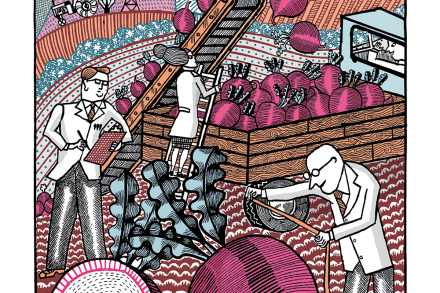
Around the turn of the century, the world embarked on an experiment. The Americas embraced the genetic modification of crops; Europe rejected it and stuck with the old ways of generating new plant varieties – bombarding seeds with gamma rays, mostly. The results are clear. Both economically and ecologically, the Americas won: more productive farmers, reduced use of pesticides, more investment in innovation, fewer emissions. By the time of the Brexit vote in 2016, polls showed the British people were no longer against genetic modification of crops. Protests by boiler-suited eco-toffs had fizzled out. But European red tape made changing our policy impossible.

Embrace the squidge of a custard slice

From our UK edition

Ihad a culinary revelation this week. I like to think I’m an egalitarian when it comes to food – I like beautiful, fancy restaurant stuff and home-cooked one-pot dishes, I like punchy, in-your-face flavour, and subtle, softer flavours. I love trying new-to-me dishes from around the world, and I love the comfort of eating suppers my grandma would make. You can put virtually anything in front of me and I’ll be thrilled. But as I contemplated this week’s recipe subject, I realised that I avoid foods that ooze. Doughnuts splurging out their jam, uncontainable ice-cream sandwiches, croissants or Danish pastries with custards or compotes that blob onto my clothes. Even really juicy stone fruit or a particularly ripe soft cheese makes me nervous.

Beef olives – classic comfort food, without an olive in sight 

From our UK edition

We all did mad things during the first Covid lockdown. For some it was getting a dog or starting up a microbakery. For me, it was signing up for a NVQ Level 2 in butchery. I’m still not quite sure how it happened, but, once the schools reopened, I spent my Tuesdays in a cold butchery store in east London, socially distanced from my septuagenarian master butchery tutor, who would teach me how to break down whole carcasses, the art of seam butchery and the trick to linking sausages.

‘It feels subversive to eat so much carbohydrate in Mayfair’: Claridge’s ArtSpace Café and Bakery reviewed

From our UK edition

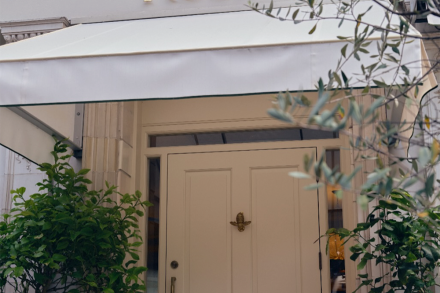
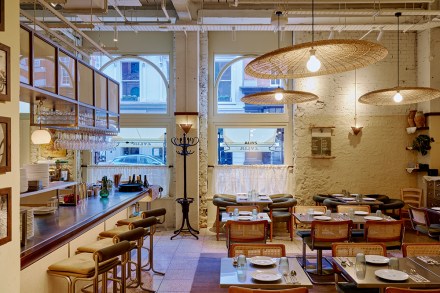
Claridge’s grew nine storeys in the last decade: it’s a metaphor. The ornamental 1897 castle on Brook Street has expanded to fit the available space. Though it grew by half, it never closed, and workmen dug out the basement by hand. In one room, Claridge’s was a building site: in another, a dream world. We are trekking through metaphors now. We are up to our necks. The children eating the Nutella, banana and whipped cream crêpes look deranged Hotels are like buses: they have infinite possibilities. That is what they are for. To not be home. Like Alec Guinness, who lived in the Connaught with his share of the profits of Star Wars, which shamed him (the Connaught is the anti-Tatooine), I would like to live in a hotel.

The joy of iced buns

From our UK edition

‘It’s just a hot dog bun with icing!’ the iced-bun detractors will shriek. I’m a lady with a lot of opinions about fairly esoteric foodstuffs, many of them declamatory, immovable, or strident, but I do not understand taking against the iced bun. I’m not sure what awful bakery-based trauma must have happened to you during childhood to make iced buns the target of your ire, but they are undeserving. For anyone not a self-proclaimed detractor, iced buns (also called Swiss buns or iced fingers) prompt reveries: forgotten childhood memories of plump buns in trollies and sticky fingers holding grown-up hands.

‘I wanted to lie face down in the hummus’: Erev reviewed

From our UK edition

Erev is an Israeli restaurant in Notting Hill, though Israeli restaurants do not call themselves Israeli nowadays. They have rebranded to Eastern Mediterranean and I don’t blame them. These are bad days for Zionists. I tried to buy an almond croissant at the progressive coffee shop in Newlyn last week while wearing an Israeli flag as a cape. My excuse was: it was election day, and Gaza was on the ballot. I didn’t get the almond croissant. They didn’t have any. Erev, though, is the subject of real protests from real people who think that eating is, under certain circumstances, a genocidal act. They stand outside and shout at diners. If you think genocide and restaurants have nothing to do with each other, meet 2026.

​A charmingly bold food podcast

From our UK edition

It takes some gumption to name a podcast History’s Greatest Dishes and proceed to offer episodes on pizza, blancmange, balti, gooseberry fool and Victoria sponge. Where’s the rarebit, the pottage, the pigeon pie? But the boldness of the podcast is one of its charms, and the choice of topics isn’t terribly important. Food historian Annie Gray and podcast host Emily Briffett chew over some fascinating material on each of the dishes they have selected and provoke surprisingly heated debates. Pineapple on pizza ought to be accompanied by Spam instead of ham It was suggested, for example, that pineapple on pizza ought to be accompanied by Spam instead of ham.

Man vs lobster

She was doing a postgrad course in a town by the sea, and a strange thing happened to us one afternoon. On the quayside we saw lobsters being sold from a trestle table. Only one of them remained and I squinted at it, close up. The sharp oval claws, like holsters, had been bound in elastic bands to stop them nipping customers. It seemed a small-minded precaution. These imposing pincers were cumbersome and useless on dry land. But in the sea, with the water’s buoyancy to give them mobility, they would be swift and lethal weapons. Yet the lobster-catcher had neutralised them with a pair of turquoise bands. What for? The beast was already defeated, plucked from its natural habitat by a giant human being, and yet the victor was fearful of the tiniest nip from his prisoner’s claws.

Is your wellness smoothie giving you cancer?

There’s a question I’ve started being asked at work. Given I’m a psychiatrist, it isn’t one I’d ever expected to hear: ‘Do I have cancer?’ A young woman with anxiety wants to know whether the lump on her neck is sinister; she has been watching a great deal of TikTok. A man in his late thirties, in for a routine review, mentions in passing that his sister has been referred for a colonoscopy and wonders whether he should be too. At a dinner party a few weeks ago, a friend leant across halfway through her low-alcohol natural wine and asked me, in a small voice, whether it was true her generation was getting cancer in their thirties. Yes, I said, perhaps a little too bluntly. She looked rather panicked for the rest of her evening.