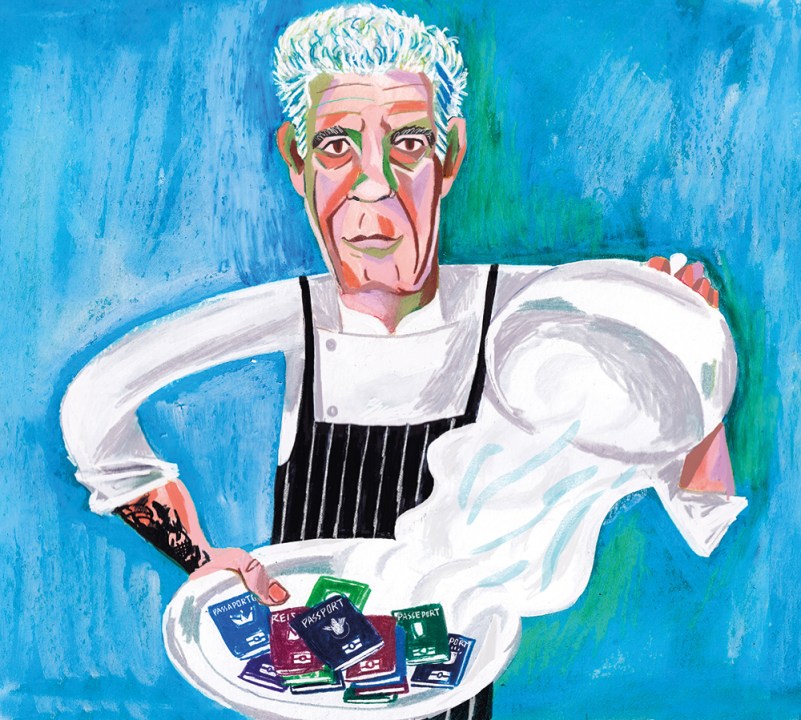
The Unabomber, Ted Kaczynski, never knew of Anthony Bourdain, I’d guess, but he understood his type well. Bourdain, who died in 2018, was an oversocialized leftist. A man who, to avoid a deep sense of guilt and worthlessness, overidentified with the system and presented conformity with its values as a kind of rebellion. That might sound complicated, but it’s really not.
“Generally speaking,” Kaczynski once wrote, “the goals of today’s leftists are NOT in conflict with the accepted morality. On the contrary, the left takes an accepted moral principle, adopts it as its own and then accuses mainstream society of violating that principle. Examples: racial equality, equality of the sexes, helping poor people, peace as opposed to war, nonviolence generally, freedom of expression, kindness to animals. All these have been deeply rooted values of our society… Leftists, especially those of oversocialized type, usually do not rebel against these principles but justify their hostility to society by claiming… that society is not living up to these principles.”
Everything Bourdain sold as edgy and punk was indistinguishable from the spirit of our age
Everything Bourdain sold as edgy and punk, the mark of a free thinker and a free spirit – traveling the world, drinking a pint at 4 p.m. in an empty bar, eating an oyster, having that extra slice of French toast, mass immigration as a way of brightening up our pale, stale, male countries – was indistinguishable from the spirit of our age.
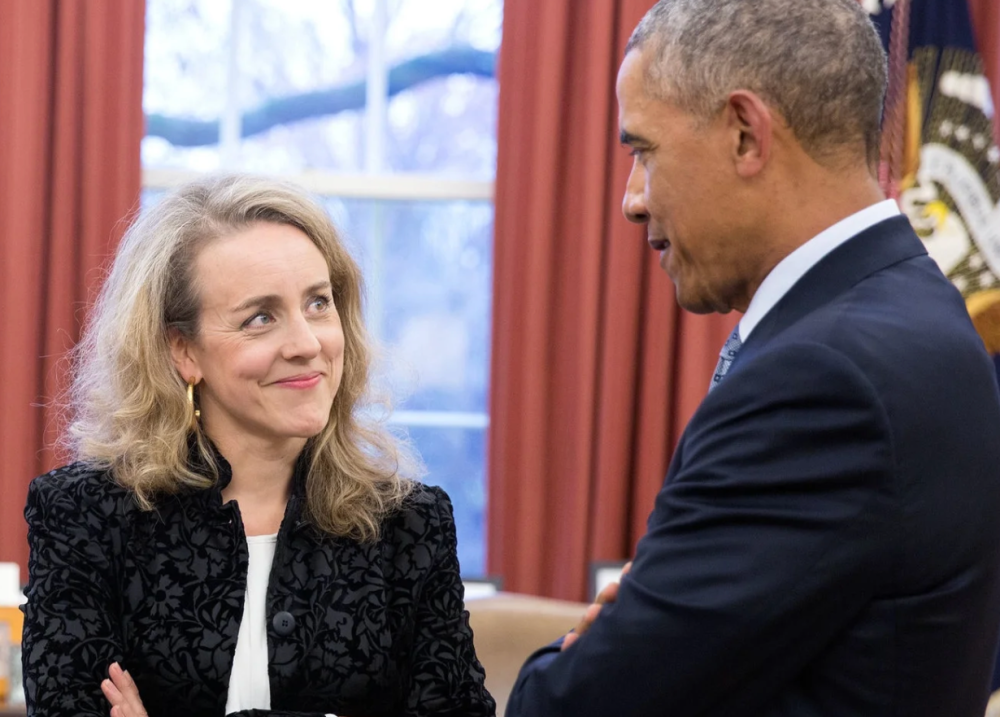
Bourdain was never apolitical: we just didn’t see or hear his political views that much. When the Tea Party came around during Barack Obama’s first term, Bourdain had plenty of disparaging things to say about it, but they weren’t in his early books or TV shows. That came later.
Bourdain was a working chef in his mid-40s at New York’s Brasserie Les Halles when he released his memoir-cum-exposé Kitchen Confidential: Adventures in the Culinary Underbelly, in 2000. The book, an expansion of a hit New Yorker essay he wrote the year before at the urging of his mother, launched him to overnight fame. In 2002, his first cooking show, Cook’s Tour, aired on the Food Network. Then came No Reservations and The Layover, and finally, in 2016, Parts Unknown.
Along with chefs such as Gordon Ramsay, Bourdain perfected the archetype of chef-as-cultural-icon, chef-as-rockstar. No longer was the chef simply someone who cooked food: he was someone who defined taste in a broader sense, a sage, even a philosopher, so long as you like your philosophy soft-boiled. Perhaps I’m being a little harsh. Maybe there is truth to this. Maybe chefs, like artists and artisans and people who connect with the world by making things with their hands, do have something to tell us about what really matters in life.
But Bourdain revealed the obvious limits of that model. Sometimes the world might indeed resemble a soufflé or sole meunière – even a kebab devoured on a piss-soaked street, drunk, in the early hours – but just as often it doesn’t.
It was Parts Unknown, Bourdain’s final series, that stretched the model of chef-as-sage far beyond its breaking point. One of the more memorable episodes involved a visit to the UK not long after the Brexit referendum. After eating scotch eggs and whitebait in a fancy London pub with domestic goddess Nigella Lawson, Bourdain ventured out into the rolling Wiltshire countryside to visit legendary chef Marco Pierre White at his restaurant-hotel the Rudloe Arms. We already have a sense that “all is not right in the world” as Bourdain segues from city to countryside. “England, as the anti-Brexit forces found out to their dismay, ain’t London,” he says, gloomily. “It’s different, out there. And a lot of it is very beautiful.”
The implication, of course, is that much of it is also very ugly – and it’s clear Bourdain means the people and their attitudes as much as the housing estates where they live, with their polyester England flags and white vans in the driveway. His discomfort only grows after he arrives at Rudloe, despite the pleasantness of the surroundings and the food, which includes White’s famous stuffed pig’s trotter à la Pierre Koffmann.
White speaks with great reverence about the past – his past – and how beyond a certain age, a man yearns to go back. This isn’t what Bourdain wants him to say. How can an Englishman look at his country’s past like that? So he tries to force a way in, by displacing the left’s more recent obsession with race with its older fetish: class. “You were working class, Marco. Wasn’t it a battle for you to make your way?” “Yes, but life was hard,” White replies. He is largely oblivious, it seems, to Bourdain’s triangulations. When Bourdain tries to tell him how difficult his pig’s trotter dish is, he brushes the comment aside. “It’s very simple.”
After a dismal boat trip off Portland Bill, the two men eventually end up at a fish-and-chip shop in sunny Weymouth, Dorset. By this point, as White douses the mushy peas with enough malt vinegar to preserve a dead admiral, Bourdain’s inner howl is an audible hum. He looks shellshocked, a man staring into the void. White, by contrast, has morphed into a character from the Brothers Grimm, his rugged features twisted into a nightmarish smile as he waxes lyrical about the pleasures of a chip butty – something Bourdain has obviously never tried. “Delicious” is an adjective often applied to irony.
As funny as it may be to watch Bourdain’s shitlibbery founder on the rocks of White’s earnest love of England and her past, it’s worth remembering that there’s actually something quite sinister about the vision of food served up in Parts Unknown. In another episode, Bourdain sits down to eat with a bunch of German leftists in Cologne, and the conversation – natürlich – turns to the “far right,” which had been on the march since Mutti Merkel decided, the year before, to welcome to the country anyone who would come. “How will Germany integrate a million refugees?” Bourdain asks.
His interlocutor says the only way to ensure Germany – and the world – can get along is if white people disappear in a new “utopia.” Thankfully, this is actually happening, and in 70 or 80 years there will be a world with “no white people anymore and only cappuccino-colored people.” Bourdain agrees. “It’s the only solution,” he says. “It’s our only way out of this.”
It’s worth remembering that there’s something sinister about the version of food served up in Parts Unknown
Food has become the last-ditch defense of mass immigrationists across the West. Now that the economic motte has been breached and the moral and social arguments also fail, what’s left? An endless succession of new cuisines, that’s what. Who cares what happens when the food is this good?
Take the 2018 murder of young Iowa student Mollie Tibbetts by Cristhian Bahena Rivera, an illegal immigrant from Mexico. I’ll spare you the horrendous details, except to say that it involved an ear of corn, and when her rapist and killer was done with her, she lived for a full 27 minutes before finally dying. At her funeral, in Brooklyn, Iowa, her father Rob praised the local Hispanic community for their help during the search for his daughter. “The Hispanic community are Iowans. They have the same values as Iowans. As far as I’m concerned, they’re Iowans with better food,” he said, as he condemned attempts to “politicize” her murder.
It was a eulogy that could have been written by the Department of Justice’s Community Relations Service, a special unit set up to ease “community tensions” in the wake of the Civil Rights Act. The CRS was defunded by Donald Trump last year. That eulogy could have been written by Bourdain.
A final, desperate stronghold as the horror mounts. Taco trucks. Curry. Daal. Jerk chicken. Bowls of pho and ramen. Anything but chip butties and the bland, “unseasoned” staples of western cuisine. Food, glorious food. Food so good it can justify anything. It’s no wonder Bourdain’s later programs leave such a bad taste in the mouth.



Comments