England

Jung Chang: what the West gets wrong about China

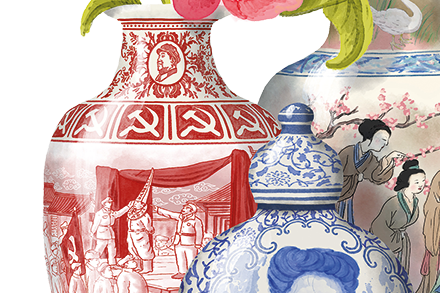
No writer has done more than Jung Chang to bring the horrors of Maoist China to the attention of western readers. In her monumental memoir Wild Swans (1991), she recounted the Chinese Communist Revolution, the Great Famine and the Cultural Revolution through the stories of her grandmother, her mother and herself. Its influence was enormous: Wild Swans sold more than 15 million copies, making it one of the best-selling nonfiction books of all time. In Mao: The Unknown Story (2005), co-written with her husband, the historian Jon Halliday, she blew apart decades of Chinese Communist party propaganda to reevaluate Mao as one of history’s greatest monsters, as bad, if not worse, than Hitler or Stalin.

How I won over a Scrooge-like New Yorker

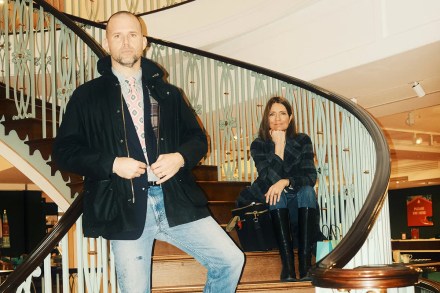
Like all men, my dear friend Chris Black is an absolutely terrible person to shop with. He behaves only marginally better than a boy toddler. As we stood on the street outside Fortnum’s, this New Yorker’s greeting to me was, “I’m not really a Christmassy kind of person.” How anyone could say this when they are about to enter the Father Christmas of department stores is beyond me. Fortnum & Mason, with its crimson carpets and twirling mahogany doors, counters groaning with marzipan and chocolate and its gracious staircases and red-coated butlers transport even the most jaded shopper to a gentler time when Christmas shopping was an “outing,” one that you dressed up for, before people had even imagined scroll-and-click retail.

What makes money ‘short?’

I heard on the wireless a reference to the growing number of small political parties getting funds from short money. I’m afraid I let it slide past me as one of the many things about money that I don’t understand. Short is an extremely productive element in English vocabulary. Short-haul journeys preceded by decades the invention of airplanes. The unlikely sounding shorthorn carrots have been with us since the 1830s. The Americans favor short hundredweights, which are only 100lb instead of the Imperial 112lb; worse, the standard ton is consequently a short ton of 2,000lb, a long way off the metric tonne, to which British tons approximate.

The strange death of England

Whatever happened to Britain, or the UK, or England, or whatever they're calling it? We can't even agree on what it's called. But what happened to England, the England that, if you're over 50, you grew up learning about, the England that controlled the world, the England that ran the largest empire in human history at the end of World War One?  Britain, which is an island in a pretty inhospitable climate, controlled literally a quarter of the Earth's surface – and not controlled in the way the United States controls the rest of the world with an implied threat or with economic ties through trade, but with administrators and people sitting at desks with eyeshades, counting things.

Do Jews have a future in Britain? 

I was on my way to synagogue yesterday when I got news that was surprising and unsurprising at the same time. That there had been an attack at a Manchester synagogue on Yom Kippur was a shock, but only the location and the timing. The fact that terror had struck our community felt like the confirmation of our worst fears – and something that was grimly predictable.  For as long as I can remember, Jewish life in the UK has been closely guarded and protected. My childhood synagogue in the leafy London suburb of Surbiton was behind locked gates with security guards posted outside when anyone was in the building. My Jewish newspaper office today has similar protections and an address we’re told must never be made public.

Liz Truss calls for a ‘Trump revolution in Britain’

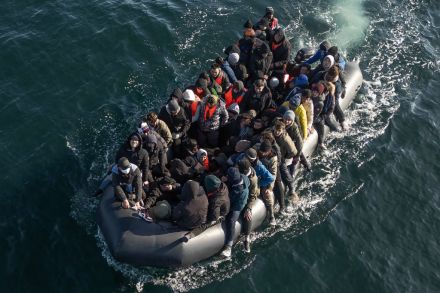
National Harbor, Maryland Former British prime minister Liz Truss began her speech at CPAC today by declaring that America has just entered its golden age with the election of President Trump. Britain, however, is in its dark age, she said: “Let’s be honest, Britain isn't working.” Truss’s concerns for the current state of the UK and Europe mirrored those expressed in Vice President J.D. Vance’s speech in Munich last week. She touched on attacks on free speech in the UK, the rise of Pakistani grooming gangs and the inability of the British government to do anything about the rise in illegal immigration.

The vision behind Woolsery

At first glance, it looks like any other sleepy village in southwest England. A medieval church and manor house face a fish ’n’ chip shop and post office across the green. There’s the obligatory pub, the Farmers Arms, where log fires crackle and ale-taps gleam beneath oak-beamed ceilings. Along the narrow lanes, whitewashed cottages peter out into rolling Devonshire hills. In true UK style, the place even has an obscure tongue-twister of a name: Woolfardisworthy. Population 1,123. Look closer, however, and you’ll realize this isn’t your standard British backwater. For every pint of cider being poured in the pub, there’s a craft cocktail infused with foraged botanicals and homemade cordials — think a crabapple cider margarita or a sea buckthorn gin sour.

village

The rise of English wine

Sometimes, I pretend that I worked the wine beat thirty or forty years ago. I picture myself in formal wear, kicking back in gilded settings, sipping perfectly aged first growth, trading bons mots with winemakers. We’d spend hours solemnly considering the slow, steady, seemingly eternal rise of wine culture, and how inevitably it would soften the cruder edges of society. It would be so merry, yet cerebral — but also something we could feel good, even morally superior, about participating in. Instead, I’m in 2024 wearing yoga pants and guzzling mineral water (must hydrate!) by myself holding Zooms with winemakers, sweating over the fact that scientists say climate change imperils up to 73 percent of the world’s current wine-growing regions.

wine

How to celebrate Christmas in London

You just can’t beat London at Christmas. Unless you’re lining up to get into the Tube station (never mind onto a train) at Oxford Circus, in the pissing rain. Then you’re better off in one of those glass igloos in Finland.  When I’m in town for the holidays, I find myself returning to a few old faithfuls, with a few old faithfuls. The Zetter Marylebone Keep this gem up your sleeve for when the crowds become a little too much. A warren of sumptuous suites and a lavish, candlelit parlor awaits at dinky Zetter Marylebone hotel, just a couple of streets back from shopping mecca Selfridges. Divide and conquer last-minute shopping with Mom, then meet here at lunchtime for a swift recovery.

christmas london

The royal lust of Hampton Court

The Dowager Countess of Deloraine, who was governess to the children of George II at Hampton Court and other royal homes, was a notorious bore — so much so that her “every word” made one “sick,” according to the courtier Lord Hervey. When she naively asked him why everyone was avoiding her, he replied with exquisite irony that “envy kept the women at a distance, despair the men.

Hampton

How they treat trans children across the pond

England's National Health Service made the major announcement last week that they would limit the prescription of puberty-blocking drugs for transgender children to clinical trials. A report released by the NHS on June 9 states that "there is not enough evidence to support their safety or clinical effectiveness as a routinely available treatment and that they should only be accessed as part of research." The decision is the latest consequence of a multi-year review into how the medical community in England should treat children who suffer from gender dysphoria.

LGBT activists gather outside the Stonewall Inn (Photo by Spencer Platt/Getty Images)

Opening a bottle with: Lime Wood Hotel’s Luke Holder

Quizzed on how best to assimilate a new culture, travel writer and celebrity chef Anthony Bourdain once uttered the famous line: “Drink heavily with locals whenever possible.” I never met the man, but still I miss him and his deft writing. The Opening a Bottle series is about getting pickled with people far cooler than I am, in whatever city I’ve washed up in.  It’s my first proper day of spring on home soil, and it’s a blinder. Not a cloud in the sky, and a glorious cool breeze wafting the scent of mown grass across Lime Wood Hotel’s sumptuous gardens. They’re bursting with color, flowers blooming in every direction. White stone walls are awash with lilac wisteria. I’ve driven down to rural Hampshire from London to meet lauded resident chef Luke Holder.

What’s in a name?

Someone, I think it was Martin Amis, once said that you can judge a novelist by how much effort he puts into his characters’ names. If that’s true, a political independent who grew up in the 1990s with the name “Matt Purple” may be a sign of some cosmic writerly laziness. Yes, that is my real name. The one you see in the byline there. I’m always amazed at how many people assume it’s a nom de plume, as though if I could have any last name I wanted I’d choose an Easter color. I actually did write an essay under a pseudonym once: “Matt Thomas,” Thomas being my middle name. Given that it was instantly posted to the top of a prominent website and discussed on a national radio show, I sometimes wonder whether I’m the victim of nomenclature discrimination.

name

The deep conservatism of Agatha Christie

Some fiction, regardless of how intimately tethered to a time and place, is timeless. And the work of Agatha Christie certainly seems that way. Christie's novel Death on the Nile is now receiving renewed cinematic treatment under the expert hand of Kenneth Branagh, with the film scheduled for release on February 11. This follows the success of Branagh’s 2017 adaption of Murder on the Orient Express, which grossed $351 million against a production budget of $55 million. “Rest assured," says Belgian detective Hercule Poirot in Christie’s novel Five Little Pigs. "I am the best!” The same might be said of Christie herself, the world’s all-time bestselling fiction author.

In defense of the English original sandwich

Hannah Moore’s June Spectator piece on sandwiches made me hungry. Then it made me think. Ms Moore makes a sound distinction between modern Britain’s plastic-boxed, triangular ‘sandwich’ and the custom-made, piled-high, endlessly imitated, seldom-matched product of a good New York or Chicago delicatessen. Why, one wonders, do the Brits put up with it? Landing in countless foreign ports over the years, for business or pleasure, I’ve always wondered, pretty much before wondering about anything else, ‘What’s the food like?’ Almost always, I’ve liked what it was like. In the age of real borders and undiluted ethnicities, food was a powerful expression of locality.

sandwiches
scotland

Scotland by sleeper

Traveling internationally these days is a bit like how Dicky Umfraville, a character in Anthony Powell’s Dance to the Music of Time, describes aging: being punished for a crime one hasn’t committed. After taking my pre-departure COVID test, alerting the British government to my whereabouts for the next week (no small undertaking given I’d be in a different bed every night), and proving all this plus my vaccination status to the British Airways check-in desk at JFK, I finally settled in my seat and supplemented my mandatory mouth-muzzle with an eye mask as though bound for Gitmo, not Heathrow. An hour into the flight, the woman in front of me started bawling: a panic attack brought on by mild turbulence.

Football is more than a religion to the English

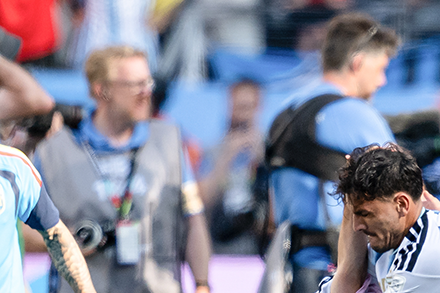
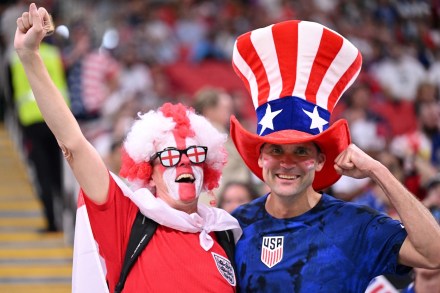
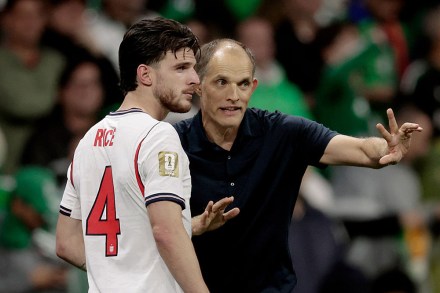
London All is fair in love and war, and nothing is fair in sport. England rode their luck to their first final in a European Championship in London on Sunday night. They scored a stylish goal in the second minute, too — but then their luck ran out. Italy, always the favorites, regained control of the game. They equalized with only 23 minutes of normal time to run, forced a penalty shootout, and won. You make your own luck. England had the host nation’s home advantage. They had an off-pitch assist from their fans, too. For weeks the words 'Football’s coming home’ have echoed around this green and pleasant, small and crowded land. England’s game rose as the tournament progressed, until an entire nation waited on tenterhooks for Sunday night. For what?

football