


We have only fragments of The Satyricon by Titus Petronius (AD 27–66). The centerpiece of the narrative that survives is the so-called “Cena Trimalchionis,” the banquet of Trimalchio in which a dazzling array of exotic foods and rare wines are paraded before a handful of gratefully stupefied guests. While the host of this feast was the aforementioned Trimalchio, the narrator was a young buck called Encolpius. He is appropriately amazed by the delicacies and potations that appear one after the next before him.
The Satyricon is a work of satire (Menippean satire for those keeping track). The antics recounted are recited partly tongue in cheek. Everything is turned up to eleven. The point is parody. I’d say Federico Fellini captured the excesses more than the satire in his 1969 film taking off from the book. F. Scott Fitzgerald should thank his editors: they convinced him to change his title Trimalchio in West Egg to The Great Gatsby, much better (though it’s nice knowing what Fitzgerald had in the back of his mind).
The ‘drink window’ for the wine was 2024-2064. That saddened me. I had better get going
Just as caricature, in exaggerating, reveals something essential about its subject, so The Satyricon tells us something important about the excesses of the Roman world in the time of Nero. Petronius himself was, for a while, a pal of Nero’s. It didn’t work out in the end – Petronius wound up killing himself on Nero’s orders – but while the going was good the emperor bestowed upon Petronius the title arbiter elegantiae, “judge of elegance.”
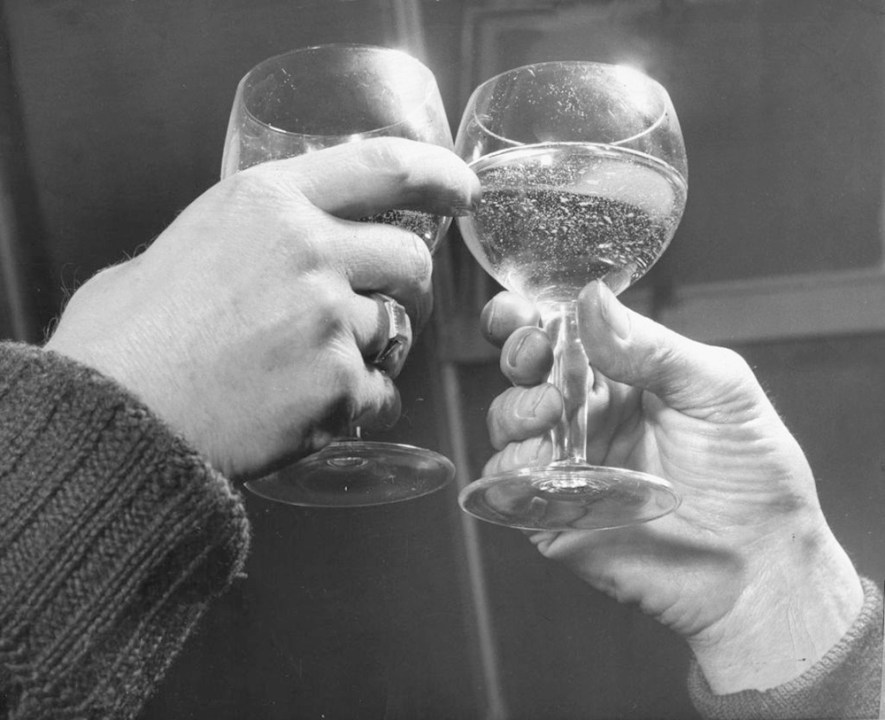
What, you might be asking yourself, does this have to do with wine? Well, for one thing Trimalchio served his guests Falernum Opimianum annorum centum: 100-year-old Falernian wine from the consulship of Lucius Opimius in 121 BC. And I was just treated to a Madeira from 1899, a rare terrantez (that’s the grape) from the celebrated house of D’Oliveiras. It is odd to drink a wine that not only precedes one by so many years but also will outlast one by decades. Trimalchio entertained a similar thought when passing around his 100-year-old Falernian. “Eheu,” inquit, “ergo diutius vivit vinum quam homuncio. Quare tangomenas faciamus. Vita vinum est.” “Sad it is,” he said, “that wine lives longer than little man. Therefore, let us drink. Life takes its polish from wine.”

That Madeira I mentioned was the concluding wine in an astounding inventory of great wines served at a celebratory feast I was grateful to attend this spring. The dinner, in honor of a great scholar and teacher who was retiring, was organized by a latter-day arbiter elegantiae. It was an intimate gathering of ten, Trimalchian in its excellence, not its excesses. There were no boars releasing live birds, no pastry eggs containing birds, no pigs stuffed with sausages. The entertainment was elevated conversation. The menu was sumptuous. But the wines were simply stunning. I will devote the rest of this column to telling you a bit about both. Being of a kindly disposition, I will not, when naming the wines, mention anything so untoward as what they cost.
We gathered in a lovely antechamber for the hors d’oeuvre, which featured caviar, potato blini and chive crème fraîche. We savored that with a couple of magnums of 2016 Pierre Péters “Les Montjolys” Blanc de Blancs Champagne. Delightful, full of that bread-like yeastiness that the best Champagnes (in my opinion) boast. We then moved into the dining room and on to the first course. I hurry over the Dover sole (my favorite fish) au vin blanc with zucchini and a petite citrus salad enlivened by tarragon and chive. I hurry because this delicious dish seemed merely an excuse for the 2017 Montrachet “Marquis de Laguiche” Grand Cru from Joseph Drouhin. A storied year, a grand house, a stupendous wine, plush, peachy, palate-pleasing, powerful.
I’d like you to sit down now. Next up was a “duet of duck,” pan-seared breast and braised leg with stone fruit, wilted greens and cocoa nibs. And the wine(s)? A 1996 Domaine de la Romanée-Conti Romanée-Conti, quite possibly the best, certainly one of the most expensive, wines in the world. Wow. And guess what? That Burgundy was followed by one of the world’s most elegant Pauillacs, a 1996 Château Latour.
You may get up and stretch your legs now. Only two to go. We caught our breath and moved on to some dry-aged sirloin steak accompanied by truffled potato fondant with morels, English peas and sauce espagnole. We also moved to Italy, to the Piedmont, to sample one of the world’s great Barolos, a 2014 Giacomo Conterno “Monfortino” riserva. I want to second the commentator who said this Barolo “enters the stratosphere of profound and utterly moving beauty. Seamless and elegant in the glass, with stunning aromatics and perfectly ripe tannins, the 2014 is simply breathtaking in its beauty.” This same sage said that the “drink window” for the wine was “2024-2064.” That saddened me. I had better get going.





Comments