

The real ‘Libor scandal’ was not the fraudulent fixing of official interest rates to boost City traders’ profits and bonuses in the late 2000s. It was the £36 million or more of taxpayers’ money wasted by the Serious Fraud Office in its failed pursuit of criminal charges ever since – and the two decades of combined jail time endured by defendants whose convictions have now almost all been overturned.
The latest twist in this legal farce is the reversal by the Court of Appeal of the lower court’s verdict on Christian Bittar, a Deutsche Bank derivatives trader who had pleaded guilty to conspiring to manipulate the Euribor rate (which applies to inter-bank euro borrowings) and spent almost two years behind bars. The Supreme Court last year deemed unsafe the convictions of Tom Hayes of UBS and Citicorp and Carlo Palombo of Barclays, Hayes having originally received a fierce 14-year sentence (of which he served five) from a judge intent on sending ‘a message to the world of banking’. The senior court deemed that judge to have misdirected jurors in his explanation of the law in relation to the rate-fixing process.

The same ruling has now been applied to Bittar, while five other Barclays traders also had their convictions quashed last week without objection from the SFO. The last trader still convicted, Peter Johnson, is pursuing an appeal. Hayes is suing UBS for $400 million and Barclays is likely to face similar action.
Every one of the accused in these cases regarded himself as a scapegoat for an endemic practice of market manipulation that was tacitly condoned by their bosses, not one of whom was brought to justice. Though it was claimed that mortgage-payers and struggling businesses might sometimes have suffered higher interest rates as a result, they will also have benefited from fractionally lower rates when that happened to suit the traders’ books. Professor Anthony Neuberger, of Bayes Business School, concluded: ‘Maybe the main victims… were largely other banks and financial institutions. Not a victimless crime – there is no such thing – but rather like fouls committed in professional sport.’ As self-appointed arbiter of the Libor game, the incompetent and discredited SFO makes Fifa look like a regulatory paragon.
Beware of black boxes
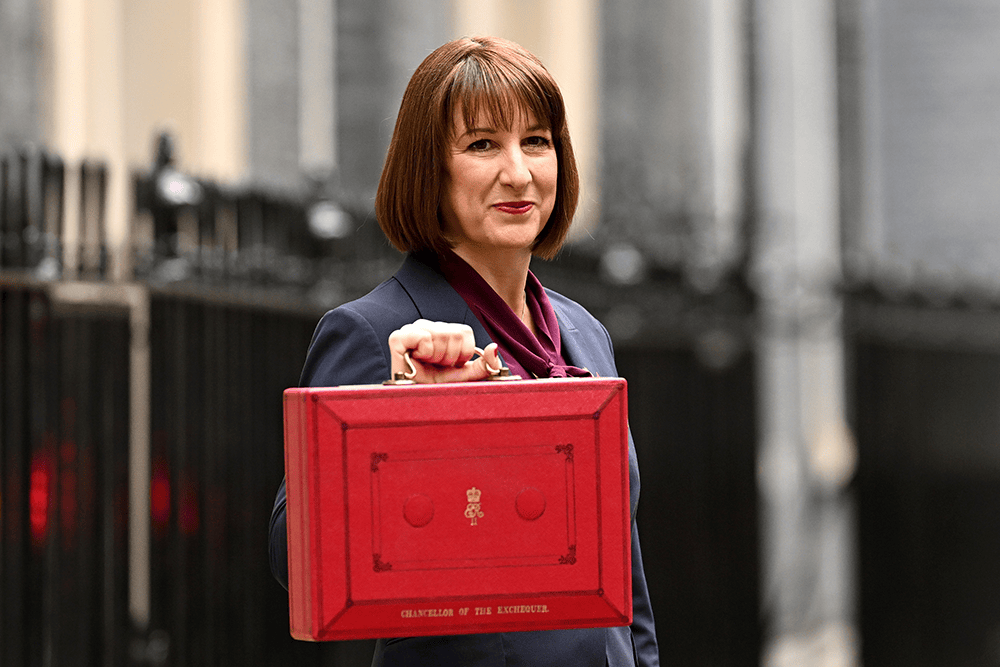
AI is the new Rachel Reeves. That doesn’t mean I believe John Healey is an evil bot plotting to deliver an even more damaging Budget than those of his predecessor. It means that, like Reeves during her dismal chancellorship, AI has become a topic commentators like me can’t duck writing about week after week, much as we’d prefer not to.
And I think that may be one way in which the gods of this dark new science will first drive us mad – to adapt a classical cliché – before they destroy us. They will also continually disorient us by turning mundane tasks into Kafkaesque nightmares. The more headline-grabbing AI predictions are too apocalyptic to contemplate, but here’s a couple of entry-level examples of that last, closer-to-home assertion.
First, car insurance, once a matter of occasional contact with the same company or broker; now (so it feels) an AI-made labyrinth. Last month, I wrote about my Audi that had been written off by a drunk driver, to be replaced with a Skoda. Since then I’ve been caught in an online chaos of comparison sites, chatbots, offers and refusals, with annual premiums ranging from £400 to £4,000. At one point I accidentally double-insured the new car before I at last found a human who explained the Financial Conduct Authority’s 14-day ‘cooling-off period’ that allows mistakes to be undone.
Likewise, I faced the challenge of becoming a solicitor’s new client, once no more than a matter of showing a passport and utility bill as proof of identity. In response to anti-money-laundering regulations and law firms’ staff cuts, you’re now more likely to meet a merciless app called Thirdfort that will torture you for days with repeated demands for uploaded documents, selfies and access to your bank accounts.
The stress of these encounters was amplified when a tech guru told me the very essence of AI is ‘inexplicable’, because it writes its own rules inside ‘black boxes’. That phrase recalled Long-Term Capital Management, a US hedge fund that blew up in 1998 when its impenetrable but hitherto high-performing ‘black box’ trading algorithm, created by Nobel laureates, was overwhelmed in the aftermath of a Russian debt default. The algorithm had predicted a negligibly slim chance of markets behaving as they did in that episode, so LTCM’s trades were loaded in the opposite direction.
What does all this tell us? At this stage, we have no idea whether there’s a non-negligible probability of an AI black box reducing civilisation to rubble, by accident or design. We can be more certain that it will make most people’s lives more bewildered and fearful – and that sooner or later it will blow up the financial world.
Leading indicators
In the Holborn and St Pancras by-election, I could not bring myself to vote for the loathsome Zack Polanski as a token kick at Labour, so in the end I voted tribally for the near-invisible Tory. He had no chance of winning, but his respectable margin ahead of Reform’s ex-Met anti-terrorism commander could be a leading indicator of Kemi Badenoch’s long march to power.
Meanwhile, the only candidate I encountered on my doorstep, the only one who lives in the constituency and, I suspect, the only one to have run a local business (a gallery in Seven Dials) was Briony Kapoor. If I had not already posted my ballot, those facts and her good manners might have added my vote to her meagre haul of 236 – were it not that she was standing for ‘Rejoin EU’. I’m not quite with her yet but, like it or not, that too is a cause on track for revival. Before we retreat to the trenches of 2016, we should hear both sides of the economic argument.




Comments